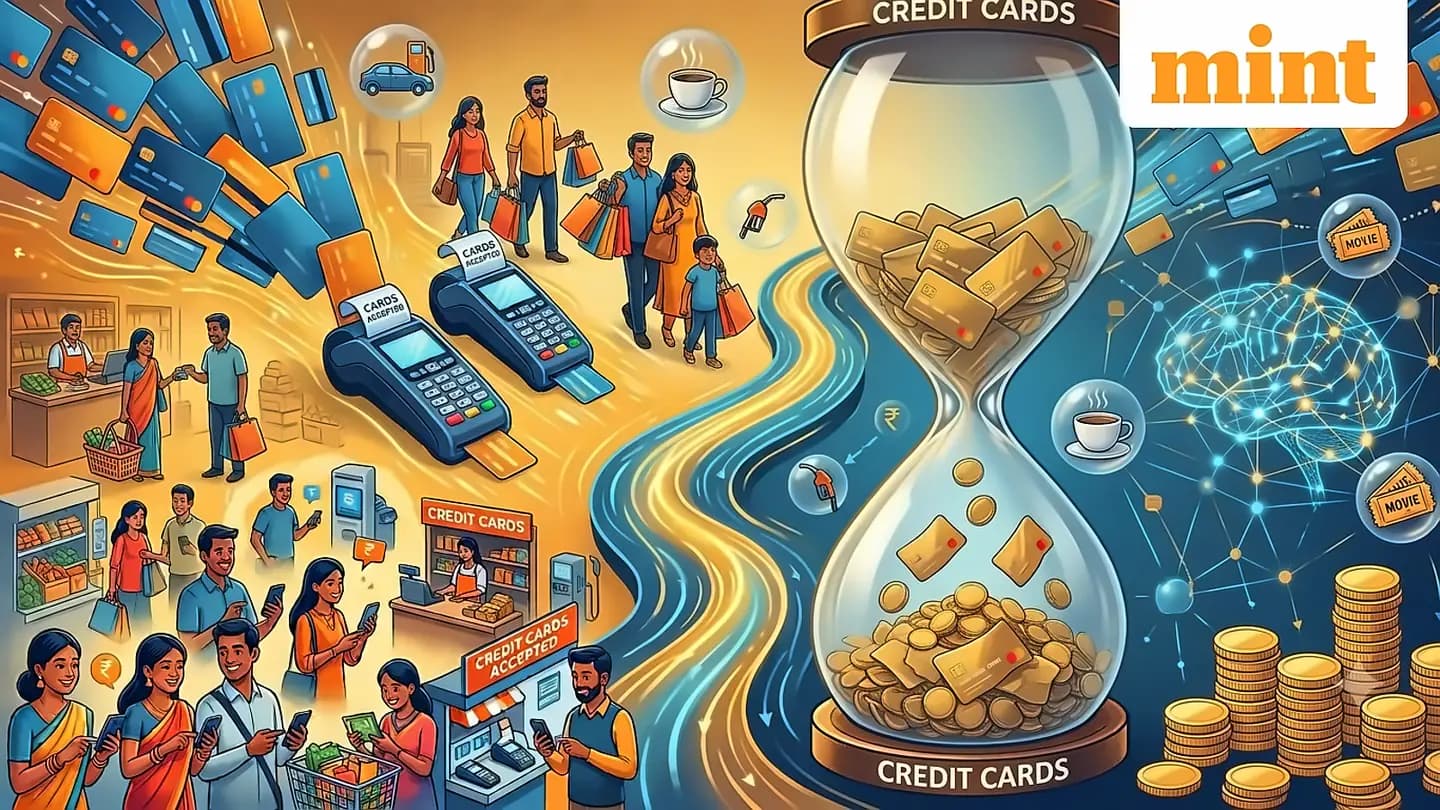
Credit card transactions experienced a significant 24.1% year-on-year increase to 601 million in July, according to the Moneycontrol report. However, this surge in transaction frequency was not matched by corresponding spending growth, with overall spending through credit cards rising by only 7.4% during the same period, reaching ₹2.08 lakh crore. This widening gap between transaction growth and spending growth pushed the average ticket size down 13.5% year-on-year to ₹3,460 in July, representing a more pronounced decline than the 12.9% drop seen in June. As per the TradingView News report, this trend shows credit cards being used for many more transactions while the average value of each transaction is shrinking.
The decline in average spending is particularly linked to the increasing use of RuPay credit cards connected to UPI for small-value payments, as highlighted in the ACMIIL report. RuPay credit cards linked to UPI allow users to make payments at merchants through the UPI network without physically swiping or tapping their cards. According to the ACMIIL report, this growing preference for smaller-value transactions through UPI-linked credit cards is a key factor driving the decline in average transaction values. The report specifically links this fall to RuPay credit cards being used through UPI for lower-ticket transactions, though it does not quantify how much of the industry's overall transaction growth came from credit card-linked UPI. The TradingView News report emphasizes that while UPI-linked credit card payments can contribute to higher transaction volumes, the 24.1% rise in transaction volume should not be interpreted as being driven solely by UPI.
The average monthly expenditure per credit card was ₹16,812 in July, marking a 2.2% increase from June but a 2.4% decline compared with the same month last year, as reported by Moneycontrol. Spending patterns varied considerably among major card issuers, with HDFC Bank reporting the highest average monthly spend per card at ₹22,322, followed by SBI at ₹17,392 and ICICI Bank at ₹17,278. Across the industry, the average monthly expenditure stood at ₹16,812. As per the TradingView News report, there are also sizeable differences across issuers, with HDFC Bank recording the highest average spend per card at ₹22,322, followed by SBI at ₹17,392 and ICICI Bank at ₹17,278.
Punjab National Bank (PNB) recorded 5.2 million credit card transactions in July, marking an 8.9% month-on-month increase after transaction volumes had surged six-fold in June. According to the ACMIIL report, this latest rise was attributed to PNB's partnership with Kiwi for UPI-based credit card payments. Credit card spending at PNB also recorded strong growth, rising 173% year-on-year and 8.6% month-on-month in July. Despite this sharp increase, PNB remains a relatively minor contributor to the overall credit card market, accounting for just 0.4% of industry-wide spending. The TradingView News report provides a specific example of how UPI-linked credit card usage can push up transaction volumes, though these numbers cannot by themselves be extrapolated to the entire industry.
The July data points to a clear divergence in credit card usage, with consumers making transactions more frequently while the amount spent in each transaction continues to fall. As reported by Moneycontrol and TradingView News, the ACMIIL attributed part of the decline in transaction value to the growing use of RuPay credit cards linked to UPI for smaller-ticket payments. The report emphasizes that while UPI-linked credit card payments can contribute to higher transaction volumes, the 24.1% increase in transaction volume should not be used to conclude that UPI alone drove the entire industry trend. The TradingView News report specifically notes that the data doesn't establish that UPI is making people spend more frequently or that consumers are replacing debit-account UPI with credit cards, focusing instead on what the actual data can tell us about current transaction patterns.