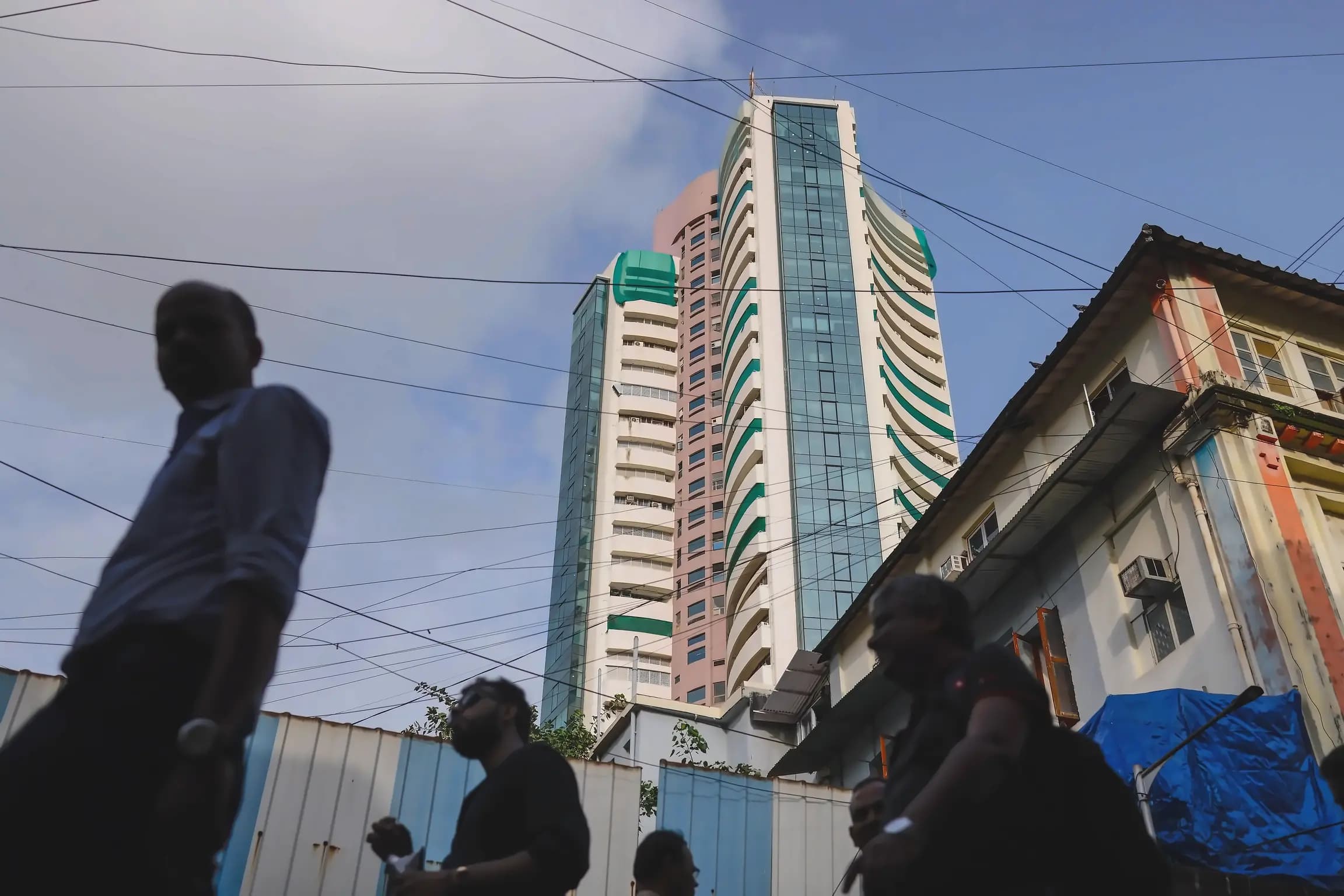
BSE shares declined over 1% to ₹3,550 after opening flat on Tuesday, while Wipro traded flat at ₹187.07 following NSE Indices' announcement that BSE will replace Wipro in the benchmark Nifty 50 index as part of its latest semi-annual review. The contrasting market reactions highlight investor sentiment around the index inclusion process. Over the past six months, BSE shares have gained 11.70%, while the stock has surged 37% year-to-date in 2026. In contrast, Wipro has declined 30% this year, compared with a 16% decline in the IT index and 6% drop in the broader benchmark, reflecting the significant performance differential between the two companies. The changes will take effect from September 30, 2026, after market close on September 29, 2026.
Bengaluru-based IT services provider Wipro Ltd. is now confirmed to exit the Nifty 50 index during the September 2026 semi-annual rejig, according to the latest NSE Indices release dated August 10. This marks the first instance of Wipro being excluded from the benchmark index since its inclusion on January 17, 2002. The company was previously briefly excluded between April and September 2013 due to its corporate demerger when it hived off its non-IT business units. BSE has been confirmed as the replacement candidate for Wipro in the Nifty 50, with the rejig taking effect from September 30, 2026, meaning the changes will be effective after the close of trade on September 29, 2026. The official announcement was made by NSE Indices on August 10, 2026 after market hours. As per The Financial Express, the reshuffle will reshape the flow of passive money between the two stocks, with BSE entering the Nifty 50 for the first time following the latest semi-annual index review.
BSE's inclusion in the Nifty 50 follows its six-month average free-float market cap crossing the required threshold, with the exchange's average free-float market cap standing at ₹1,40,879 crore, which was at least 1.5 times the six-month average free-float market cap of the smallest Nifty 50 constituent, Wipro. Wipro's average free-float market cap stood at ₹55,930 crore, significantly lower than BSE's requirement. The replacement will also apply to the Nifty50 Equal Weight index. NSE Indices noted that only stocks available for trading in NSE's futures and options segment are eligible for inclusion in the Nifty, and the next two eligible companies, TVS Motor and Divi's Labs, were not considered for inclusion because their average free-float market cap was less than 1.5 times their six-month average free-float market cap. TVS Motor had an average free-float market cap of ₹84,566 crore and Divi's Labs stood at ₹82,930 crore, both falling short of the required threshold. The average free-float market capitalisation of the two lowest-ranked existing constituents after Wipro's exclusion, HDFC Life Insurance and Tata Consumer Products, also did not meet the required 1.5-times threshold.
If Wipro is excluded, it could trigger net outflows of about $149 million from the stock, as projected by Nuvama Wealth Management, with exchange-traded funds and index funds tracking the Nifty 50 managing assets of roughly ₹9 trillion ($94.3 billion). The company could potentially be replaced by two candidates - the Bombay Stock Exchange (BSE), which ticks all the boxes for benchmark index inclusion, and TVS Motor, which could be a probable contender according to Nuvama Alternative. An inclusion of BSE in the Nifty 50 index could result in inflows of as much as $691 million. NSE Indices confirmed that BSE, Hitachi Energy India, Polycab India, Vedanta Aluminium Metal and Vodafone Idea will be included in the Nifty100, while Indian Hotels, Lodha Developers, REC, Shree Cement and United Spirits will be excluded. The index changes could lead to increased investor attention and potential flows into the stocks being added to the key benchmarks, while companies facing exclusion could see selling pressure from passive funds tracking the respective indices. According to The Financial Express, when a stock enters the index, funds that aim to replicate its performance typically need to increase their exposure to that stock, with the actual flow varying depending on fund size, index weights and market prices around the effective date.
The departure of Wipro from the Nifty 50 reflects a broader decline in the influence of India's IT sector, with the combined weight of India's top five IT companies in the Nifty 50 falling below 9% this year, the lowest at least since 2002, according to data compiled by Bloomberg. The group accounted for more than a fifth of the benchmark at its peak about two decades ago and now trails financials, which have a nearly 36% weight in the gauge, as well as consumer discretionary and energy sectors. "The symbolism is difficult to miss," said Ponmudi R, chief executive at local brokerage Enrich Money. "One of the companies that defined India's outsourcing boom is being replaced by a business benefiting from the financialization of Indian household savings." The retreat reflects mounting questions over an outsourcing model that for decades relied on supplying relatively inexpensive engineers to overseas corporations, with generative AI threatening to automate coding, testing and maintenance work underpinning that model. Wipro joined the Nifty 50 in 2002 as India's outsourcing industry was emerging as a major source of growth and foreign exchange, and this time its departure reflects a decline in its free-float market value relative to other eligible companies. "AI is a megatrend that could disrupt the business models of India-based IT companies," S&P Global Ratings said in a report last month, expecting competition from AI-native firms to intensify over the next three years.
The September 2026 reshuffle will bring significant changes across multiple NSE indices beyond the Nifty 50. In the Nifty 100, BSE, Hitachi Energy India, Polycab India, Vedanta Aluminium Metal and Vodafone Idea will be included, replacing Indian Hotels, Lodha Developers, REC, Shree Cement and United Spirits. In the Nifty Next 50, Hitachi Energy India, Polycab India, Vedanta Aluminium Metal, Vodafone Idea and Wipro will be added, while Indian Hotels, Lodha Developers, REC, Shree Cement and United Spirits will exit. The Nifty 500 will see an even bigger churn, with 27 stocks entering and 27 leaving. The Nifty Midcap 150 will see 13 stocks exit, including BSE, Hitachi Energy India, Polycab India, KPIT Technologies and Tata Elxsi, while Aster DM Quality Care, Embassy Office Parks REIT, Indian Hotels, Meesho, REC and United Spirits are among the stocks entering the index. The Nifty 200 will add Apar Industries, Bank of Maharashtra, Hindustan Copper, LIC, Meesho, NLC India and Vedanta Aluminium Metal, while Alkem Laboratories, Coromandel International, HUDCO, KPIT Technologies, Shree Cement, Tata Elxsi and Tata Investment Corporation will be excluded. The Nifty Smallcap 250 will see 33 additions and 33 exclusions, with key entrants including ACC, Apollo Tyres, KPIT Technologies, Tata Elxsi, SJVN and The New India Assurance Company, while several companies including Aster DM Quality Care, Meesho, Narayana Hrudayalaya and Piramal Finance will exit. Among sectoral indices, the Nifty Auto will add Hyundai Motor India in place of Exide Industries, the Nifty Capital Goods will include Grindwell Norton and MTAR Technologies, replacing Finolex Industries and Praj Industries, and the Nifty Healthcare index will add Gland Pharma and Krishna Institute of Medical Sciences, replacing Piramal Pharma and Syngene International.