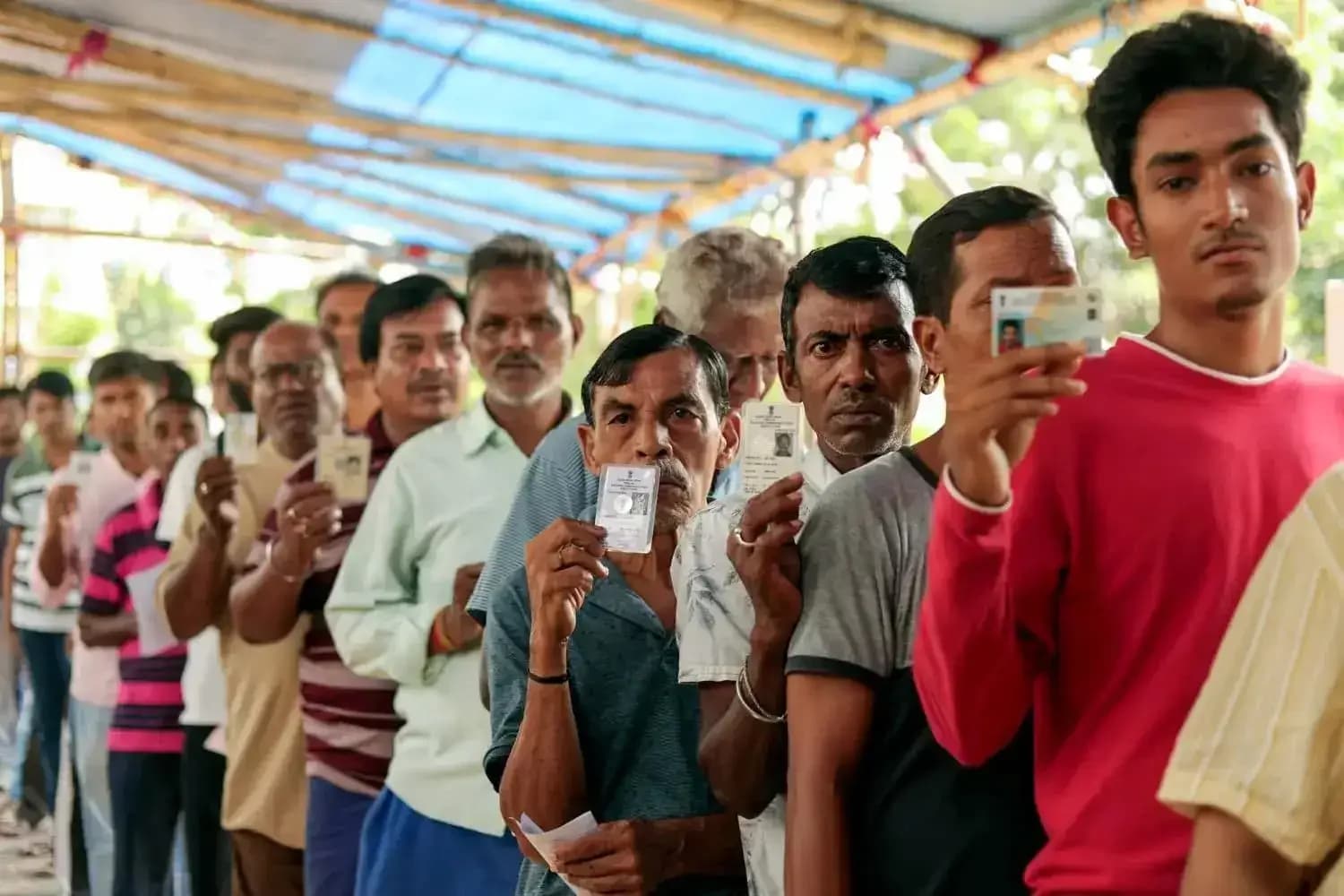
Actor-turned-politician C Joseph Vijay's Tamilaga Vettri Kazhagam (TVK) has delivered a historic upset in Tamil Nadu's Assembly elections, leading in 110 of the 234 seats as final counting trends emerged on May 4, 2026. The AIADMK-led alliance followed with 62 seats, while the ruling DMK alliance, which had won 159 seats in 2021, was ahead in 61 seats. Vijay contested from two constituencies—Perambur and Tiruchirappalli East—and was leading in both, with the actor leading in Tiruchirappalli East by a margin of 6,499 votes at the end of the first round of counting. TVK's stunning performance cut across urban centres and rural constituencies, including traditional DMK strongholds, with the party making significant impacts in southern districts including Madurai, Dindigul, Theni, Virudhunagar, Sivaganga, Ramanathapuram, Thoothukudi, Tirunelveli, and Tenkasi. With TVK already crossing the 100-seat mark, while 118 seats are required for a majority in the 234-member assembly, he could potentially emerge as chief minister if current numbers hold and alliances consolidate.
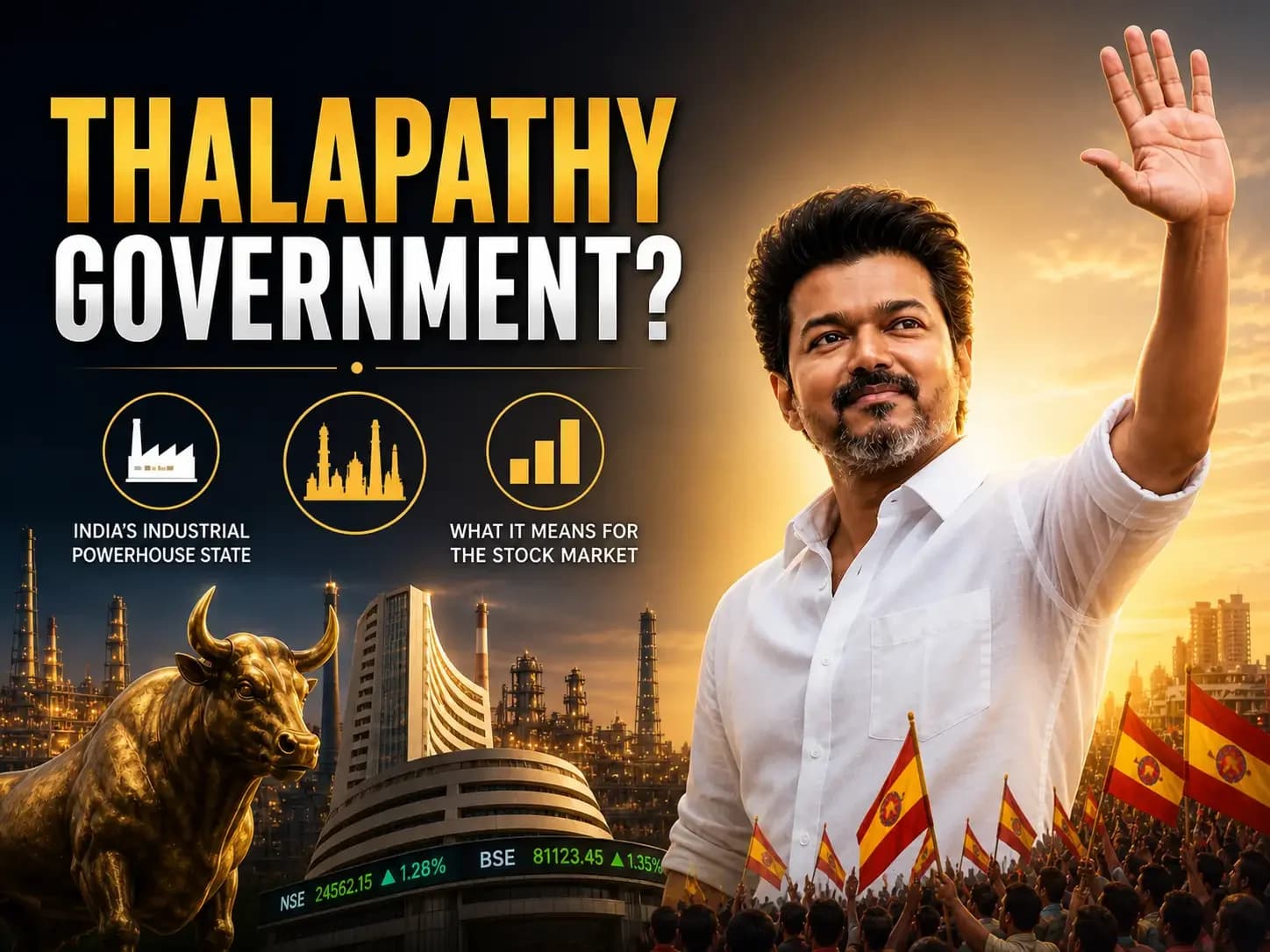
Tamil Nadu contributes roughly 8-9% of India's GDP and serves as a major auto and electronics hub, hosting global manufacturers across automobiles, semiconductors, defence, textiles and renewable energy sectors. As reported by The Economic Times, the state is home to manufacturing clusters that support companies such as Hyundai Motor Company, Ford Motor Company, Foxconn, Tata Electronics and Ashok Leyland. Tamil Nadu is also central to India's electronics export push, EV manufacturing plans and semiconductor ambitions. The state has been among India's leading states in attracting foreign direct investment (FDI), supported by its manufacturing base, industrial infrastructure, and workforce, with steady growth in automobiles, electronics, and renewable energy sectors alongside expansion of its startup ecosystem.
TVK's manifesto includes comprehensive proposals focused on employment support and small enterprise development, with specific focus on youth and MSME sectors. The party has proposed interest-free loans for women, monthly financial assistance for unemployed youth, and stipend-based internship programmes. It has outlined plans to provide ₹4,000 per month to graduates and ₹2,500 to diploma holders, alongside subsidies for micro, small and medium enterprises (MSMEs). For early-stage businesses and entrepreneurs, the manifesto proposes loan guarantees of up to ₹25 lakh and plans to convert self-help groups into MSMEs with annual financial support. The party's manifesto also included five lakh new government jobs, five lakh paid internships for students, a monthly stipend of ₹4,000 for unemployed graduates, and education loans of up to ₹20 lakh for higher studies. The TVK had promised a monthly assistance of ₹2,500 for women under 60 years of age, excluding beneficiaries of similar existing schemes, along with eight grams of gold and a silk saree for brides from low-income families.
Prashant Kishor's predictions from a year ago are now resurfacing on social media platforms as TVK's stunning rise materializes. According to Deccan Herald, Kishor was roped in by Vijay for his debut elections in the state, with the actor feeling that Kishor's inputs and strategy could prove valuable during the elections. In a TVK rally almost a year ago, Kishor had told Thanthi TV that there are high chances of Vijay winning in the state if he decides to go solo. He famously stated, 'Save this video, if Vijay goes alone, he will win the majority on his own' when asked about the possibility of TVK winning 118 seats, which is the majority mark required to form the government in Tamil Nadu.
According to Santosh Meena, Head of Research at Swastika Investmart, the initial market reaction is likely to be measured rather than emotional. As reported by The Economic Times, TVK's strong showing is expected to generate mixed but cautious business sentiment. Meena noted that Vijay's emphasis on welfare, social justice and anti-corruption may create short-term concerns around fiscal spending and regulatory oversight, but his clean image, youth connect, and promises around jobs, MSMEs, startups, and economic growth could improve governance perception if executed pragmatically. These proposals involve direct financial support and subsidies, which would require allocation of state resources, with details on implementation timelines and funding mechanisms not specified in the manifesto.
According to analysts, any policy shift in industrial incentives, labour reforms, land acquisition, power tariffs or logistics approvals can directly impact corporate capex decisions. As reported by The Economic Times, if policy continuity emerges, sectors linked to Tamil Nadu that could remain in focus include auto and auto ancillaries, electronics manufacturing, industrial parks and logistics, renewable energy and grid infrastructure. The state's investment environment has historically been supported by policy continuity and infrastructure development, with the state having attracted both domestic and global investments across sectors. Investor confidence likely to remain resilient because Tamil Nadu already has strong industrial fundamentals, skilled manpower and infrastructure, with the election potentially marking a transition point from a model driven largely by industrial capital and large investments to one that experiments with distributed entrepreneurship and direct economic support.