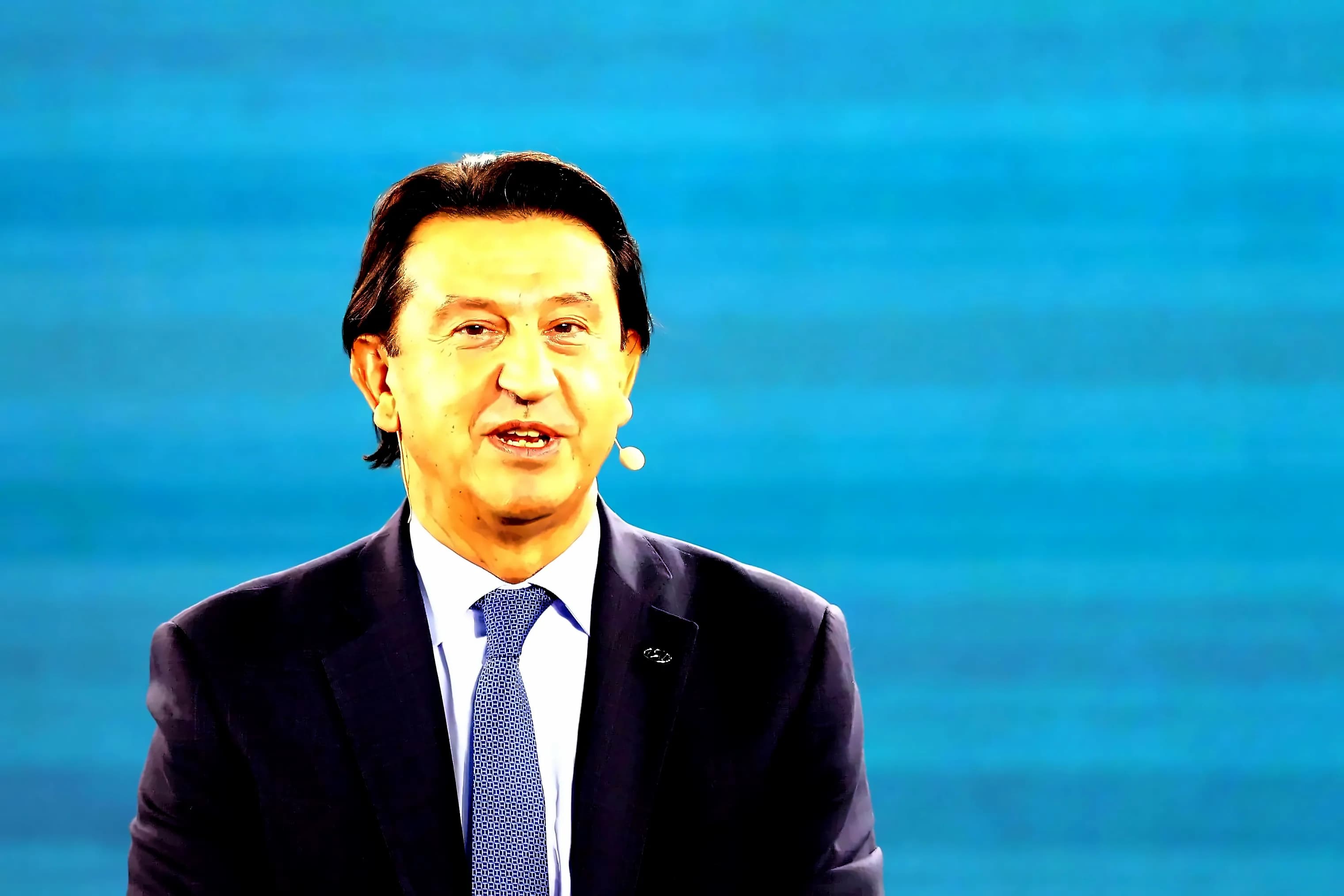
Hyundai Motor Company and TVS Motor Company have officially signed a joint development agreement to advance the commercialization of electric three-wheeler solutions for India's last-mile mobility needs. The partnership, formalized after the successful presentation of the E3W concept at the Bharat Mobility Global Expo 2025, brings together Hyundai's research and development expertise, advanced mobility technologies, and human-centric design approach with TVS's leading-edge electric platform, extensive three-wheeler engineering expertise, and deep local market knowledge. Hyundai Motor Company Senior Vice President of Corporate Strategy & Planning Joongsun Ko emphasized that "Hyundai Motor Company has long explored ways to contribute to improving India's transportation environment as a key market, and our collaboration with TVS Motor is a strategic decision rooted in that effort."
The partnership emphasizes local component manufacturing as a cornerstone strategy, with major components to be sourced and manufactured locally within India. This approach serves multiple objectives including strengthening India's automotive supply chain ecosystem, creating employment opportunities, reducing overall vehicle costs, and ensuring rapid after-sales support and spare parts availability for end customers. TVS Motor Company President, Group Strategy, Sharad Mishra noted that "By bringing together complementary strengths - including our electric three-wheeler platform, engineering expertise, and deep understanding of customer needs - we are well-positioned to deliver purpose-built products for India and additional markets." Hyundai Motor Company will lead the design of the electric three-wheeler (E3W) using its R&D expertise, while TVS Motor will co-develop the product and lead local sales with manufacturing operations in India catering to Indian market demand and future exports. The companies are committed to delivering the first vehicle in India - the world's largest three-wheeler market.
Indian Prime Minister Narendra Modi and South Korean President Lee Jae-Myung met in New Delhi on Monday, with both leaders pledging to nearly double bilateral trade to $50 billion by 2030. Modi stated that "India and South Korea are going to transform their trusted ties into a futuristic partnership," emphasizing the strategic importance of this enhanced cooperation. The trade enhancement targets an increase from the current $27 billion to $50 billion by 2030, focusing on strengthening supply chains, improving market access, and encouraging greater investment between the two nations.
Indian companies deepened global expansion through significant deals across multiple sectors during the India-Korea Business Forum. Suzlon Energy and Korean firm GS E&C signed an initial pact for India's renewable energy business, with cooperation on securing ageing wind farms and undertaking re-powering projects. Hyundai Motor Company and TVS Motor Company announced their joint development agreement to advance electric three-wheeler solutions for India's last-mile mobility needs, with Hyundai leading design and co-development using its R&D expertise. Hyundai Motor Company and TVS Motor Company announced their joint development agreement to advance electric three-wheeler solutions for India's last-mile mobility needs, with Hyundai leading design and co-development using its R&D expertise.
JSW Steel entered a joint venture with South Korean steel major POSCO to establish a 6 million tonnes per annum steel plant in Odisha, with land already secured and the project capable of manufacturing high-grade flat steel products for automotive applications. RailTel Corporation received a ₹86.36 crore order from Municipal Corporation of Greater Mumbai for BMC Cloud Services provisioning and operations & maintenance. Eimco Elecon completed a major land acquisition in Gujarat's Kanjari for ₹45.56 crore, securing substantial parcel for future expansion plans.