Stock markets surged on Tuesday (May 19, 2026) after U.S. President Donald Trump announced he has halted fresh strikes on Iran at the request of Qatar, Saudi Arabia and the UAE. According to reports from PTI, Trump made the announcement on Truth Social on Monday (May 18, 2026) late afternoon, stating he was asked by the Emir of Qatar, Tamim bin Hamad Al Thani, the Crown Prince of Saudi Arabia, Mohammed bin Salman Al Saud, and the President of the UAE, Mohamed bin Zayed Al Nahyan, to hold off on the planned military attack. Trump told reporters at the White House that they were getting ready to do a very major attack, but had put it off because they've had very big discussions with Iran and they'll see what they amount to. As per PTI, Trump specifically stated that "I have been asked by the Emir of Qatar, Tamim bin Hamad Al Thani, the Crown Prince of Saudi Arabia, Mohammed bin Salman Al Saud, and the President of the United Arab Emirates, Mohamed bin Zayed Al Nahyan, to hold off on our planned Military attack of the Islamic Republic of Iran, which was scheduled for tomorrow (Tuesday)."
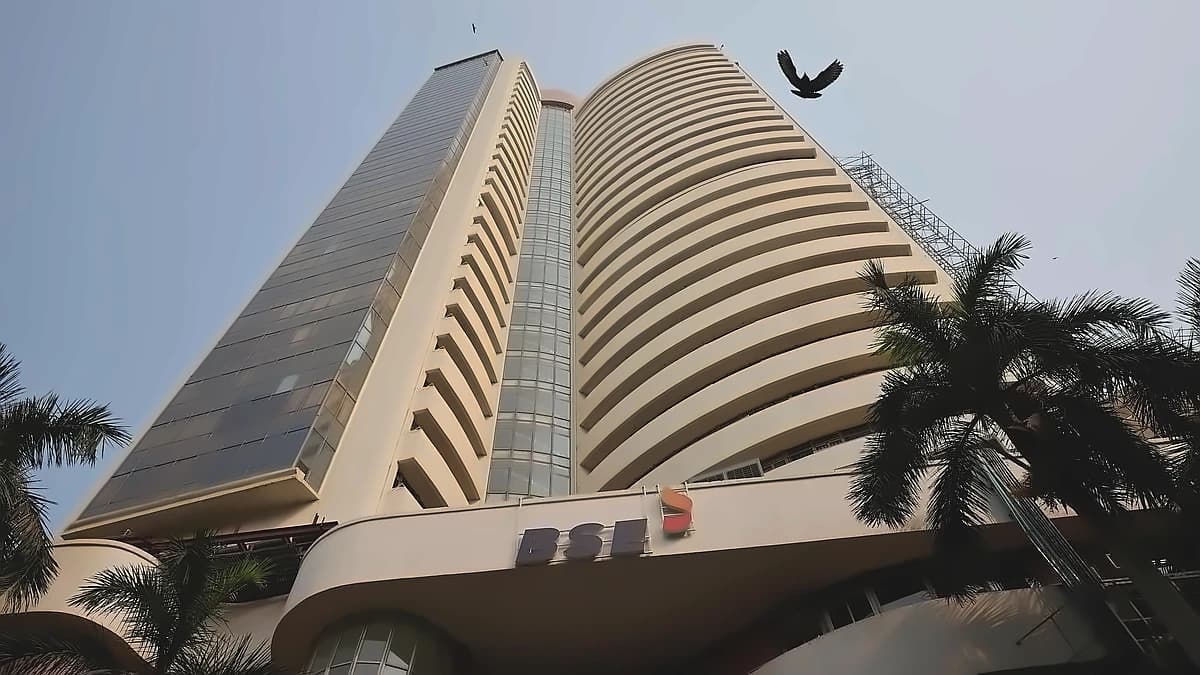
The 30-share BSE Sensex climbed 366.71 points to 75,706.88 in early trade, while the 50-share NSE Nifty advanced 107.45 points to 23,760. As reported by PTI, from the 30-Sensex firms, Infosys, HCL Tech, Tech Mahindra, Tata Consultancy Services, Trent and InterGlobe Aviation were among the major winners. However, UltraTech Cement, Kotak Mahindra Bank, Titan and Eternal were among the laggards. The positive momentum was supported by buying in frontline IT stocks, Adani group firms and foreign fund inflows. On Monday, the BSE benchmark had increased by 77.05 points, or 0.10 per cent, to settle at 75,315.04, while the Nifty edged higher by 6.45 points, or 0.03 per cent, to end at 23,649.95.
Foreign Institutional Investors (FIIs) bought equities worth ₹2,813.69 crore on Monday (May 18, 2026), according to exchange data reported by PTI. Brent crude, the global oil benchmark, traded 2% lower at $109.9 per barrel. VK Vijayakumar, Chief Investment Strategist at Geojit Investments Limited, noted that FIIs turning buyers is an indication that valuations are becoming attractive in India, with concerns of bubble valuations in AI stocks increasing. He suggested that if FII buying becomes a trend, largecaps in financials, particularly in leading banks, will be the segment to move up since their valuations are attractive and the segment has growth potential. The analyst emphasized that "FIIs turning buyers, though not a trend yet, is an indication that valuations are becoming attractive in India. Also, the concerns of bubble valuations in AI stocks are increasing. If the FII buying becomes a trend, largecaps in financials, particularly in leading banks will be the segment to move up since their valuations are attractive and the segment has growth potential."
Adani group stocks were trading higher after the U.S. Department of Justice permanently dropped all criminal charges against Indian tycoon Gautam Adani and his nephew Sagar, bringing the high-profile securities and wire fraud case in New York to a complete close after prosecutors concluded they could not sustain the allegations. As reported by PTI, this development provided additional support to the positive market sentiment and contributed to the rally in frontline IT stocks and Adani group firms.
In Asian markets, South Korea's benchmark Kospi and Japan's Nikkei 225 index quoted lower, while Shanghai's SSE Composite index and Hong Kong's Hang Seng index were trading higher. According to Ponmudi R, CEO of Enrich Money, recent remarks from Trump stating that the U.S. is delaying any potential military action against Iran at the request of Gulf leaders have offered some near-term hope of de-escalation. However, he added that the broader geopolitical backdrop remains highly fluid, with investors continuing to remain cautious amid the risk of renewed escalation. The United Arab Emirates faced more missile and drone attacks from Iran during the war than any other country, with the attacks and Iran's chokehold on the Strait of Hormuz more than halving the Emirates' exports of crude oil and natural gas. Its tourism and conference sectors have also suffered significantly, testing the UAE's economic model as a West Asian business haven like never before.