Sterlite Technologies Ltd., the optical-fiber maker owned by the Vedanta Group, has emerged as the poster child of India's AI infrastructure boom with a 530% surge this year. According to reports from Business Standard, the company secured a $1.1 billion multi-year contract from a US-based hyperscaler last month, positioning it at the forefront of the global AI infrastructure investment cycle. The company's competitor, HFCL Ltd., has jumped 191% while MTAR Technologies Ltd., which makes precision cooling and power components, has more than tripled in value. As reported by Business Standard, this rally is largely invisible in headline numbers as many of these companies remain excluded from the broadest domestic indexes.
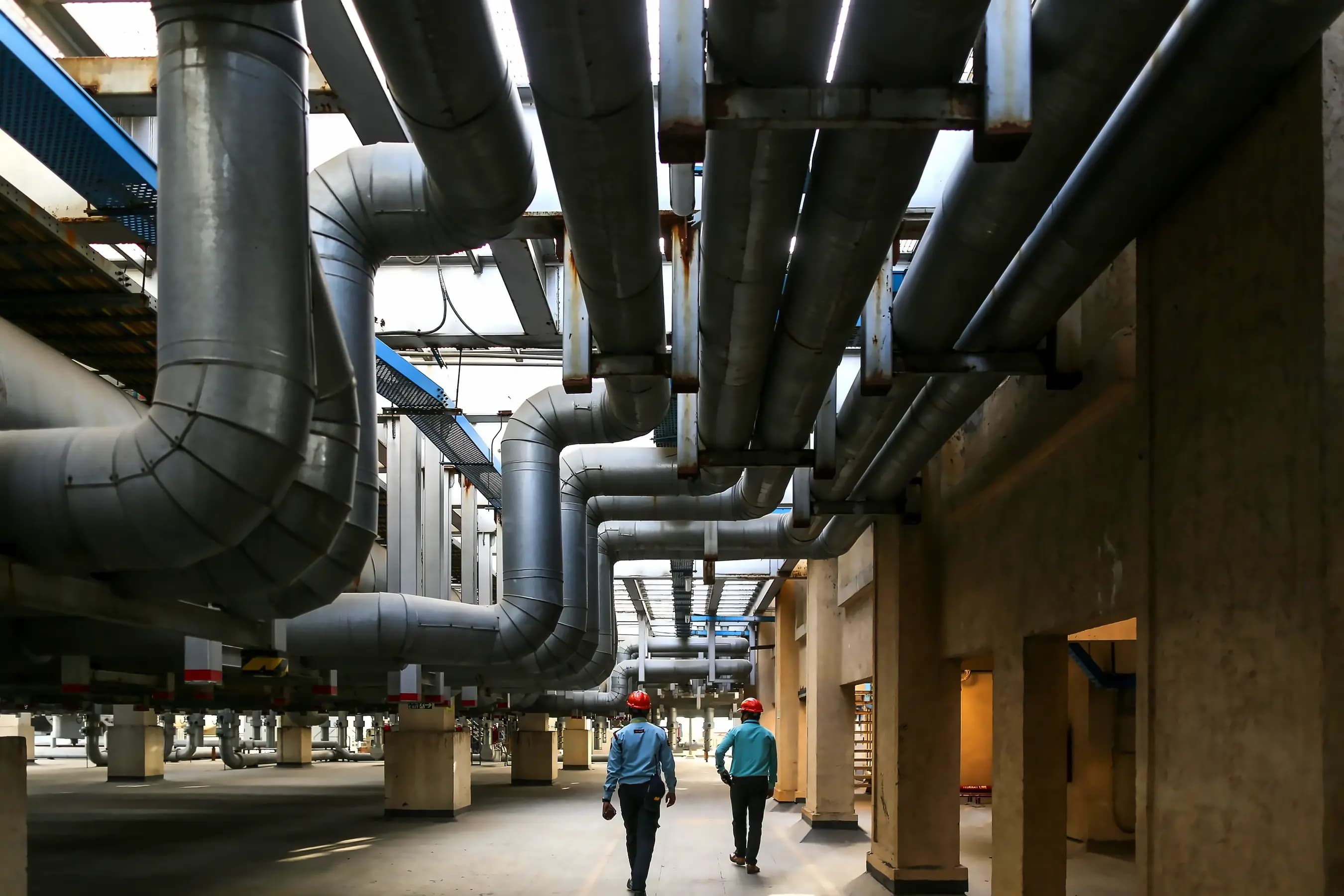
An equal-weighted Bloomberg index of 28 Indian companies that feed the data-center ecosystem has added approximately $47 billion in combined market value this year, representing a nearly 50% rise. As reported by Business Standard, this contrasts sharply with the NSE Nifty 500, which has lost over $300 billion in 2026. The data center ecosystem includes makers of transformers, switchgear, wires, cables, and cooling systems, transforming old-economy industrial firms into India's hottest market play in what's being called the 'AI capex trade' in Mumbai dealing rooms. According to Angel One, the market is rewarding companies with visible AI-linked earnings rather than just thematic exposure, with Sterlite trading at about 70 times its 12-month forward earnings compared to NSE 500's 19 times.
The divergent fortunes of Indian IT companies and AI beneficiaries have created a striking valuation gap between Indian equities and global technology giants. As reported by ET Now, NVIDIA recently reported revenue of $81.6 billion, reflecting year-on-year growth of 85%, with CEO Jensen Huang describing the current AI phase as the 'largest infrastructure expansion in human history'. NVIDIA is valued at $5.36 trillion, higher than the Nifty 50's $2.06 trillion market capitalization. Similarly, Alphabet and Apple are each valued above $4.5 trillion, while Microsoft stands at $3.42 trillion. This contrasts sharply with India's recent market weakness, with the Nifty 50 declining 11.49% year-to-date compared to AI beneficiaries' strong performance.
Major corporations are making substantial commitments to India's data center infrastructure. According to Business Standard, Amazon.com Inc. plans to invest $12.7 billion in cloud infrastructure in India through 2030, while Alphabet Inc. is spending about $15 billion on an AI infrastructure hub in Visakhapatnam. A Reliance Industries Ltd. joint venture signed an $11 billion pact to build local data centers last year, and AdaniConnex Pvt. has partnerships with Google as well as Uber Technologies Inc. to help build their data centers. These investments are creating significant opportunities for equipment manufacturers and supply chain companies, with total investments in global hyperscale data centers likely to exceed $1.2 trillion between 2025 and 2027, according to Angel One.
As reported by Business Standard, Nomura Holdings Inc. analysts led by Akash Gupta identified the industrial supply chain as the most attractive exposure, describing it as the 'picks and shovels' that build, power, and cool these facilities. The analysts noted that a two-to-four year lead time in supplying some components has created an enviable seller's market with multi-year backlogs, with orders secured now expected to bring revenue between 2027 and 2029. Foreign investors are already piling in, with shareholding of foreign funds in industrials rising to 14% as of end-March, the highest in two years, according to Elara Capital. According to Nomura analysts, data center capex has emerged as the single largest contemporary industrial investment cycle, larger than the global wireless 4G roll out, the post-2008 LNG build-out, or the early-2010s shale boom.