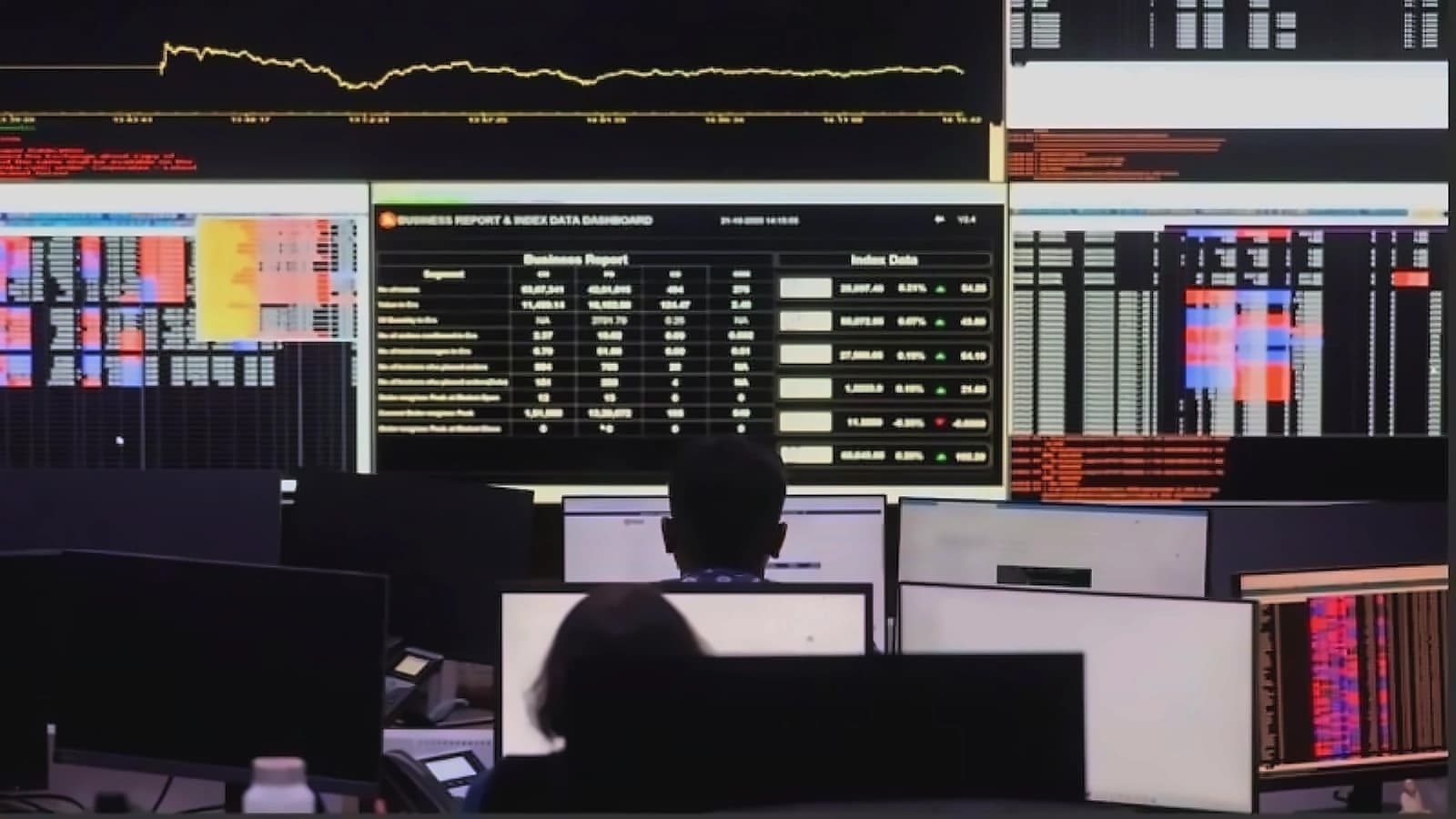
Indian stock markets showed mixed performance on Friday, with the BSE Sensex gaining 114 points or 0.15% to close at 78,009.25, while the NSE Nifty declined 40 points or 0.16% to end at 24,366. According to Business Standard, the divergence between the Sensex and Nifty stood at 0.31 percentage points on Thursday, marking a significant improvement from the 0.82% difference seen on the first CAS day (August 3). This narrowing gap represents a notable improvement in market stability as the new mechanism settles in.
The newly implemented Closing Auction Session (CAS) continues to show gradual improvement, with the Nifty closing gap narrowing from 0.82% on August 3 to just 0.05% on Friday. As per Business Standard, SEBI is holding regular meetings with stockbrokers to address these issues, with the most recent meeting held on Thursday. SEBI chairman Tuhin Kanta Pandey stated that most top brokers have started showing indicative prices, with those on the qualified stock broker list expected to provide the same to clients by August 14. The chairman noted that mutual funds' participation in CAS has surged from 5-7% to almost 20-25%, while participation from proprietary traders is seen more around expiry dates. However, a senior brokerage official noted that "the divergence becomes more visible when buy-side activity increases", with the current challenge being that "until participation deepens, this liquidity issue is likely to persist."
The divergence extended beyond benchmark indices to individual stocks, with several Nifty constituents showing significant price differences between exchanges. According to Business Standard, Bajaj Auto ended at ₹11,730 on BSE and ₹11,661 on NSE, a difference of ₹69. Similarly, UltraTech Cement showed a difference of ₹44 in closing prices, while Trent recorded a difference of ₹24. This sharper divergence in index stock closing prices on Thursday's Sensex expiry day represents a notable escalation from the minimal differences seen in recent sessions, indicating continued challenges with the CAS mechanism's effectiveness.
Under the closing auction system, closing prices for stocks with futures and options contracts are determined through an auction conducted between 3:15 pm and 3:35 pm, replacing the earlier method of using the volume-weighted average price of trades during the final 30 minutes of the session. As per Business Standard, Prakarsh Gagdani, founder of Soaring Peaks Capital, explained that "earlier, the closing price was based on the last 30 minutes of trading on both exchanges, so differences in volume mattered less because the price reflected a broader average. Now, with separate closing sessions, liquidity has become more important." He noted that during the 3:15 p.m. to 3:30 p.m. window, price discovery depends on the bids, asks and quantities available on each exchange, where higher liquidity leads to more efficient price discovery due to greater buyer and seller participation.

Markets were also reacting to the RBI's decision to keep the repo rate unchanged, adding to the mixed sentiment. As reported by The Hindu, Vinod Nair, Head of Research at Geojit Investments Limited, noted that markets remained on a tight leash as uncertainty surrounding the Strait of Hormuz continued to temper risk appetite, even as encouraging corporate earnings lent support to broader sentiment. The softer-than-expected U.S. jobs data weakened the case for Fed tightening, shifting investor focus to upcoming U.S. inflation readings for fresh direction on rates and bond yields. According to Enrich Money, with key inflation readings due in both India and the United States later this week, investors largely remained on the sidelines, awaiting fresh macroeconomic cues.