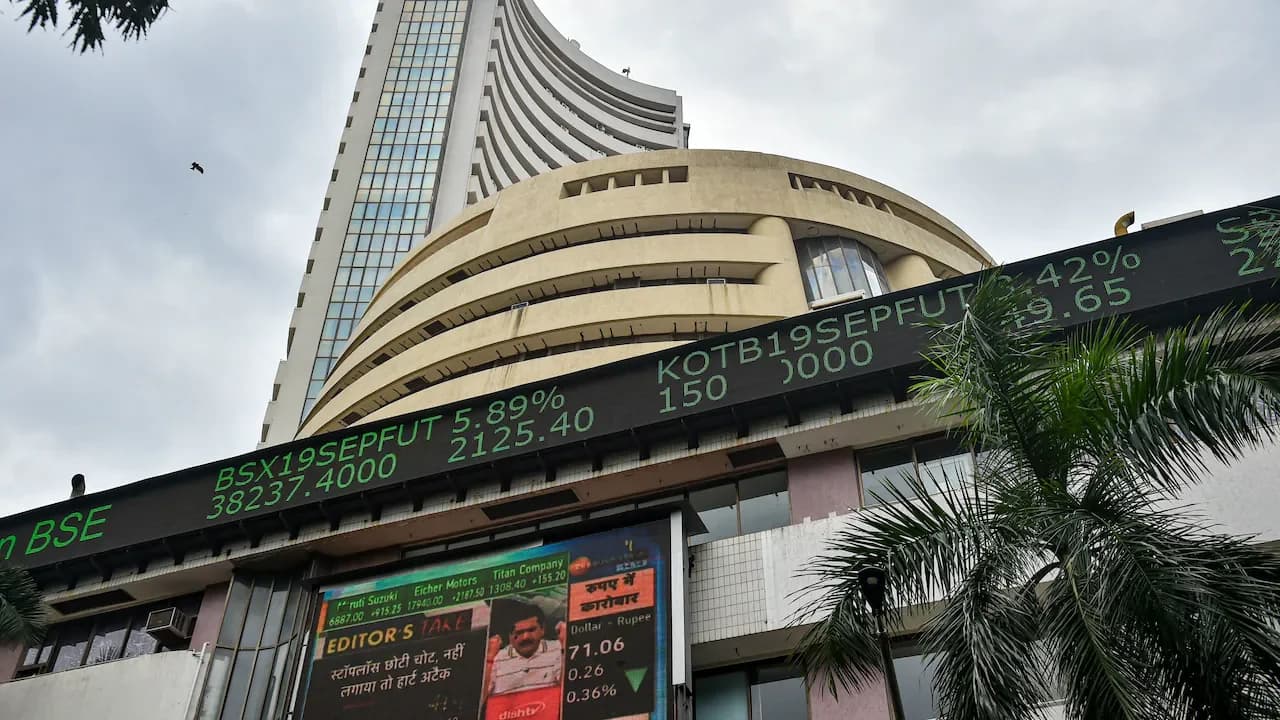
Indian equity benchmarks ended lower on Wednesday, with the BSE Sensex falling 352.6 points or 0.48% to close at 73,246, after plunging as much as 995 points or 1.35% to 72,603.5 during the session. The NSE Nifty50 declined 50.90 points or 0.22% to settle at 22,699, having fallen as much as 1% earlier in the day. According to The Economic Times, both indices showed significant intraday volatility, with selling pressure primarily driven by IT stocks and rising crude oil prices. Bank Nifty underperformed sharply, closing at 53,974.90, down 391.80 points or 0.72%, weighed by private sector banking stocks. As per Moneycontrol, about 2,807 shares advanced, 1,334 shares declined, and 179 shares unchanged, with market breadth remaining positive despite the marginal decline.
The IT sector faced significant pressure with IT stocks plunging amid global optimism around AI-linked stocks. According to The Economic Times, Infosys declined 3.4%, Tech Mahindra fell 1.92%, and TCS dropped 1.48%, while the Nifty IT index fell around 2%. The decline was compounded by global developments, with South Korean chipmakers leading a broader recovery in AI-related stocks after SK Hynix reported a sevenfold jump in profit and announced an additional $45 billion in shareholder returns. Among Asian markets, South Korea's Kospi was up 6.6%, Japan's Nikkei 225 was up 1.08%, Shanghai's SSE Composite and Hong Kong's Hang Seng indices also traded in positive territory. The Nifty IT index led sectoral declines, with concerns over AI-led disruption and slowing traditional IT spending compounding pressure on the sector.
Brent crude prices climbed following an attack on a Saudi Arabian refinery, rising 1% to $114.50 a barrel, adding to concerns over inflation and its potential impact on India's economy and corporate earnings. As per The Economic Times, investor sentiment remained cautious as Brent crude prices climbed, with the global oil benchmark at elevated levels. The rupee weakened 11 paise to close at 95.23 against the US dollar, compared with Tuesday's close of 95.12. FPIs have sold about ₹53,000 crore this month, while domestic institutions keep absorbing it, according to Lokesh Manik, senior analyst at Vallum Capital. The market also awaited the outcome of the US Federal Reserve's policy decision, contributing to the cautious sentiment.
The broader market showed mixed performance with the Nifty Midcap 150 index rising around 0.3% and the Nifty Smallcap 250 index gaining about 0.3%, as reported by The Economic Times. Among sectors, the Nifty Auto index advanced 1.4%, while consumer durables, media and pharma stocks gained around 1% each. In contrast, the Nifty IT and Oil & Gas indices fell around 2% each, while Realty and FMCG stocks declined about 0.5%. Reliance Industries was among the biggest drags on the benchmarks, with its shares falling 3.19% amid Jio Platforms' market debut. Among individual stocks, Tata Consumer Products emerged as the top Nifty gainer, jumping 5.37% to ₹986.80, while Asian Paints fell 2.15% to ₹2,272, emerging as the top loser.
FPIs were net sellers in six of the first ten months of 2026, withdrawing a net ₹2,42,190 crore up to October 27, according to ET Now data. Equity accounted for all of the outflow, with FPIs selling a net ₹3,07,050 crore of shares, while debt drew in ₹60,959 crore. Despite the selling pressure, FPI assets under custody stood at ₹73.67 lakh crore in September 2026, only 0.8% below the ₹74.30 lakh crore of January 2025. FPIs net bought shares worth ₹871 crore on Wednesday, while domestic institutions were net buyers of ₹643 crore, according to The Economic Times. Technical analysts said the Nifty 50 faces immediate resistance around 22,780-22,800, while support is placed near 22,500-22,400. As per Gaurav Garg, head - research at Lemonn, a sustained move above resistance could open the way toward 23,000-23,100, whereas a breakdown below support may drag the index toward 22,200.