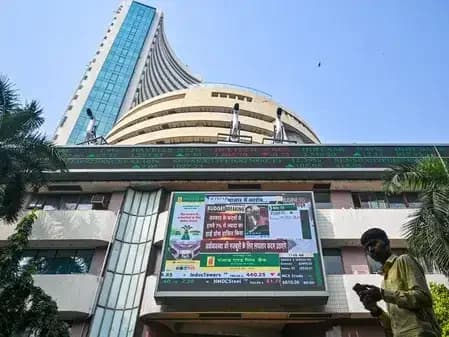
On May 26, the 30-share BSE SENSEX declined by 479.26 points or 0.63% to settle at 76,009.70, while the 50-share NIFTY fell by 118 points or 0.49% to end at 23,913.70. According to exchange data, the SENSEX closed at 76,009.70 points compared to 76,488.96 points at the previous market session, while the NIFTY50 ended at 23,913.70 points versus 24,031.70 points in the previous session. The market decline was driven by profit booking after Monday's gains, with both benchmark indices closing lower after opening with marginal gains during morning trading hours before dropping into negative territory during afternoon sessions. As per TradingView News, the market opened on a weak note and remained volatile for most of the session, oscillating between gains and losses after reports of fresh U.S. military action dampened hopes of an early de-escalation in West Asia.
Apollo Hospitals Enterprise weighed down the NIFTY50 index, closing 1.65% lower, leading the decline among major stocks. As reported by NSE data, the top losers included Wipro (-1.6%), Bharti Airtel (-1.4%), TCS (-1.16%), Trent (-1%), and Titan (-1%). These stocks contributed significantly to the overall negative sentiment in the benchmark index during the trading session, with investors booking profits after recent gains. According to TradingView News, the biggest Nifty losers were Apollo Hospitals, Bharti Airtel, TCS, Wipro and Trent, with intensified selling pressure in the final hour dragging the Nifty below the crucial 24,000 mark at close.
On the positive side, Adani Enterprises emerged as the top gainer, rising 4.33%, followed by Tata Motors PV (+3.31%), Tech Mahindra (+1.71%), Eternal (+1.34%), Nestle India (+1.28%), and Bajaj Auto (+1%). According to exchange data, these stocks provided some support to the broader market despite the overall negative sentiment, with the outperformance helping limit the decline in the benchmark indices during the profit booking session. As per TradingView News, gainers included Adani Enterprises, Tata Motors Passenger Vehicles, Tech Mahindra, Nestle and Eternal, with nearly 140 stocks touching their 52-week high on the BSE, including Adani Power, Adani Energy, Lloyds Metals, Granules India, Adani Enterprises, Schneider Infra, HFCL, Angel One, Vodafone Idea, Navin Fluorine, Polycab, among others.

The market decline was influenced by multiple factors including geopolitical developments in US-Iran negotiations and rising fears of West Asia conflict escalation. As per latest reports, the United States carried out 'self defense strikes' on Southern Iran, targeting missile launch sites and boats laying mines across the Strait of Hormuz. Key focus remains on any positive developments from negotiations between the two countries, while investors monitor for potential escalations if Iran decides to retaliate. According to TradingView News, the market opened on a weak note and witnessed a brief recovery during the initial hour of trade, but weak participation at elevated levels on the expiry day, coupled with mounting geopolitical concerns, weighed on investor sentiment. The benchmark indices gradually surrendered early gains, with the Nifty50 slipping into negative territory during the second half of the session.
The NIFTY Midcap 100 ended 0.54% or 332.30 points higher at 62,298.90, outperforming the benchmark indices despite broader market weakness. As reported by exchange data, the top winners in the midcap space included Adani Total Gas (+8.17%), Exide Industries (+6.04%), Info Edge (+4.64%), KPIT Technologies (+4.41%) and JSW Energy (+3.75%). Meanwhile, the NIFTY Smallcap 100 closed at 18,267.20, up by 64.50 points or 0.35%, with Afcons Infrastructure (+6.70%), Gujarat Mineral Development Corporation (+5.99%), HBL Engineering (+5.50%), Wockhardt (+4.73%) and Tata Technologies (+4.47%) leading the gains, showing resilience across different market segments. According to TradingView News, the broader market demonstrated notable resilience despite heightened expiry-day volatility in the benchmark index, indicating underlying strength in market breadth.