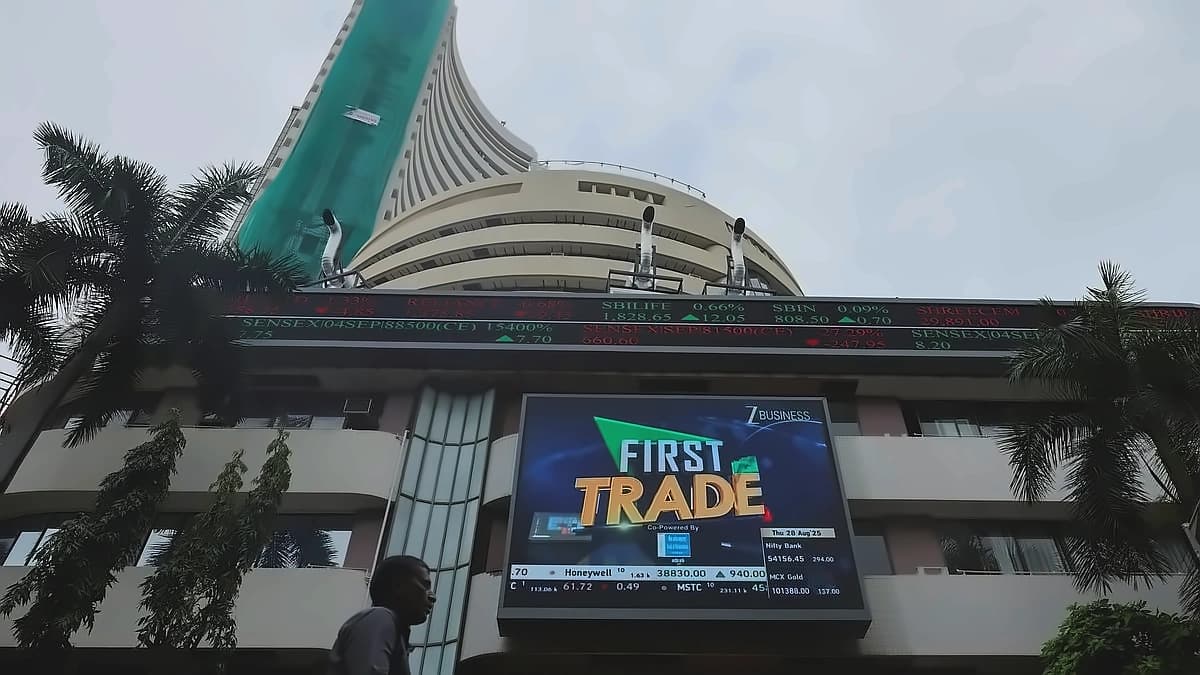
Indian stock markets ended slightly higher on Wednesday (May 13, 2026), snapping a four-day losing streak amid heightened volatility driven by elevated crude oil prices, persistent geopolitical tensions in West Asia and continued foreign fund outflows. According to UNI, the 30-share BSE Sensex rose 49.74 points, or 0.07%, to settle at 74,608.98, while the 50-share NSE edged higher by 33.05 points or 0.14% to end at 23,412.60. The recovery came after two consecutive heavy sell-off sessions, with markets trading largely range-bound through the day. The Nifty had slipped to an intraday low of 23,262.55 before recovering to touch 23,582.95, though profit booking in the latter half of the session trimmed gains. The BSE 150 Midcap index rose by 0.71pc and the BSE 250 Smallcap index climbed by 0.27pc, indicating selective buying interest after recent sharp corrections. As reported by Religare Broking, the market witnessed a volatile yet relatively stable session following the sharp sell-off seen over the previous four trading sessions, with selling pressure resurfacing in the latter half and trimming most gains.
Broader markets outperformed the frontline indices, with the Nifty Midcap 100 index rising 0.77% and the Nifty Smallcap 100 index advancing 0.31%, indicating selective buying interest after recent sharp corrections. According to latest reports, metal stocks emerged as the top-performing sector with the Nifty Metal index surging 3.18%, while oil & gas and consumer durable stocks also ended firmly higher with gains of 1.28% and 1.67% respectively. The metal pack benefited from supply disruptions linked to ongoing Middle East tensions, higher global metal prices and the government's decision to raise customs duty on precious metals to 15% from 6%. Analysts noted that the tariff hike triggered a sharp repricing in domestic bullion markets, with silver surging over 6% and gold rising nearly 5.6% amid rising safe-haven demand and concerns over imported inflation and currency depreciation. However, IT stocks remained under pressure for a second straight session with the Nifty IT index falling 1.13%, while the Nifty Auto index declined nearly 1%, with the Nifty Auto index falling 0.97% according to latest data. According to Religare Broking, metals, energy and FMCG stocks showed resilience, whereas IT and auto counters remained under pressure. SAIL rallied 14.43% to top the BSE Midcap gainers list, and shares of Biocon moved higher by 4% in intra-day trade, with the pharmaceuticals company's stock price rallying 10% in the past three trading days.
The rupee remained under pressure, with USD/INR hitting a new record low of 95.7950 against the US dollar, surpassing Tuesday's previous all-time low of 95.7375. According to UNI, Brent crude continued to hold above the $100 per barrel level, with Brent crude near $107.65 and WTI above $101.80, adding to market worries as ongoing geopolitical tensions failed to meaningfully cool energy markets due to continued disruptions around key trade routes. Market participants also tracked the fragile US-Iran ceasefire, which failed to meaningfully cool energy markets as supply concerns persisted. The volatility remained elevated, with India VIX closing near 19.42, reflecting continued uncertainty in the market. Gold and silver exchange-traded funds (ETFs) were trading sharply higher after the government raised import duties on gold and silver to 15% from 6%. Gold futures for June delivery edged higher to ₹1,62,621 per 10 gram, up 6% from the previous close of ₹1,53,442 per 10 gram on MCX during the morning session. As reported by LKP Securities, the market is closely watching expected government measures aimed at curbing imports and supporting the rupee amid pressure from elevated crude prices and rising import bills, with the near-term rupee range seen between 95.45–96. Analysts pointed to persistent US inflation, reported at 3.8% year-on-year in April 2026, as a key factor, suggesting global interest rates may stay high longer, strengthening the US dollar and pressuring markets like India's.
As reported by The Hindu BusinessLine, Foreign Institutional Investors (FIIs) offloaded equities worth ₹1,959.39 crore on Tuesday (May 12). Additionally, India's retail inflation rose slightly to 3.48% in April, mainly due to higher prices of gold and silver jewellery as well as some kitchen items, according to government data released on Tuesday (May 12). The persistent FII selling and weaker global tech spending trends also weighed on frontline technology counters such as Infosys, TCS and Wipro, with analysts citing growing concerns around the long-term outlook for traditional outsourcing-led business models amid rising adoption of AI-native enterprise deployment models. The overall market capitalisation of the firms listed on the BSE rose to nearly ₹459 lakh crore from ₹456 lakh crore in the previous session. According to HDFC Securities, market breadth improved meaningfully, with the BSE advance-decline ratio at 1.36, indicating renewed buying interest after the sharp profit booking seen over the last few sessions.
Key companies showed varied performance and analyst views, with Asian Paints trading at high valuation multiples (P/E around 61-66) and approaching overbought levels, while Tata Steel, with a P/E around 28.7-30, showed neutral technical indicators. In contrast, Infosys's technical indicators signaled oversold conditions, with Morgan Stanley downgrading the company to 'Hold' citing softer FY27 guidance and competition concerns from AI, noting its P/E ratio is near a 5-year low. Mahindra & Mahindra (M&M) also had its rating downgraded to 'Hold' by MarketsMOJO due to weak technical trends, though JM Financial maintained a 'Buy' rating with a target of ₹3,745. Adani Ports showed mixed signals, potentially entering overbought territory, despite SEBI clearing Adani Group firms, including Adani Ports, of allegations by Hindenburg Research regarding stock manipulation in September 2025. Despite pockets of strength, significant risks remain, with Infosys facing challenging outlook with low revenue growth forecasts and move towards offshore work, and Mahindra & Mahindra's weak technical trends prompting its downgrade. The ongoing weakness in the Indian rupee, near 95.75, combined with global economic uncertainty and high crude oil prices, threatens India's current account balance and company profits, creating more complex challenges than seen in May 2025 when markets were calmer and the rupee stronger.
According to Hariprasad K, Research Analyst and Founder, Livelong Wealth, as quoted by The Hindu BusinessLine, "After two consecutive heavy sell-off sessions, Indian equity markets witnessed a relatively stable session today, with benchmark indices managing to close marginally in the green. The market traded largely range-bound through the day, indicating a temporary pause in panic selling, although underlying sentiment continues to remain cautious amid persistent global and domestic macro concerns." Ajit Mishra – SVP (Research) at Religare Broking noted that "The market witnessed a volatile yet relatively stable session today following the sharp sell-off seen over the previous four trading sessions, with Nifty opening on a weak note amid mixed global cues and persistent concerns surrounding elevated crude oil prices but gradually recovering on selective buying in heavyweight counters." From a technical perspective, Mishra stated that "Nifty rebounded after hitting an intraday low of 23,262 and has nearly filled the gap around 23,150 level. Overall, the index is likely to face selling pressure on rebounds towards the 23,600–23,700 zone, and participants should align their positions accordingly." Analysts said investors are likely to closely monitor developments in the Middle East, crude oil prices and the upcoming Trump-Xi meeting for further direction. Any prolonged disruption in energy supplies or deterioration in geopolitical conditions could keep markets volatile in the near term, while stability in crude and currency markets may help support a gradual recovery. Overall market sentiment remains cautious, with investors weighing geopolitical risks, inflation, and currency depreciation against opportunities in select value stocks, while the IT sector faces long-term challenges that could limit immediate gains.