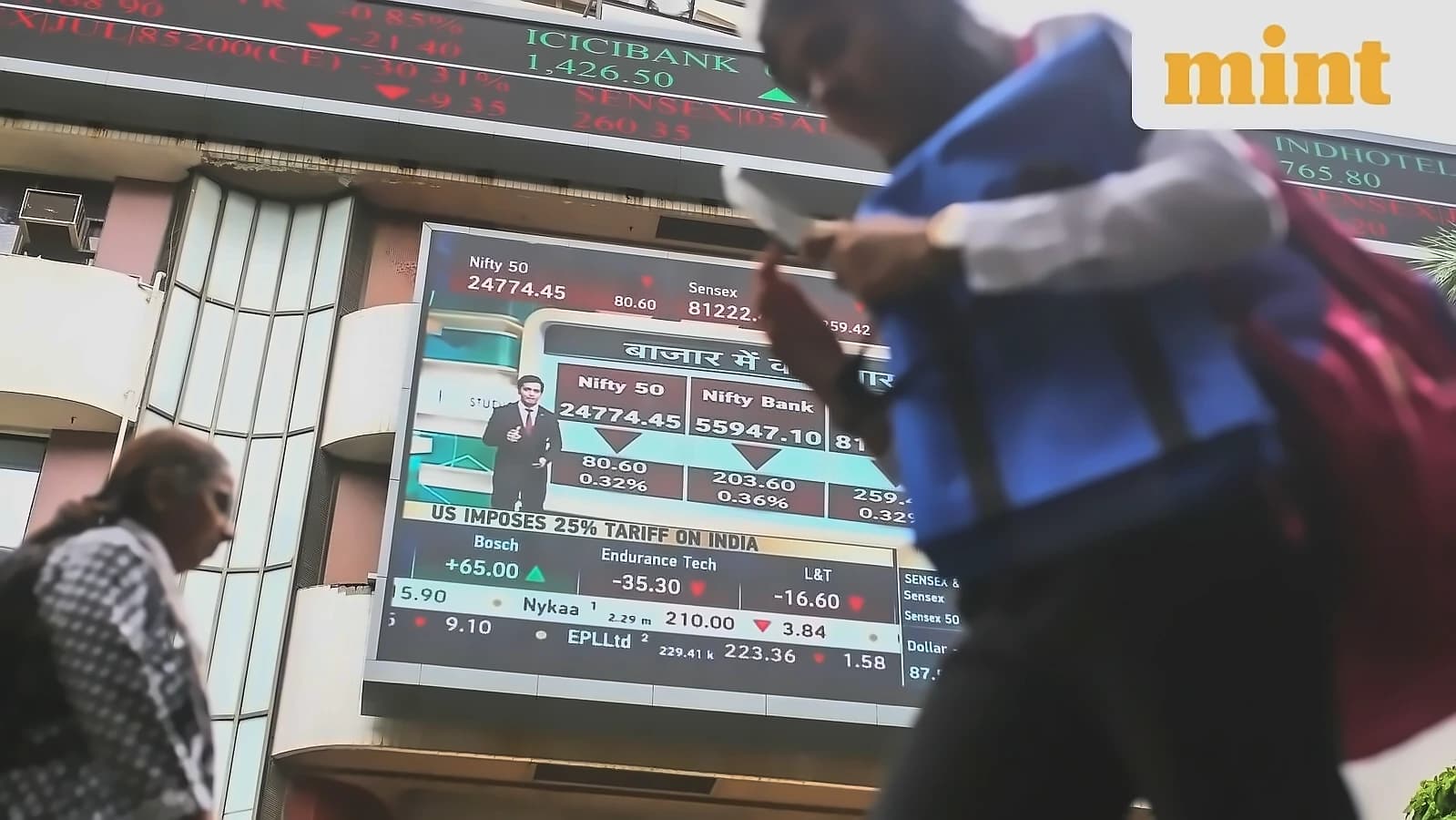
Indian stock markets extended gains for the second consecutive session on Thursday, with Sensex crossing 75,000 and Nifty 50 rising 111 points to 23,523. According to reports from The Economic Times, the markets opened higher despite challenging macroeconomic conditions including elevated oil prices and the rupee hovering near record low levels after crossing the 95.7 mark for the first time ever on Wednesday. India VIX, which measures market volatility, dropped 4% to 18.68 during the session. Latest market data shows Nifty 23,413 (+0.14%) snapping a 4-session losing streak, while Sensex 74,609 (+0.07%) ended the volatile session marginally higher. However, Bank Nifty 53,456 (-0.18%) lagged despite the broader recovery, as reported by Capital Markets Masters Union.
Bharti Airtel shares were the top gainers on the Sensex after the telecom giant's Q4 earnings impressed Dalal Street. As reported by The Economic Times, other major gainers included Adani Ports, Tata Steel, Zudio-parent Trent, Bharat Electronics, Power Grid, Maruti Suzuki, L&T, Zomato-parent Eternal and several other stocks that gained around 1% each. However, IndiGo shares declined around 1%, while IT stocks including TCS, HCLTech and Tech Mahindra traded in the red with marginal losses. The optimism was broad-based, with the Nifty Smallcap 100 and Nifty Midcap 100 indices gaining up to 0.7% each. According to Capital Markets Masters Union, markets saw a relief bounce after days of heavy selling, but 23,400 remains the key level to watch.

According to The Economic Times, Nifty Pharma and Nifty Metal indices gained more than 1% each to emerge as the top gainers, while Nifty IT declined over 1%. The strong performance in pharma and metals sectors reflects investor confidence in these defensive and commodity-linked segments. The broad-based nature of the gains indicates widespread market participation across different sectors despite the challenging macroeconomic environment.
The rupee has declined 1.4% so far this week and hit record lows in each trading session between Tuesday and Thursday, reaching 95.85 against the dollar on Thursday. As reported by The Economic Times, VK Vijayakumar, Chief Investment Strategist at Geojit Investments, highlighted that continuous rupee depreciation is becoming a major macroeconomic threat for the economy. India imports about 90% of its oil needs and 50% of its gas requirements, leaving the currency particularly vulnerable among emerging markets if the Iran war drags on. The central bank has so far sold down FX reserves and tapped rare regulatory measures to support the currency, which is Asia's worst performer in 2026 so far. On Thursday, dollar sales from state-run banks - most likely on behalf of the Reserve Bank of India - cushioned the rupee's fall, as reported by traders.
Prime Minister Narendra Modi earlier urged citizens to conserve foreign exchange reserves, while the federal government has hiked tariffs on precious metal imports. According to The Economic Times, Khushi Mistry, Research Analyst at Bonanza Portfolio, noted that a weaker rupee substantially increases India's import bill particularly for crude oil, electronics and industrial raw materials, which further fuels imported inflation and puts pressure on household spending. BofA Global Research analysts noted that India's current account deficit appears set to exceed ~2% of GDP, which the RBI has historically identified as the threshold level that India can finance sustainably over the long term. RBI Governor Sanjay Malhotra warned that monetary policy can look through temporary supply shocks but may need to act if inflation pressures become entrenched following the oil price spike.