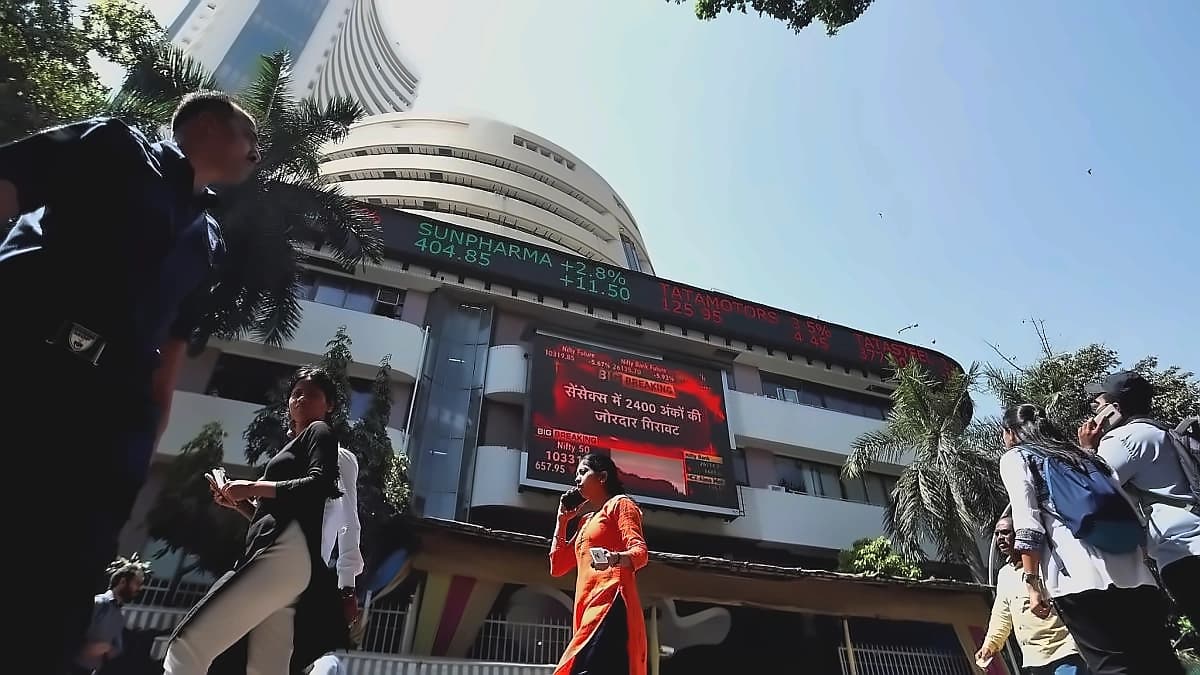
Indian equities ended sharply lower on Thursday as expiry-day volatility intensified after the first monthly expiry under the Closing Auction Session. According to reports from The Economic Times, Sensex fell 539 points or 0.7% to close at 76,934, while Nifty lost 117 points or 0.48% to end below 24,091. Both benchmark indices erased all morning gains, with Sensex's losses being sharper than Nifty's decline. The sharp downturn occurred at the fag end of the session on the first monthly expiry following the introduction of the closing auction session (CAS).
As reported by The Economic Times, Vinod Nair, Head of Research at Geojit Investments, explained that expiry-led volatility and the lack of a diplomatic breakthrough in the Middle East continue to keep markets range-bound in the near term. While a degree of higher energy prices is largely factored into earnings expectations, the recent moderation in crude oil prices and long-term bond yields is supporting the inflation outlook. FII inflows and resilient earnings momentum remain supportive for Indian equities, particularly mid-caps, where several segments are relatively insulated from global uncertainties and continue to benefit from strong domestic demand trends.
According to Rupak De, Senior Technical Analyst at LKP Securities, as reported by The Economic Times, Nifty 50 has slipped below the rising channel on the daily timeframe, indicating an increase in bearishness in the market. The index has fallen below the 50EMA, confirming a weakening trend, with the daily RSI also breaking below its rising trendline, indicating further loss of momentum. Further weakness could emerge in the near term, potentially dragging the Nifty towards 23,900 and lower, while resistance is placed at 24,200 and 24,350. Investors will closely watch the US Fed chair Kevin Warsh's upcoming Jackson Hole address for signals on inflation, interest rates, and policy outlook.
As reported by The Economic Times, among the most active stocks in terms of turnover were HDFC Bank (₹3,328 crore), Bombay Burmah (₹2,306 crore), ICICI Bank (₹1,667 crore), Bharti Airtel (₹1,655 crore), and Adani Power (₹1,488 crore). In volume terms, Vodafone Idea (43.06 crore shares), NMDC Steel (8.66 crore shares), Adani Power (7 crore shares), HDFC Bank (4.65 crore shares), and IFCI (4.46 crore shares) were among the most actively traded stocks. Among stocks showing buying interest, Bombay Burmah, Whirlpool India, NMDC Steel, Apar Industries, BHEL, Welspun Corp and Wockhardt witnessed strong buying interest, while Ramco Cements, Manappuram Finance, CONCOR, Capri Global, ICICI Prudential AMC, Sapphire Foods and Concord Biotech faced significant selling pressure.

According to The Economic Times, among stocks hitting 52-week highs on NSE included Welspun Corp, HFCL, Global Health, Jindal Saw, Solar Industries, Laurus Labs and Sai Life Science. Conversely, RVNL, HDFC Bank, Groww, Inox Wind, Aditya Birla Retail, Dabur India and IRFC hit their 52-week lows. Out of the 3,619 stocks that traded on NSE on August 27, 1,341 stocks witnessed advances, 2,160 saw declines while 118 stocks remained unchanged, indicating a bearish sentiment meter that favors bulls despite the overall market decline.