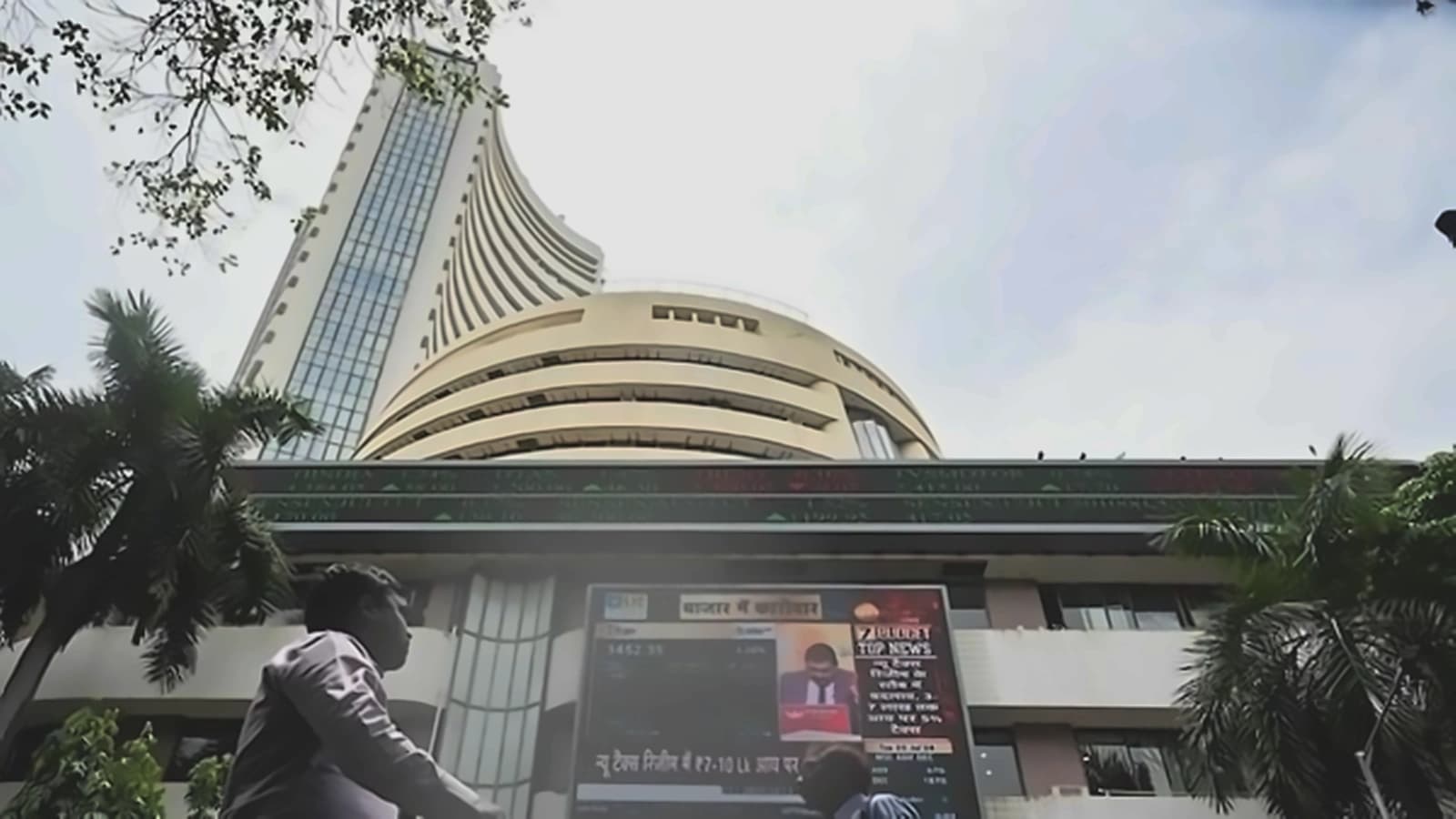
Indian benchmark indices witnessed a sharp recovery on Tuesday, with the BSE Sensex gaining 1,000+ points to recover from Monday's 954-point crash, while the NSE Nifty50 recovered from Monday's 300+ point decline. The market turnaround was supported by positive global cues, falling crude oil prices, strong Gift Nifty, and heavy FII-DII buying that are supporting bullish sentiment for the Indian stock market. Despite the broader market recovery, IT stocks emerged as the standout performers with the Nifty IT index rising 0.19%, making it the only sectoral index trading in positive territory. Tata Steel emerged as the biggest loser, falling over 3.7%, followed by Power Grid, SBI, HDFC Bank and Adani Ports & Special Economic Zone. In contrast, Infosys, TCS and Tech Mahindra traded in the green, with Infosys leading gains in early trade.
The Indian rupee hit a record low on Monday, sliding for the seventh consecutive trading session, with the currency falling 0.4% from its closing level on Friday to 96.3450 per dollar. The rupee fell to 96.3875 per dollar, eclipsing its previous all-time low of 96.1350, as per latest reports. Traders said the losses would have been steeper if not for market interventions by the Reserve Bank of India. The currency has slumped 2% over the last seven trading sessions, with the rupee continuing to remain under severe pressure and emerging as Asia's weakest-performing currency this year. Elevated energy prices and weak capital flows have left India staring at a third consecutive fiscal year of a deficit in its balance of payments (BoP), with economists at HSBC forecasting a BoP deficit of around $65 billion in the fiscal year ending April 2027.
Selling pressure remained visible across almost all sectors and market segments, with the Nifty PSU Bank plunging 2.43% and Nifty Metal falling more than 2%. Realty and consumer durable stocks also witnessed sharp declines, with Nifty Realty falling 2.56% and Nifty Consumer Durables declining 2.88%. The Nifty Midcap100 declined 1.58% and the Nifty Smallcap100 slipped 1.94%, indicating widespread risk aversion among investors. Market volatility rose sharply with India VIX jumping 6.49% to cross the 20 mark, signaling increased nervousness among market participants and expectations of larger market swings. The Nifty IT index has decreased 25.00% over last one year compared to the 5.48% fall in benchmark Nifty 50 index, highlighting the sector's underperformance despite recent gains.
Soaring energy prices from the Iran war have fanned inflation fears and prompted wagers on rate hikes by global central banks, with U.S. 10-year note yields hitting a 15-month high of 4.631% and Japan's 10-year yield hitting its highest since 1996. Brent futures hovered around $110 per barrel as efforts to end the Iran war appeared to have stalled following a drone strike at a nuclear power plant in the United Arab Emirates. Overseas investors have sold over $23 billion of local stocks and bonds on a net basis since March, hurting the capital account at a time when the current account is stressed by elevated import prices. Analysts at ING noted that high oil prices and now a selloff at the long end of the bond market are a bearish double whammy for EMFX and for risk assets in general.