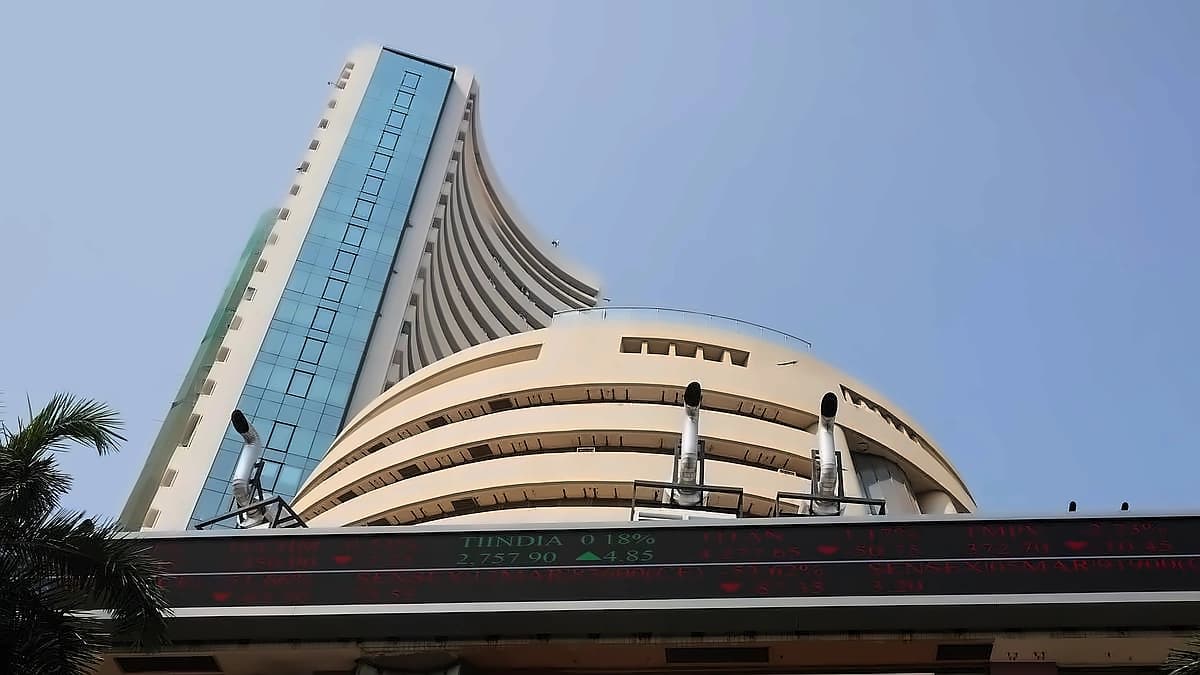
The Indian benchmark indices experienced a severe crash on Friday, with the BSE Sensex tumbling 197.17 points or 0.18% to settle at 77,466.83 and the NSE Nifty declining 72.50 points or 0.17% to close at 24,100.55, slipping below the 24,200 mark. According to The Hindu BusinessLine, the market opened cautiously with the Nifty 50 trading at 24,130.75, down 42.30 points from its previous close of 24,173.05, while the Sensex opened at 77,483.80 against its previous close of 77,664.00. The decline snapped a three-day winning streak that had been underway, with the crash led by heavy selling in IT stocks amid escalating geopolitical tensions. India VIX, the market's fear gauge, rose 1.58% to 18.59, indicating heightened uncertainty among investors.

The downturn was primarily driven by IT majors experiencing heavy selling pressure, with Infosys falling 2.93% to ₹1,204.30 from a previous close of ₹1,240.60 on over 21 lakh shares changing hands, while TCS declined 1.06% to ₹2,495.00. The Hindu BusinessLine reports that IT and pharma heavyweights were the session's biggest drag, with Cipla dropping 2.35% to ₹1,275.20, Sun Pharma slipping 1.74% to ₹1,650.90, and Dr. Reddy's Laboratories declining 1.66% to ₹1,308.90. As per Dr VK Vijayakumar, Chief Investment Strategist at Geojit Investments, poor guidance from IT majors indicate that large cap IT stocks will continue to be weak despite the low valuations. Among other earnings reactions, Persistent Systems declined 5% and Tata Elxsi dropped over 6%, reflecting broader concerns about the IT sector's performance and outlook.
Despite the broader market weakness, pharma and aviation names led gains on Friday's session. Max Healthcare opened at ₹1,009.95 and was trading at ₹1,017.00, up 1.02%, while IndiGo rose 0.92% to ₹4,597.90 from a previous close of ₹4,556.00. Grasim Industries gained 0.88% to ₹2,759.20, Bajaj Auto climbed 0.83% to ₹9,630.00, and Jio Financial Services added 0.77% to trade at ₹250.57. According to The Hindu BusinessLine, on the Nifty 50, pharma and aviation names led gains, indicating selective buying interest in specific segments despite the overall market decline. However, the financial services and automotive sectors were not spared, with several prominent companies posting losses as investors became increasingly cautious.
The market decline was significantly influenced by Brent crude oil surging to around $106 per barrel, up nearly 18% this week as a naval blockade of the Strait of Hormuz continued to disrupt supply. As per The Hindu BusinessLine, the spike has rattled markets from Tokyo to Mumbai, with Asia's refining activity already hit by crude shortages. Dr VK Vijayakumar noted that the market has been continuously responding to bad news and hopes emanating from a potential deal on the West Asia conflict, with a mid to long-term market direction expected only from clarity on conflict resolution, particularly on the opening of the Hormuz Strait. The pressure pushed the rupee down 32 paise against the dollar to its weakest level this April, last seen at 94.11, with technical resistance at 94.15 and support at 93.40.
Foreign institutional investors extended their selling streak to a fourth consecutive session on April 23, offloading equities worth ₹3,254 crore, while domestic institutional investors provided partial cover, buying equities worth ₹941 crore. According to The Hindu BusinessLine, a section of investors sees this as a potential buying opportunity, hoping to capitalise on the lower share prices, with this perspective fostering a contrasting trend where there is an underlying belief that markets could recover despite current declines. However, analysts broadly agree the market is in a wait-and-watch mode, with fresh long positions should ideally be initiated only after the Nifty decisively breaks above and sustains the 24,500 level. Gaurav Udani from ThinCredBlu Securities noted that Nifty is expected to open slightly higher around 24,250 but the structure remains cautious unless important resistances are reclaimed, making a sell on rise approach more relevant for current market conditions.