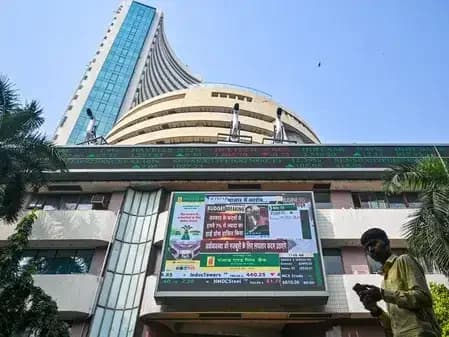
The Indian stock market ended lower on Friday with Sensex closing 71 points down at 78,009 and Nifty 50 losing 30 points to end at 24,366. According to The Economic Times, the market closed in the red despite oil prices stabilising around $87 per barrel. Broader markets slipped into the deep red, with Nifty Smallcap 100 and Nifty Midcap 100 indices falling around 0.7% each. This represents a continuation of the broader market weakness that began earlier in the week, with the latest session showing continued volatility amid global yield uncertainty and oil price movements.
The market closure resulted in continued losses for investors, with the sustained selling pressure reflecting cautious sentiment among market participants. Market breadth remained negative with NSE seeing 1,855 declines against 1,479 advances, while 127 stocks remained unchanged. As reported by The Economic Times, this negative breadth indicates widespread selling across the market, with investors closely monitoring global developments and domestic factors. The heavy selling pressure in early trade reflects the cautious sentiment among investors who are closely monitoring global developments, with the latest session showing continued volatility amid expiry-day conditions.
Sectoral performance showed mixed results with Nifty Auto, Nifty Metal, Nifty Pharma and several other indices falling around 1% each, while Nifty Consumer Durables gained nearly 1%. Among individual stocks, Asian Paints shares dropped around 2% to lead losses on the Sensex, while IndiGo, NTPC, Power Grid, SBI and HCLTech shares fell more than 1% each. However, Bucking the trend, Bharti Airtel shares jumped over 2.5% while Adani Ports shares gained around 2%. The sectoral weakness reflects investor concerns about global yield uncertainty and oil price movements, with defensive sectors like consumer durables showing relative strength.
The market selloff was attributed to several key factors that contributed to the broad-based decline across both benchmark indices. As reported by The Economic Times, today's fall comes even as oil prices stabilised around $87 per barrel, but analysts cite global yield uncertainty as a primary driver of the sideways movement. Despite these headwinds, analysts note that better-than-expected corporate earnings during the quarter, along with supportive domestic factors continue to create opportunities for a bottom-up stock selection approach. The stability in the rupee, moderation in India's 10-year bond yield, and gradual improvement in FII participation are providing support to the domestic macro-environment.
Market experts provide mixed outlook for the near-term trading patterns with specific technical levels identified for key support and resistance zones. SBI Securities identifies the immediate resistance for Nifty in the 24,500-24,550 zone, with any sustainable move above this zone potentially resulting in Nifty extending its pullback towards 24,700, followed by 24,850 in the short term. On the downside, the immediate support for Nifty is placed in the 24,230-24,200 zone, which coincides with the 100-day EMA. India VIX, which measures volatility in the market, dropped 1.4% to 11.69, indicating some stabilization in market sentiment despite the continued selling pressure in broader markets.