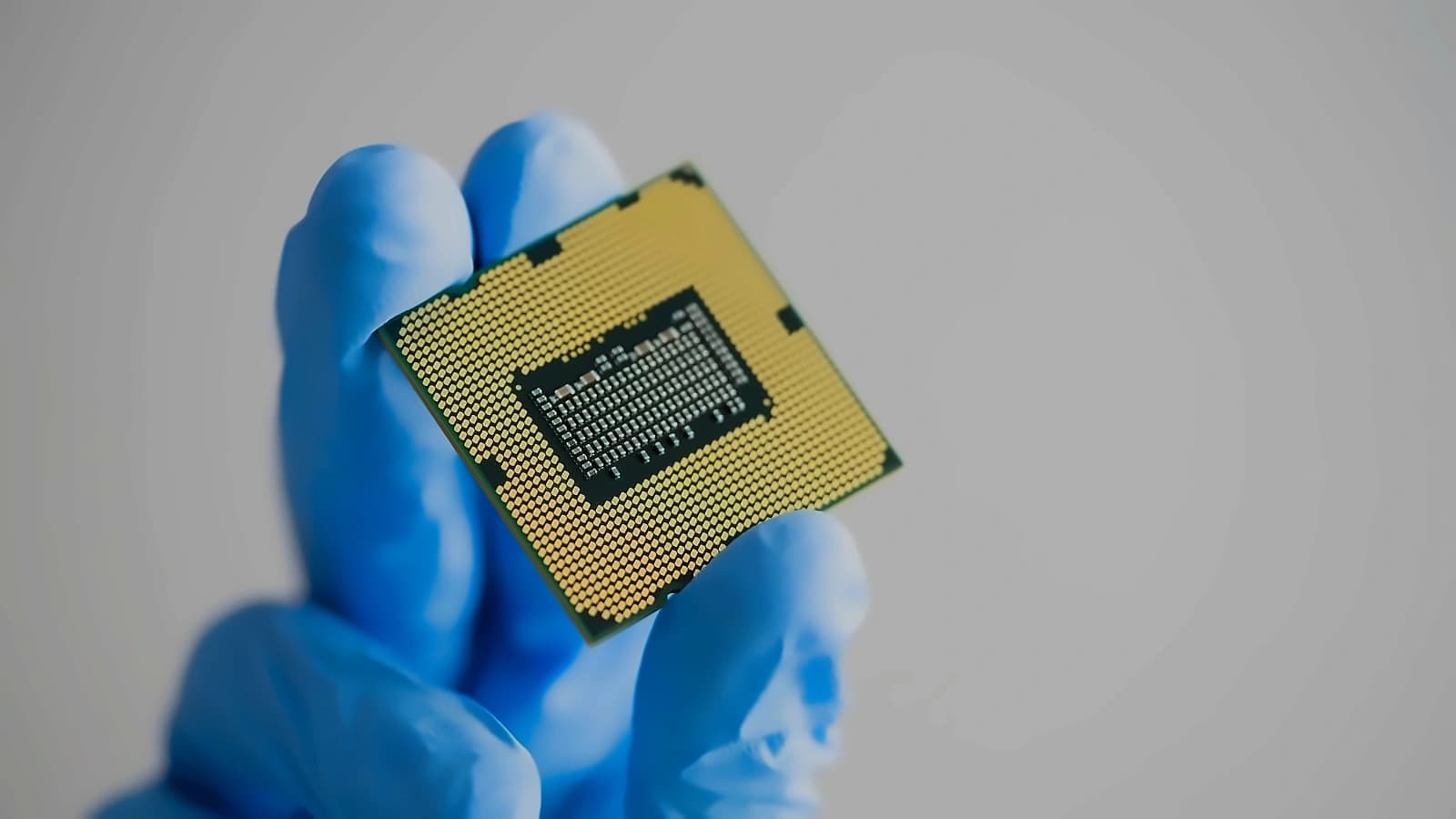
The semiconductor market achieved unprecedented milestones on Friday, with the Philadelphia Semiconductor Index surging 5.51% to close at 11,775.5 points, reaching a record high. According to Tradingkey, this performance significantly outpaced the broader market, with the Nasdaq Composite rising 1.71% to hit a record high of 26,247.08 points. Among major semiconductor stocks, Micron Technology (MU) gained 15.49%, Intel (INTC) rose 13.96%, AMD (AMD) added 11.44%, Qualcomm (QCOM) climbed 8.17%, and Tesla (TSLA) advanced 4.02%. The semiconductor sector's 64.97% gain over the past month has significantly outperformed the Nasdaq Composite's 26% and S&P 500's 17% returns, demonstrating the sector's continued strength in the AI-driven market rally.
The current semiconductor rally is fundamentally driven by artificial intelligence investments, with AI-related communication services contributing 51% and information technology 48% of S&P 500 earnings growth in the first quarter. As reported by Tradingkey, S&P 500 earnings growth reached 28%, a new high since the 32% recorded in Q4 2021, with the magnitude of earnings surprises rising from 6.5% to 19% and companies beating expectations increasing from 75.1% to 85%. The five major cloud providers contributed 40% of overall earnings growth, with their first-quarter capital expenditure growing 91% year-on-year to $148 billion, driving overall S&P 500 Capex up 36% to $381 billion. Semiconductors and equipment led growth at 99%, reflecting how large-scale AI infrastructure investments are being converted into upstream orders and revenue. Recent data shows AI infrastructure stocks have seen 2026 earnings estimates revised higher by 55% since December 2024, while the full S&P 500 is up only 7%.
From a technical perspective, Micron appears to be in the middle of a massive gamma squeeze with implied volatility steadily rising and call volumes off the charts. As reported by Investing.com India, the stock is trading above its upper Bollinger Band with an RSI of 84 and trading 157% above its 200-day moving average, compared to only 78% above its 200-day moving average during the March 2000 peak. The SOX index shows similar overextension with an RSI above 70, and the stock is trading nearly 60% above its 200-day moving average, with previous similar levels only seen in the 1995 and 2000 market peaks. However, the current rally reflects AI investments rather than speculation, with market focus shifting from pure capital expenditure expansion to order certainty and earnings delivery, as noted by CICC research. The 14-day RSI has surged to 74.58, deep into overbought territory and the highest since January's peak, indicating current market overextension.
The Treasury is preparing to shift from cash injection to net issuance, beginning with roughly $13 billion in bill settlements and another $42 billion in coupon settlements. According to Investing.com India, this week marks the end of the paydown phase that has treated markets fairly well, with paydown days seeing the S&P 500 rise 64% of the time compared to 52.4% for non-paydown days. However, Treasury bill settlement days have seen the market rise only 24% of the time, with settlement days averaging gains of just 50 basis points versus 66 basis points on non-settlement days. Looking ahead, Wall Street forecasts the S&P 500 will reach 7,600-8,000 by year-end, with Goldman Sachs and JPMorgan predicting 7,600, Citi expecting 7,700, Morgan Stanley forecasting 7,800, and Deutsche Bank predicting 8,000 - one of the highest targets among major Wall Street banks. The second-quarter results in mid-July may become a critical juncture for validating the next round of market trends, particularly for sectors with elevated valuations that require higher certainty in earnings delivery.