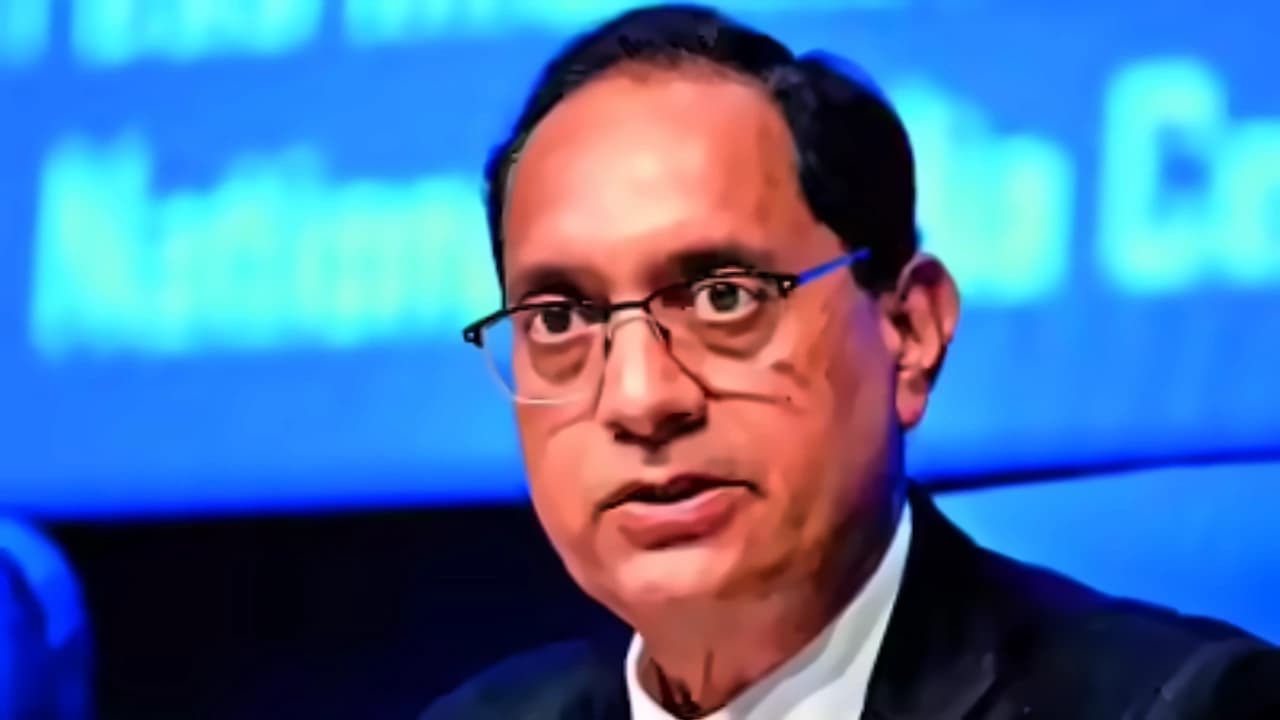
Indian markets have already adjusted to lower GDP growth and higher inflation projections this year arising from the ongoing oil shock and geopolitical tensions, according to SEBI-registered research analyst Kunal Saraogi. Speaking at the PHD Chamber of Commerce and Industry's 8th Annual Convention on Capital Market & Commodity Market, Saraogi noted that markets have factored in these concerns because of the oil shock that is currently affecting the economy. As reported by ANI, he emphasized that markets have absorbed the shocks triggered by conflicts in West Asia and if the same situation prevails, no significant reaction on the bourses would be seen unless major military action is taken. "Markets have already factored that in; that is because of this oil shock that we are going through, and we have seen much worse shocks in 2020," Saraogi told ANI in an exclusive interview. He further added that market sentiment has remained cautious due to global developments and geopolitical tensions, particularly in West Asia, but maintained that India's long-term economic fundamentals remain strong.
Market reports have projected GDP growth at 6.6% this year compared to 7.1% last year, while inflation is forecast at 5.1% against the RBI's comfortable band of 4%. According to Saraogi's analysis, India's dependence on imported energy has made it more vulnerable to global oil price volatility, causing underperformance in the short term. He explained that while the entire world has been affected by geopolitical tensions, India's status as a big importer of energy has resulted in more significant impact compared to other countries. "In the short term the entire world has been affected. Obviously, India is a big importer of energy. So because of that we have been hurt more than other countries and that has caused this underperformance," Saraogi said. However, he expressed optimism about the outlook for Indian equities over the next year, stating that the worst of the current challenges is behind us and the next year will be good.
Despite global uncertainties and geopolitical tensions, particularly in West Asia, Saraogi maintained that India's long-term economic fundamentals remain strong. As reported by ANI, he expressed optimism about the outlook for Indian equities over the next year, stating that the worst of the current challenges is behind us and the next year will be good. "But it's only going to last for a while and eventually things will be better. So the worst of this is behind us and next one year I think will be good," Saraogi said. He maintained that India's long-term fundamentals will reign supreme, noting that more markets have been uncertain because of global factors and certain other factors. However, he cautioned that market sentiment has remained cautious due to global developments and geopolitical tensions, particularly in West Asia, but emphasized that the worst is behind us and the road ahead will be better.
Saraogi highlighted the growing democratization of wealth creation in India, noting that the country now has 24 crore demat accounts, indicating that stock markets are no longer exclusive to the rich or well-educated. According to his analysis, the shift from fixed deposits and recurring deposits to mutual funds and Systematic Investment Plans is natural for a developing economy, similar to the US where most money is invested in 401(k) accounts linked to equity. He attributed the recent disappointment among retail investors to many having entered the market at the peak of the cycle, leading to expectations of double-digit returns that haven't been delivered in the last one-and-a-half years. "We now have about 24 crore demat accounts. So stock markets are no longer the preserve of the rich or the very well-educated. Everybody is now participating," Saraogi said. This transition is natural for a developing economy, as he explained that in the US hardly anybody ever gets an FD made, most of their money is in 401(k) accounts which is linked to equity.
Despite current market challenges, Saraogi advised investors to continue investing in good quality stocks, emphasizing that there is substantial money to be made in India. As reported by ANI, he noted that markets have come down in the last one-and-a-half years and haven't performed as expected, leading to disappointment among investors used to getting 10-15% returns. However, he maintained that the current challenges are temporary and that the worst is behind us, suggesting that the next year will be favorable for Indian equities. "One should continue to invest in good quality stocks and there is a lot of money to be made in India," he said. He advised investors to remain invested despite volatility, noting that market fluctuations are a normal part of investing cycles and should not discourage long-term participation. "Markets have come down in the last one-and-a-half years or haven't performed. We are used to getting a 10-15 per cent kind of return from the market. So since that hasn't happened, all of us are disappointed," Saraogi explained.