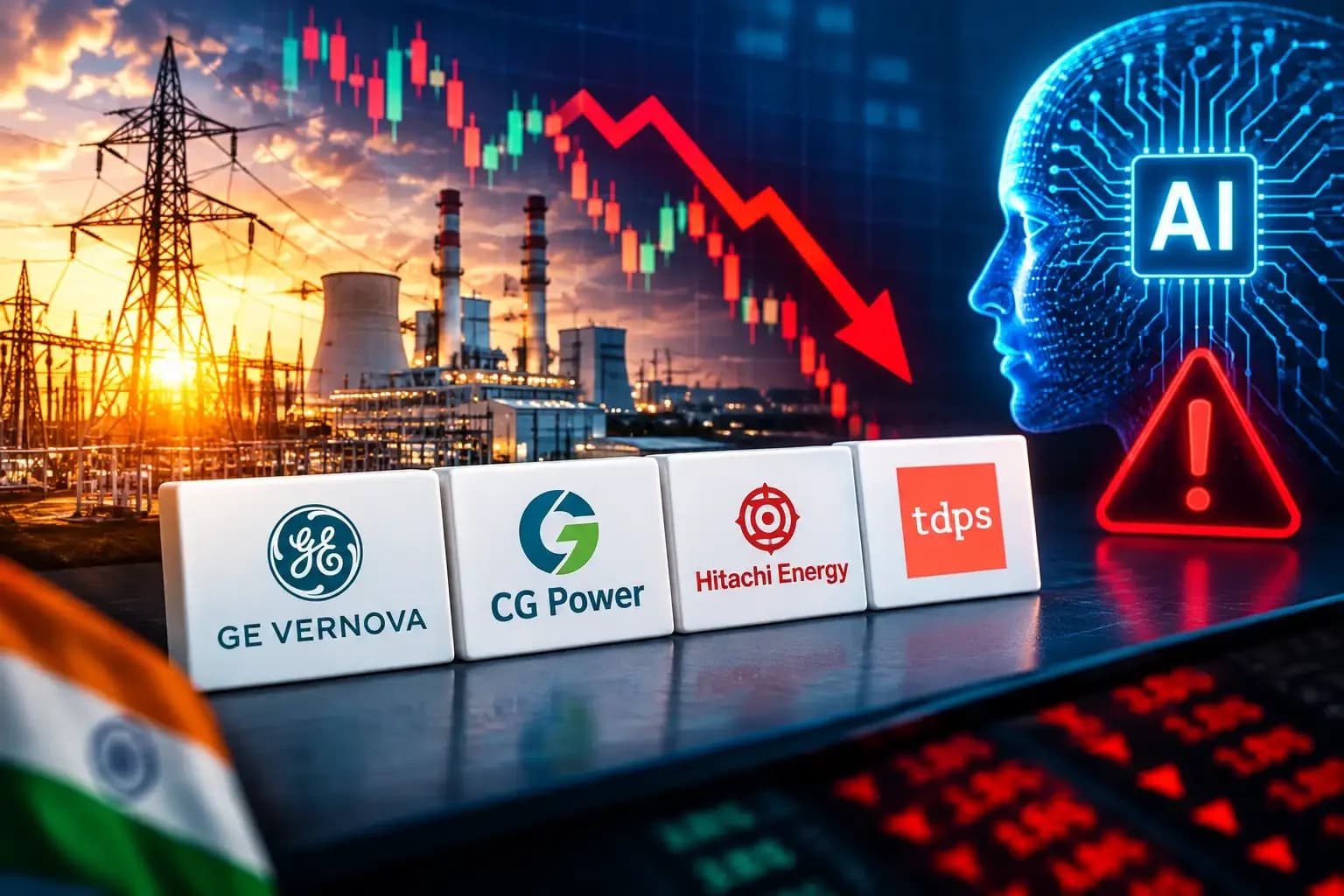
Power capex stocks experienced significant selling pressure over two trading sessions, with shares falling up to 16% amid growing caution around artificial intelligence development. According to reports from The Economic Times, GE Vernova T&D India shares declined nearly 9% during the period, while CG Power dropped 8%. Hitachi Energy shares were down around 6%, and Sterlite Tech and HFCL tumbled 10% each. TD Power Systems experienced the steepest decline, crashing 16% during the two-day period.
The decline was triggered by calls from OpenAI and Anthropic leaders for a slowdown in AI development to manage risks and protect humanity. As reported by The Economic Times, OpenAI CEO Sam Altman noted that AI companies should pace the AI frontier, citing concerns about losing control of the future to AI and potential concentration of power. Altman emphasized that avoiding these two threats requires walking a narrow middle path, warning against scenarios where one country or lab ends up with too much power. Anthropic CEO Dario Amodei in a long X post on Saturday called on AI companies to slow the rate at which they advance model capabilities amid mounting fears of misuse of artificial intelligence, writing that in nearly a year, AI agents "could be capable of taking over the entire internet, potentially causing hundreds of billions of dollars in damage."
Despite the AI slowdown calls, recent developments show continued strong demand for AI infrastructure. Broadcom Inc. has announced plans to ship approximately $350 billion worth of AI chips over the next two fiscal years, with supply already secured according to latest reports. The company maintains AI revenue targets of $115 billion in 2027 and $230 billion in 2028, with AI now representing 56% of total revenue. This massive demand demonstrates the ongoing investment in AI infrastructure despite growing concerns about AI development pace.
These power capex stocks had previously rallied sharply in recent months, gaining up to 63% in 2026 so far, according to The Economic Times. The stocks had benefited from expectations of rising demand for power generation, transmission and distribution to support India's data centre boom. The sharp rally had made these stocks vulnerable to sentiment shifts when AI development concerns emerged.