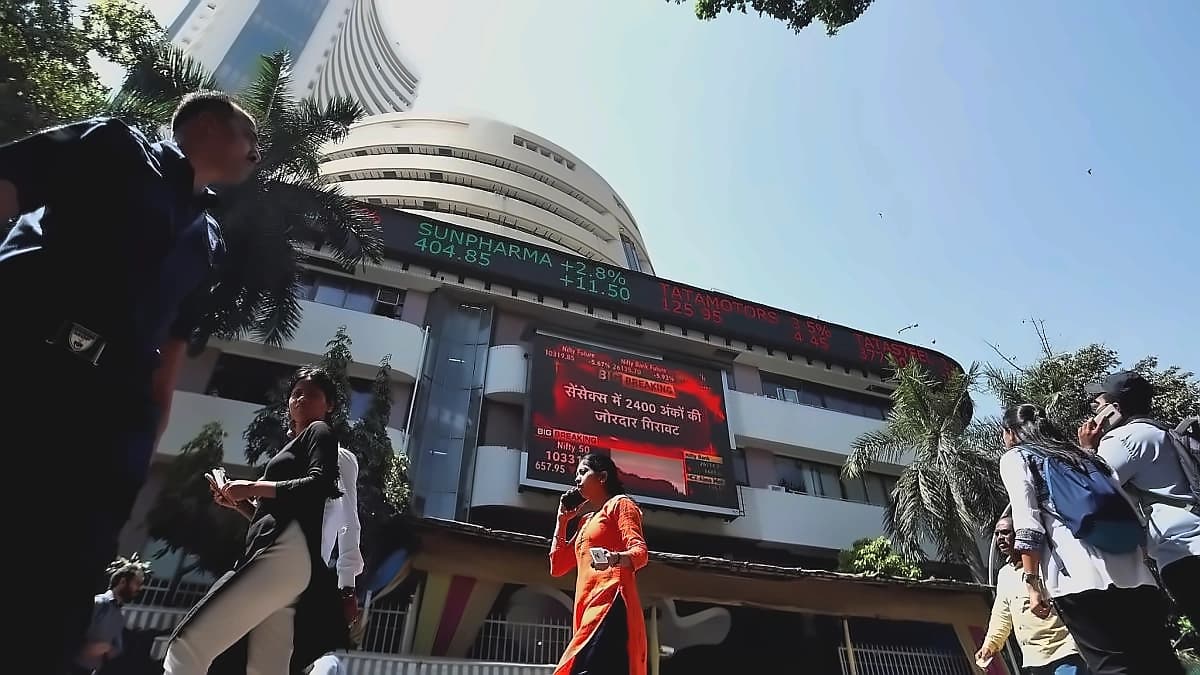
The Securities and Exchange Board of India's (Sebi) new Closing Auction Session (CAS) mechanism has faced significant adoption challenges in its initial weeks. According to The Times of India, average traded volumes of index futures, Nifty and Bank Nifty fell 40% to 69,982 contracts in the week through August 7, compared to 134,754 contracts in the previous week ended July 31. The new mechanism, which replaces the half-hour volume-weighted average price system, is still finding its feet as thin participation in the closing auction weighed on activity in the derivatives market. Market participants attribute the drop to initial uncertainty around the CAS, with expectations that volumes will improve as more investors and traders participate. Bernstein analysts noted that "every investor conversation we have had over the last week has touched upon the CAS and how volumes may get impacted from the same."
The new CAS system has dramatically reduced market participation in the final trading window, creating significant liquidity concerns. According to Bernstein analysis, volumes in the final 15-minute window now account for only 1.6% to 2.3% of daily turnover on the NSE, compared to the historical share of 10.1%. This has resulted in sharp price swings and reduced visibility on the likely final price, with Bernstein noting that thin auction liquidity has fueled concerns over unexplained swings and possible order "spoofing" as seen in sharp intra-window moves. The research firm expects the system to settle in the coming months even as the transition weighs on volumes and capital-market stocks in the near term. Retail traders are seeing an erosion in the value of the options they sell, while buyers have seen sharp gains or losses as indexes swing during the closing auction. Bernstein reports that the debut of the Closing Auction Session has seen sparse participation during the dedicated auction window, leading to distorted price action driven by thin liquidity.
Despite the volume decline, the options segment showed mixed performance across different metrics. As reported by The Times of India, while options contract volumes dropped significantly, both premium and notional terms witnessed growth during the same period. In contrast, the futures segment experienced declines in both premium and notional terms, highlighting the selective impact of regulatory changes on different trading segments. The shift reflects a broader trend toward long-term stock ownership as delivery ratios rose to around 30% during FY26, with investors showing stronger preference for owning stocks over quick intraday trades.
The weekly index options market has experienced significant volatility under the new CAS framework. According to The Times of India, index call options purchased on August 4 were at 151.9 million contracts, down 16% from 180.6 million traded on July 28, while purchased put options volumes were down 10% last Tuesday from the preceding week. Historical data shows that call expiry volumes ranged between 167.13 million and 183.2 million contracts and put volumes between 164 million and 207 million contracts during previous months. NSE maintains a market share of 99.7% in equity futures and 69.4% in equity options as of June 30, per latest exchange data. Bernstein notes that lower index-options contract volumes could also hurt retail-focused discount brokers, who depend on orders for revenue, while stock exchanges are also exposed as they charge fees on options premium turnover.
The new CAS system has significantly impacted arbitrage fund performance, with the biggest arbitrage fund accounting for 21.7% of total arbitrage fund assets showing volatile returns. As reported by The Times of India, the annualized return of Kotak Arbitrage Fund as of derivatives expiry date of July 28 was 6.64% against the benchmark return of 7.25%. On the first day of CAS implementation, the fund's return was 7% against the benchmark's 7.75%. The auction system creates uncertainty as continuous cash market trading closes 15 minutes earlier at 3.15 pm, while derivatives trading continues through 3.40 pm, forcing arbitrageurs to initiate buy cash and sell futures legs simultaneously. This creates spread volatility that arbitrageurs typically avoid, with traders closing most positions at 3.15 pm. Bernstein analysts highlighted that passive funds have largely avoided the closing window so far but may need to participate on days when indexes are rebalanced, while active fund managers face execution risks if substantial shifts in stock or index prices occur during the auction window.