Nvidia CEO Jensen Huang has declined a Senate Banking Committee invitation to testify about the company's China business, according to CNBC reports. Senator Elizabeth Warren invited Huang to appear at a Thursday hearing on American AI development and technology leadership, writing that testifying would give Huang "an opportunity to testify about NVIDIA's views on U.S. export control laws and regulations and NVIDIA's business in China." Huang has until Monday to confirm his appearance at the Senate hearing. In his letter to Warren, Huang said he would be "unable to attend" the public hearing but offered to host committee members at Nvidia's Santa Clara headquarters for private discussions. As per CNBC, Warren said she appreciated Huang's response but emphasized that "the American people deserve answers in a public forum."
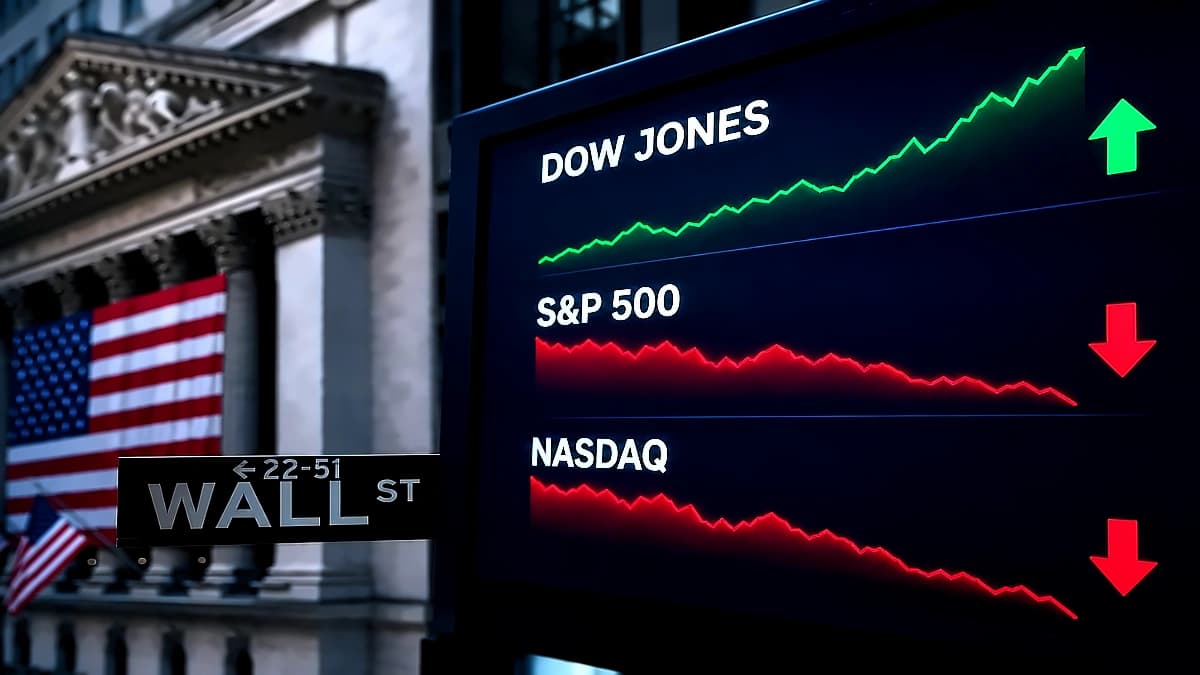
Asian markets experienced a sharp sell-off in tech stocks this week, with the pain being sharpest where gains had been greatest. According to The Economic Times, veteran investor Manishi Raychaudhuri views this correction as a buying opportunity, stating that "I would rather treat this correction as a buying opportunity." Korean and Taiwanese tech giants, the engines of Asia's semiconductor and AI rally, took the hardest hit during the recent market decline. Raychaudhuri's optimistic stance aligns with Nvidia CEO Jensen Huang's earlier comments calling the global tech stocks selloff a buying opportunity, telling reporters that the industry was still in the early stages of constructing AI infrastructure. As per ET Now, Raychaudhuri explains that "It's red all over Asia, particularly in the North Asian markets, such as South Korea and Taiwan, which had led the sharp rally seen across the region."
Warren's office confirmed that the hearing will focus on AI innovation, affordability, and U.S. technological leadership, as reported by CNBC. Warren asked Huang to discuss Nvidia's China business and its position on export controls, which restrict sales of advanced American technology to foreign markets. Policymakers continue debating how far the U.S. should limit AI chip exports, with Nvidia remaining central to that debate because its chips power many advanced AI systems. Warren criticized Huang's foreign engagements, citing his attendance at a Mar-a-Lago dinner and meetings in China. In his letter to Warren, Huang defended Nvidia's AI role, writing that the company "built and delivered the first AI supercomputer to American researchers over a decade ago" and remains committed to U.S. leadership in AI-related technologies.
Asian markets turned red this week, with the sell-off driven by three key factors. According to The Economic Times, Broadcom's chip revenue guidance, while objectively strong at nearly $16 billion with 200% growth, fell marginally short of the inflated expectations markets had already priced in. Additionally, a stronger-than-expected US non-farm payrolls report reignited fears of a rate hike as early as the next Fed meeting. Finally, renewed military tensions between Israel and Iran sent oil prices spiking again, adding another layer of macro anxiety. Put together, these factors created a classic risk-off move where investors booked profits in precisely the stocks where they had made the most money. As per ET Now, Raychaudhuri notes that "Third, the US-Iran ceasefire and treaty situation appears increasingly fragile. Reports of renewed military tensions between Israel and Iran have pushed oil prices higher once again."
India's corporate earnings growth for FY27 is now estimated at just 9% to 9.3%, a single-digit number that Raychaudhuri calls "pedestrian." This represents a significant decline from the same estimate of 16% just nine months ago, as reported by The Economic Times. Nifty and Sensex are currently trading around 19 to 20 times one-year forward earnings, a premium of roughly 30% over broader Asia ex-Japan markets. While this premium has come down from its peak of 87% over Asia at India's September 2024 highs, Raychaudhuri argues that historical valuation parity alone will not bring foreign institutional investors back. The real challenge lies in a subdued domestic consumption environment, driven by what he describes as a "tepid and uninspiring" employment situation.
Despite broader market challenges, Raychaudhuri remains positive on large private sector banks for the next three to five years. According to The Economic Times, his logic is straightforward: any meaningful economic growth in India, whether driven by consumption or investment, has to be financed by banks. Within banking, private sector players hold only 30–35% market share but are consistently gaining ground over public sector rivals through superior technology and customer acquisition. HDFC Bank, once trading at four times price-to-book, now trades around two times — a far more reasonable entry point. India's economic story needs improved financial results to attract foreign institutional investors back to the market.