India's benchmark Nifty has experienced sharp price swings following the introduction of a new formula for calculating closing prices for stocks with derivatives contracts. The BSE Sensex and volatility of Wednesday's session triggered a rare, third-straight session divergence between the two exchanges, leading to heavy losses among traders. According to Business Standard, the new system replaces the previous method where closing prices were based on an average of trades executed during the last 30 minutes of continuous trading. The Closing Auction Session is now a separate 20-minute window starting at 3:15 pm IST, with exchanges collecting orders and determining the price at which maximum volume is possible after 3:30 pm. As per OpIndia News, the new mechanism fundamentally alters how India's markets behave during the final minutes of trading, with the closing price now determined through an auction rather than an average of trades. The Closing Auction Session (CAS) applies only to the cash market of F&O-eligible shares, with non-F&O shares continuing regular trading until 3:30 pm unchanged.
Unusual price gaps between NSE and BSE have created short-lived arbitrage opportunities for high-frequency traders, with several Nifty 50 stocks trading at divergent prices. According to reports from Business Standard, many largecap index stocks moved at different paces on the two exchanges during this period, with some stocks rising more on NSE than on BSE, while others posted larger gains on BSE. Similarly, several index stocks recorded steeper declines on NSE than on BSE, creating opportunities for day traders to buy at relatively lower prices on one exchange and simultaneously sell at higher prices on the other. The NSE has a much higher institutional cash market volume than the BSE, contributing to different price movements between the exchanges. As per OpIndia News, the biggest beneficiaries have been arbitrage traders, with temporary pricing gaps between the cash and derivatives markets creating opportunities that sophisticated funds have been quick to exploit. However, retail traders have faced challenges as many entered positions based on prices visible during regular trading only to find that the official closing price used for settlement differed materially once the auction concluded.
Bajaj Auto closed at ₹11,800 per share on NSE on Wednesday, 1.01 per cent higher than its closing price of ₹11,681.5 on BSE. As reported by Business Standard, this stock had closed 3 per cent higher on NSE than on BSE on Monday, with the difference narrowing to 0.43 per cent on Tuesday. In comparison, it had closed at ₹11,520.5 per share on NSE last Friday, just 0.01 per cent higher than its closing price of ₹11,519.5 on BSE. Tata Steel's closing price on NSE on Wednesday was 0.91 per cent higher than its closing price on BSE, ending at ₹193 per share compared with ₹191.3 on BSE. Overall, 15 of the 50 Nifty 50 stocks closed at least 0.5 per cent higher on NSE than on BSE on Wednesday. According to OpIndia News, heavyweights such as Reliance Industries, ICICI Bank and Infosys have already recorded noticeably different closing prices on the NSE and BSE under the new mechanism, with the differences becoming more visible because the Nifty contains 50 stocks while the Sensex tracks 30.
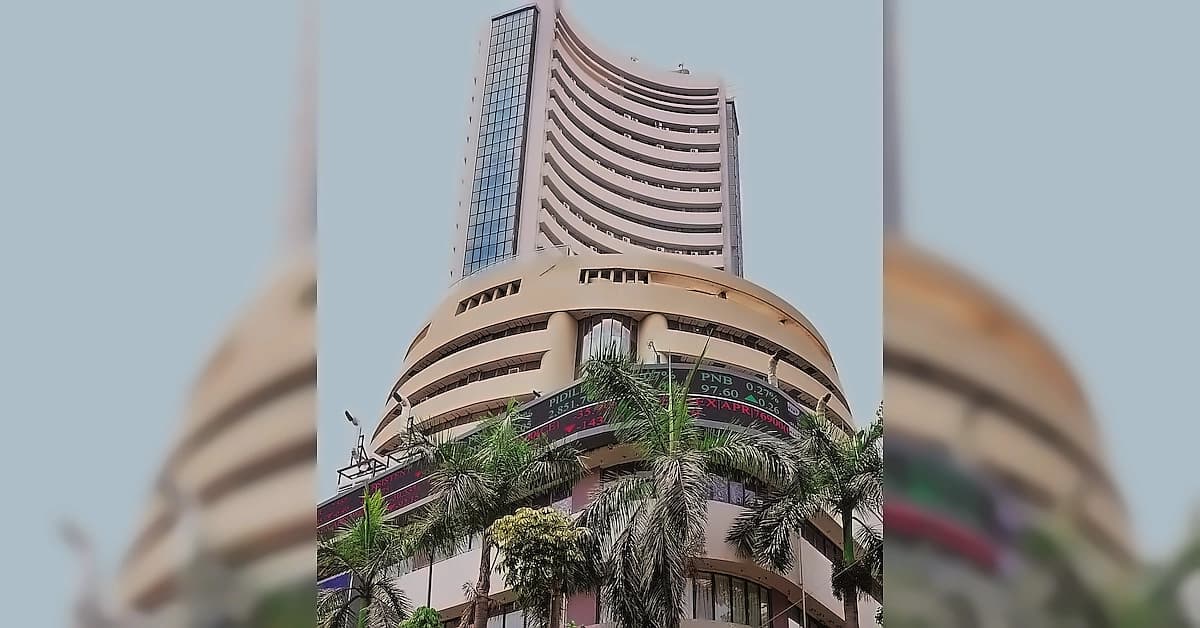
The price arbitrage between the two exchanges first emerged on Monday and has persisted through the past three trading sessions, although the overall difference in closing prices has narrowed. According to Business Standard, the anomaly was also reflected in the closing market capitalisation of Nifty 50 companies on the two exchanges. Last Friday, the combined closing market capitalisation of Nifty 50 stocks on NSE was only ₹989 crore higher than on BSE. The gap widened sharply to ₹1.42 trillion on Monday before narrowing to ₹89,625 crore on Tuesday, and further to ₹22,676 crore on Wednesday. The new closing price system has brought India closer in line with global markets and provides a transparent and fair closing price, though it may take time for participants to adjust to the new framework. As per OpIndia News, the issue lies in a new trading mechanism introduced just two days earlier, with the biggest surprise being the unusually large gap between India's two benchmark indices.
The new auction system has fundamentally changed several everyday trading practices that traders must now adapt to. According to OpIndia News, open Stop-Loss (SL), Stop-Loss Market (SL-M) and Iceberg orders do not carry forward into the auction session for eligible stocks, requiring traders to manage such positions before continuous trading ends. Market orders are accepted only during the initial phase of the auction, with traders needing to place both market and limit orders between 3:20 pm and 3:25 pm, and only limit orders accepted between 3:25 pm and 3:30 pm. The exchange randomly closes order entry sometime during the last two minutes to prevent traders from attempting last-second manipulation. Between 3:30 pm and 3:35 pm, the exchange matches all orders and discovers a single equilibrium price, which becomes the official closing price. Trading in stock and index futures and options continues until 3:40 pm, allowing derivatives traders a short window to respond after the cash-market closing price has been determined. The new mechanism applies only to the cash market of F&O-eligible stocks, with shares that do not have derivatives contracts continuing to follow the old VWAP-based closing system until 3:30 pm. Intraday traders using MIS products should also verify revised auto square-off timings with their brokers, as broker cut-off times may now differ from the old market schedule. The Closing Auction Session (CAS) is effective from August 3, 2026, as per SEBI Circular dated January 16, 2026.
Market participants expect that as more traders and institutional participants participate, the gap between NSE and BSE closing prices will narrow over time. According to Kotak Mutual Fund, they expect pricing inefficiencies to ease as the new system is adjusted, stating that while the first days of the market may be characterized by temporary price dislocations and valuation volatility, the behaviour should normalize as participants adjust to the new framework. Reports suggest that the regulator would not be able to review the system right away and expected issues to be resolved soon. As per OpIndia News, most analysts believe the current volatility reflects a market adjusting to a fundamentally new closing mechanism rather than a permanent structural problem, with liquidity expected to improve as institutional participation increases and traders become more familiar with the process. The reform is intended to make India's closing prices more transparent, improve price discovery and reduce opportunities for manipulation, though like many structural market reforms, it has produced short-term disruptions before participants have had time to adapt. For now, the familiar assumption that the market effectively ends at 3:30 pm no longer holds true for F&O stocks, as the most important price of the day is now determined only after the closing auction ends. The new system addresses long-standing concerns about large last-minute orders moving prices during the VWAP calculation period, providing better price discovery through single-price equilibrium matching instead of a trailing average.