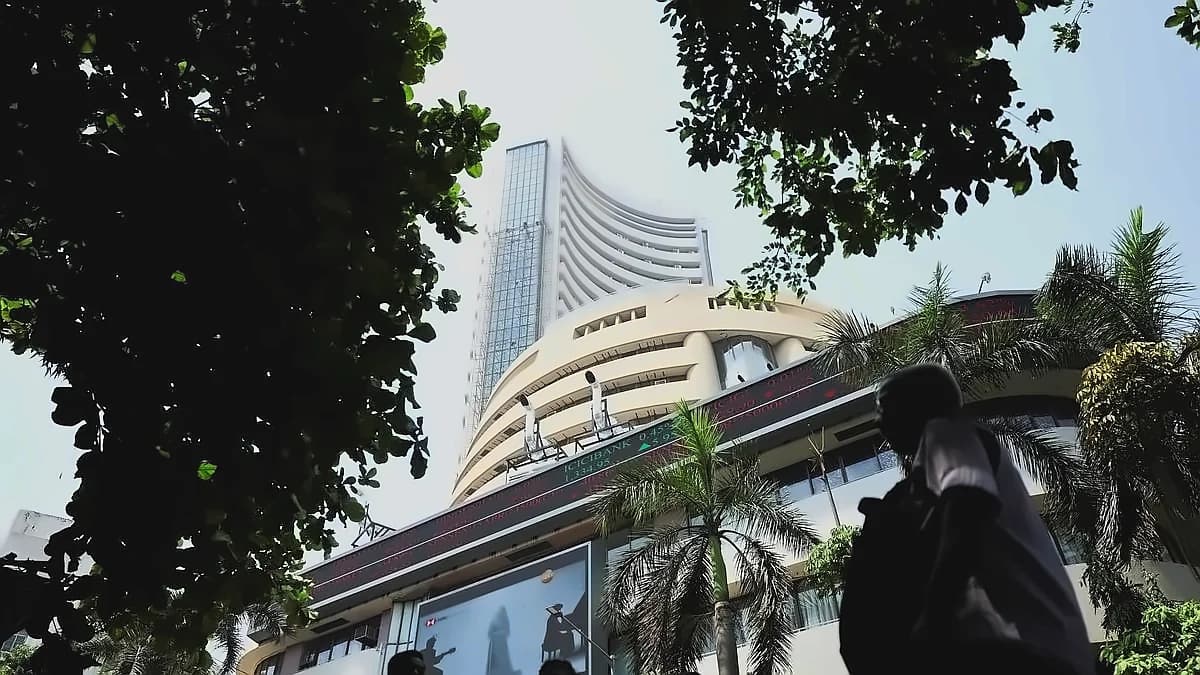
Indian equity benchmarks experienced a major crash on Thursday, with BSE Sensex plummeting by nearly 1,200 points and Nifty50 falling below the 23,800 mark. As of latest trading, Sensex was down by 1,196 points or 1.54% to trade at around 76,300, while Nifty50 was trading at around 23,810 after falling by 367 points or 1.52%. The massive sell-off was widespread, extending beyond large-cap stocks to the broader market, with the Nifty Smallcap 100 index down 0.5% and Nifty Midcap 100 index falling more than 1%. The steep decline wiped out nearly ₹9 lakh crore from the combined market capitalisation of BSE-listed companies, reducing it to around ₹460 lakh crore.

The market decline was attributed to multiple factors including a surge in crude oil prices, a record low in the rupee, and other adverse global developments. Brent crude futures advanced about 4% to around $123 a barrel in early Thursday trade, breaching the $120-per-barrel mark for the first time since Russia's 2022 invasion of Ukraine. The Indian rupee weakened further, touching a new all-time low of 95.07 against the US dollar, reflecting persistent foreign institutional investor outflows and elevated crude oil prices. India VIX, the market's volatility gauge, rose by nearly 5% to 18.29, indicating heightened uncertainty among investors. Additionally, geopolitical tensions such as US President Donald Trump's warning of a prolonged blockade of Iranian ports through the Strait of Hormuz have added to investor concerns, with Trump indicating the blockade could continue for months despite Iran's fresh proposals.
According to The Times of India, global equity markets traded lower as oil price increases weighed on investor sentiment. Japan's Nikkei dropped more than 1.2%, while Hong Kong's Hang Seng declined over 1.3% and South Korea's Kospi fell by around 0.5%. In contrast, China's Shanghai Composite managed to hold steady and was trading marginally higher. European markets had already ended the previous session with significant losses, with the UK's FTSE 100 falling more than 1%, while in the United States, Wall Street finished on a mixed note with the broader market largely unchanged but the Nasdaq closing slightly higher. The sell-off was widespread across major global markets as investors reacted to mounting geopolitical tensions and oil price volatility.
As reported by The Times of India, VK Vijayakumar, Chief Investment Strategist at Geojit Investments, identified two significant challenges facing the market. Brent crude hovering around $120 a barrel poses a serious risk to India's macroeconomic stability, with prolonged elevated oil prices potentially weakening growth prospects while intensifying inflationary pressures. Additionally, stronger-than-expected earnings from leading artificial intelligence companies in the United States and South Korea may further fuel the global AI investment theme, potentially leading to continued portfolio outflows from India and additional pressure on domestic markets. The decline was not limited to large-cap stocks but also affected mid and small-cap stocks, indicating widespread selling pressure across the board.