The Nifty Capital Market index declined 2.1% to touch an intraday low of 5,142.95 points on Wednesday, September 16, according to NSE data. The sectoral benchmark, which closed at 5,255.60 points in the previous session, recovered some losses to trade 1.36% lower at around 5,184.20 points during morning hours. Major capital market stocks including BSE (₹3,249, down 2.1%), MCX (₹3,089, down 3.6%), Groww (₹189.93, down 4.6%), and CDSL (₹1,290, down 2%) were among the leading laggards during the trading session. The decline occurred amid broader market volatility driven by crude oil price surges and other sectoral pressures.

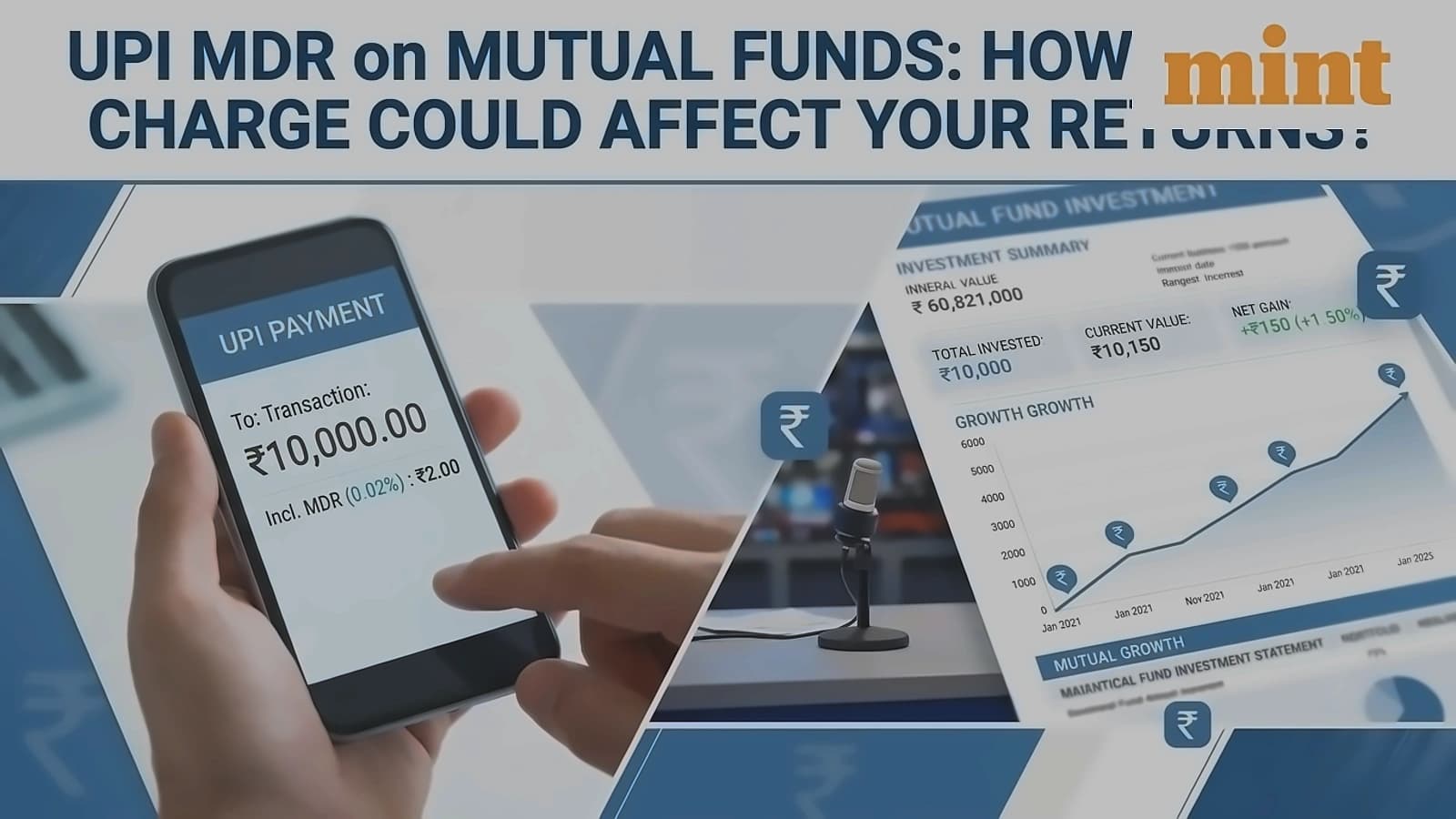
The decline was primarily driven by investor reaction to the new National Payments Corporation of India (NPCI) guidelines introducing UPI Merchant Discount Rate (MDR) charges of 0.02%, capped at a maximum of ₹300 per transaction for mutual funds, stockbrokers, and dealers. As reported by NPCI, UPI payments involving these sectors will attract the MDR fee. NSE CEO Ashishkumar Chauhan stated that the new MDR charges are expected to weigh on transaction volumes in the short term, though activity is expected to normalise over time. Above the ₹2,000 per transaction threshold, capital market companies will have to pay the 0.02% or maximum ₹300 fee to UPI payment aggregators. At 0.02%, the fee works out to ₹20 on a ₹1 lakh transaction, making the capital market rate much lower than typical commercial transaction charges.
According to NSE MD and CEO Ashishkumar Chauhan, the MDR on UPI could affect trading volumes routed through UPI in the short term, but the impact is likely to stabilise over time. "MDR on UPI might impact trading volumes via UPI in the short term, but is likely to stabilise in the long term," Chauhan said. For the market, it remains to be seen how brokers, mutual fund platforms and other intermediaries treat the cost. If the fee is absorbed by intermediaries, the impact on investors may remain limited. If it is passed on, investors could see a small additional cost on payments linked to market transactions. The near-term impact may be felt more in frequent trading-related payments than in long-term investment flows, with active traders who move funds more often being more sensitive to any added cost. Mutual fund investors making monthly SIPs or occasional lump-sum payments may not change behaviour much.
The implementation of UPI MDR charges created mixed reactions in the banking sector, with Yes Bank shares jumping over 4% to ₹24.10 on Wednesday after Citi and Morgan Stanley identified the lender as a key beneficiary of the new charges. Citi estimates that Bank of Baroda, Punjab National Bank and IndusInd Bank could see a 2% boost to profit before tax, while Axis Bank, State Bank of India and Federal Bank could see a 1-2% increase in earnings. Morgan Stanley also noted that Yes Bank remains a relative gainer, though the international brokerage expects the profit benefit to be much lower than the 10% estimated earlier. The authorities have clarified that consumers will not be charged for making UPI payments, while Person-to-Person (P2P) transfers will also remain free, with small merchants classified under the P2PM framework continuing to be protected from MDR.