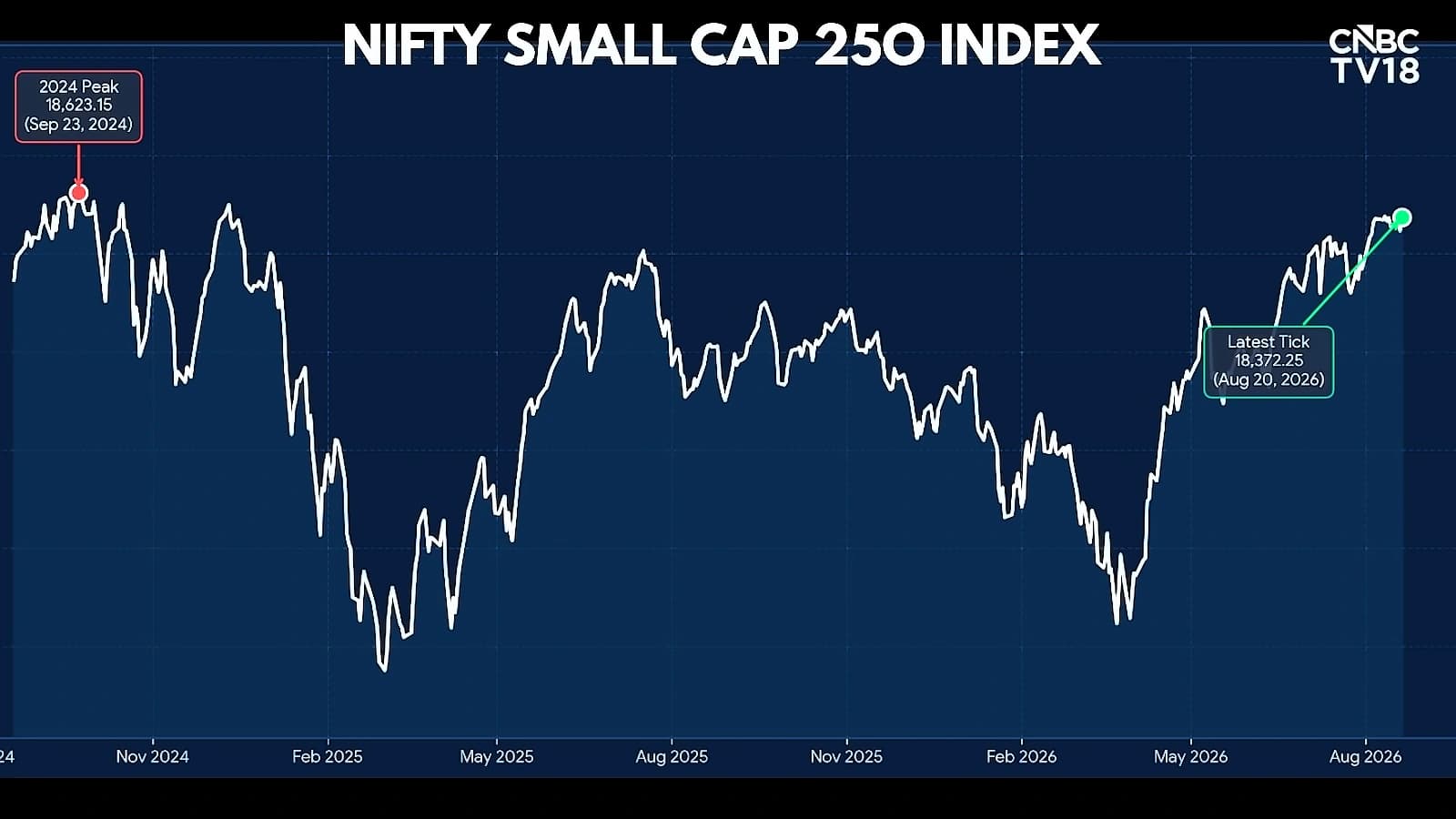
According to Kashyap Javeri, Head of Research and Fund Manager at Emkay Investment Managers Limited, India's market valuation premium is misleading due to index concentration. As reported by The Economic Times, India's Nifty 100 currently trades at 21 times earnings compared with 14-17 times for several other emerging markets. However, comparing markets purely on index-level valuations can be misleading, particularly when indices across emerging markets have vastly different compositions and concentration levels. Javeri argues that if one shifts focus from headline numbers on PER and earnings to more focussed stock-specific approach, there are plenty of opportunities available in the market to deploy money. The Nifty 100's composition shows nearly 47% weight in BFSI+IT+RIL sectors, which haven't seen rosy earnings pictures, while the Nifty Smallcap 250 and Nifty Midcap 150 indices' earnings grew at healthy 20+% for FY26 and Q1FY27.
According to Javeri's analysis reported by The Economic Times, the Nifty 100 today trades at 21x PER vs many of the emerging markets trading between 14-17x PER. This represents a significant premium, but the debate around valuations needs to go beyond a simple price-to-earnings comparison. The Nifty's forward and trailing PE both trading at a 10–12% discount to their five- and ten-year averages. The premium over Korea, Taiwan or China looks very different when adjusted for these structural differences, with the Nifty's PE at about 20.5x trading nearly 12% below its ten-year average of 23x. What would change this view is a stretch where multiples re-rate higher even as earnings disappoint, growth and profitability offering no cover for the re-rating. Right now, the market has the opposite scenario with earnings accelerating and multiples still below history.
As reported by The Economic Times, in the June quarter, small-cap earnings growth actually outpaced mid-cap, which outpaced large-cap. Strip out oil marketing and refining, and the picture sharpens: Nifty ex-oil earnings grew about 11%, NSE500 around 21%, midcaps 36%, small caps 42%. Nineteen sectors beat expectations, roughly half the companies beat PAT estimates, and the upgrade-to-downgrade ratio moved to 1.5x. Nifty adjusted PAT grew 18% year-on-year in June, the fastest pace in ten quarters. The Nifty Smallcap 250 and Nifty Midcap 150 indices' earnings grew at healthy 20+% for FY26 and Q1FY27, with the Nifty Midcap 150 Index again crossing its all-time high yesterday and Nifty Smallcap 250 index just 1% away from the same.

According to Javeri's analysis reported by The Economic Times, the genuine disconnect is across market-cap segments rather than overall valuations. The Nifty trades at about 20x earnings; midcaps at roughly 30x; small caps at roughly 34x, with premiums of 50% and 70% over large caps that assume uninterrupted small-cap-style growth. Large-caps look most comfortable today, midcaps reasonably so given genuinely stronger earnings delivery, and small-caps are where the valuation premium is running ahead of what even strong recent growth can justify indefinitely. Small- and mid-cap indices trade at roughly 34x and 30x earnings against the Nifty's 20x. Javeri notes that barring IT, almost every industry in India is witnessing tailwinds and within those industries, valuations of some stocks will overshoot the earnings expectations in some cases, while undershooting due to exogenous factors in others.
As reported by The Economic Times, DIIs have been relentless buyers, with the fair question being whether that reflects conviction or just SIPs creating an automatic bid regardless of price. According to Javeri, one would be correct in saying that SIPs are currently driving DII flows completely, with adjusted for SIP flows, the mutual funds have seen net outflows in 3 out of last 5 years. However, it is also true that Indian retail investors have raised SIP investment from $17bn in FY22 to nearly $40bn in FY26, showing their conviction. The SIP book keeps growing past 10.6 crore accounts, with DII inflows running at record levels — over ₹4 lakh crore in H1 2026 — comfortably absorbing the foreign selling. Gupta explains that Indian household savings are going through a structural shift — away from physical assets and deposits, toward long-term wealth creation through equities, and toward systematic investing over speculation, with Indian households remaining markedly underexposed to equities relative to their own history and to peers like the US or China — historically under 5% of household financial assets.