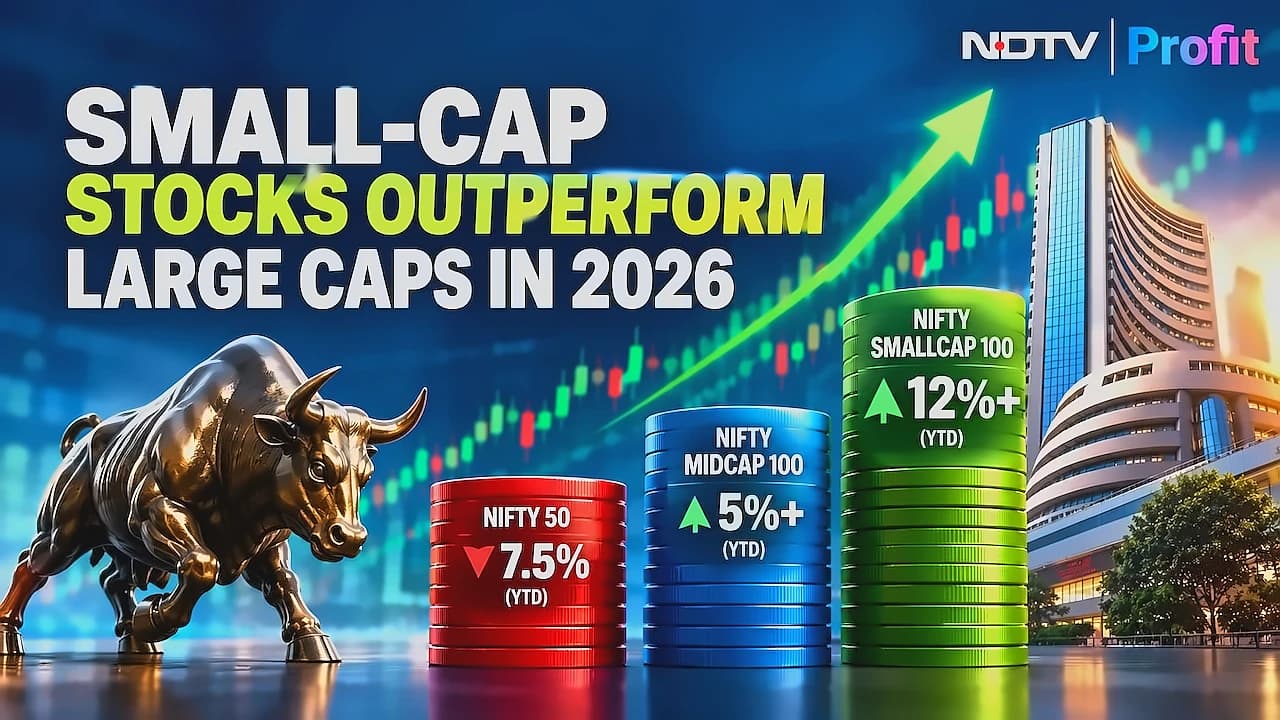
The Nifty Smallcap 100 Index has rallied 13% year-to-date in 2026, hitting a fresh 52-week high of 20,031.05 on Friday, climbing 0.69% from its previous close of 19,977. This represents a 33% recovery from its 52-week low of 14,986 touched on March 23, 2026. The Nifty Smallcap 100 currently trades at a trailing PE ratio of 31-33 times as of July 2026, representing a 71% premium over large caps on trailing earnings. This compares to the Nifty 50's trailing PE of 20.77 as of June 17, 2026, which is close to its long-run average of 20-21. The small cap premium of 71% sits well above the 29% level that triggered regulatory concern in February 2024, though the figures draw on different small cap index definitions and different points in the earnings cycle. As per Equirus Securities, the forward PE ratio stands at 1.25 times against a long-term average of 0.9 times, representing a gap more than two standard deviations above normal and close to previous peaks.
The bullish sentiment comes down to SMID profits accelerating to 28% year-on-year in the June quarter, outpacing large-cap profit growth of 21% as per Nuvama's analysis. This marked the fourth quarter of PAT outperformance for SMIDs, with analysts attributing the strength to cleaner balance sheets where net debt-to-equity has fallen sharply and revenue growth outrunning larger peers. According to Ravi Singh, Chief Research Officer from Master Capital Services, smaller companies have posted operating profit growth outpacing large-caps recently, with many companies closest to domestic consumption, manufacturing, and infrastructure themes driving investor interest. Ambit Capital notes that while small-cap valuations are not inexpensive in absolute terms, they have corrected materially from the elevated levels observed in 2024, with the balance between risk and reward within the Indian small-cap universe having improved materially for the first time since the beginning of CY25. The Nifty Smallcap 100 has been roughly flat over the trailing twelve months to July 2026, not accelerating higher in a way that would suggest fresh froth building on top of an already rich valuation.
Inflows into small-cap mutual funds have been net positive since April 2024, with July 2026 clocking the highest inflows at ₹7,768 crore according to primeMFdatabase.com data. This sustained investor interest spans nearly 2.5 years of consistent inflows, with investors positioning for a multi-year opportunity rather than pursuing a rapid rally. The Nifty Smallcap 100 has been roughly flat over the trailing twelve months to July 2026, not accelerating higher in a way that would suggest fresh froth building on top of an already rich valuation. Despite the index rally, 47% of small-cap stocks continued to trade below their 10-year average valuations as of July 2026, compared with 31% of mid-caps and 27% of large caps, suggesting selective strength rather than broad-based expansion. The Nifty 50, in contrast, has struggled to maintain momentum, posting a 7.25% decline YTD and trading more than 8% below its 52-week high of 26,373.20 touched on January 5, 2026.
Fund managers remain split on small cap allocation strategies, with Mirae Asset shifting toward a more aggressive three quarters lump sum stance after the period of flat small cap earnings genuinely ended. Nippon India continues to recommend staggered SIP entry over lump sum, citing a heavy pipeline of new 2026 IPOs that could pull fresh money away from existing small cap stocks. The strongest argument against a repeat of 2024 rests on earnings, with small cap profit growth genuinely troughed in mid-2025 and having accelerated meaningfully since. Rajesh Singla, Fund Manager & CEO of Alpha AMC, believes that while broad-based small-cap indices can look stretched, specific companies with strong balance sheets and earnings visibility remain reasonably priced. He remains constructive on manufacturing and import-substitution plays benefiting from PLI-linked demand, specialty chemicals where Indian companies are gaining share from China, and select financial services names with strong underwriting discipline. As per Ravi Singh, Chief Research Officer at MasterTrust, the rally will remain stock-specific, with preferred themes including aerospace, defence, engineering, precision engineering and auto ancillary companies. Within the smallcap universe, the power sector stands out as a promising theme as India enters a multi-year power investment cycle.
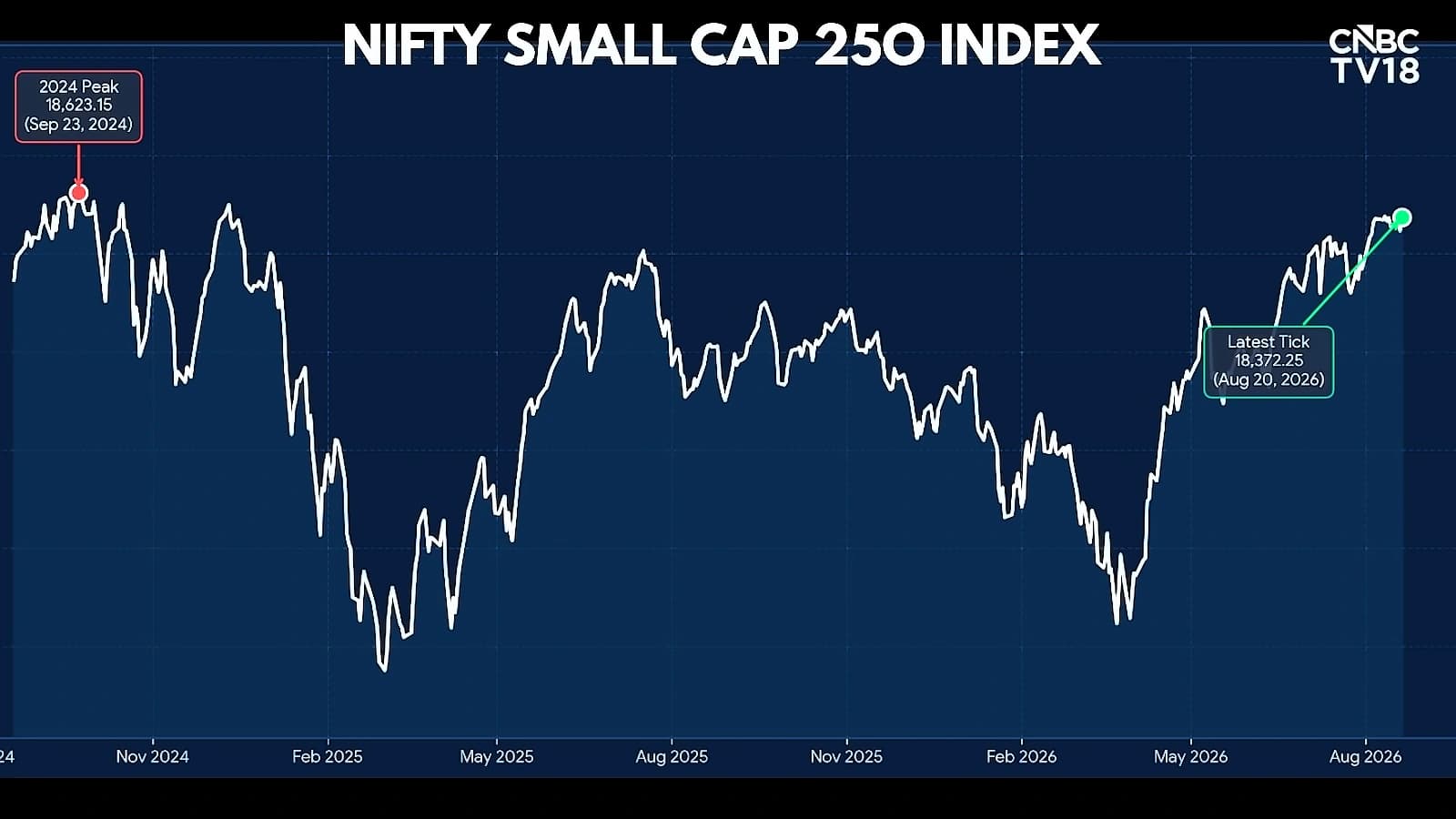
The current debate echoes India's argument from early February 2024, when SEBI publicly flagged froth building up in small and midcap segments and forced fund houses into monthly liquidity stress tests that continue today. After a sharp correction through 2025, the same question resurfaces. The small cap universe has grown roughly fivefold since 2020, with the 251st ranked company alone worth roughly ₹33,000-34,000 crore as of January 2026. Two things distinguish today's small cap universe from 2024: companies are larger and better capitalized, and small cap earnings growth has accelerated through recent quarters after a genuinely weak start, with year-on-year earnings growth jumping to around 31% in September 2025 and holding near 25% in December 2025. A large share of retail equity exposure in India runs through small cap mutual funds and SIPs, making this segment structurally more sensitive to valuation resets. According to Ravi Singh, Chief Research Officer at MasterTrust, one important factor behind this divergence is the concentration of FII activity in large-cap stocks, with foreign investors having greater exposure to large counters, creating selling pressure that has been more pronounced in that space.