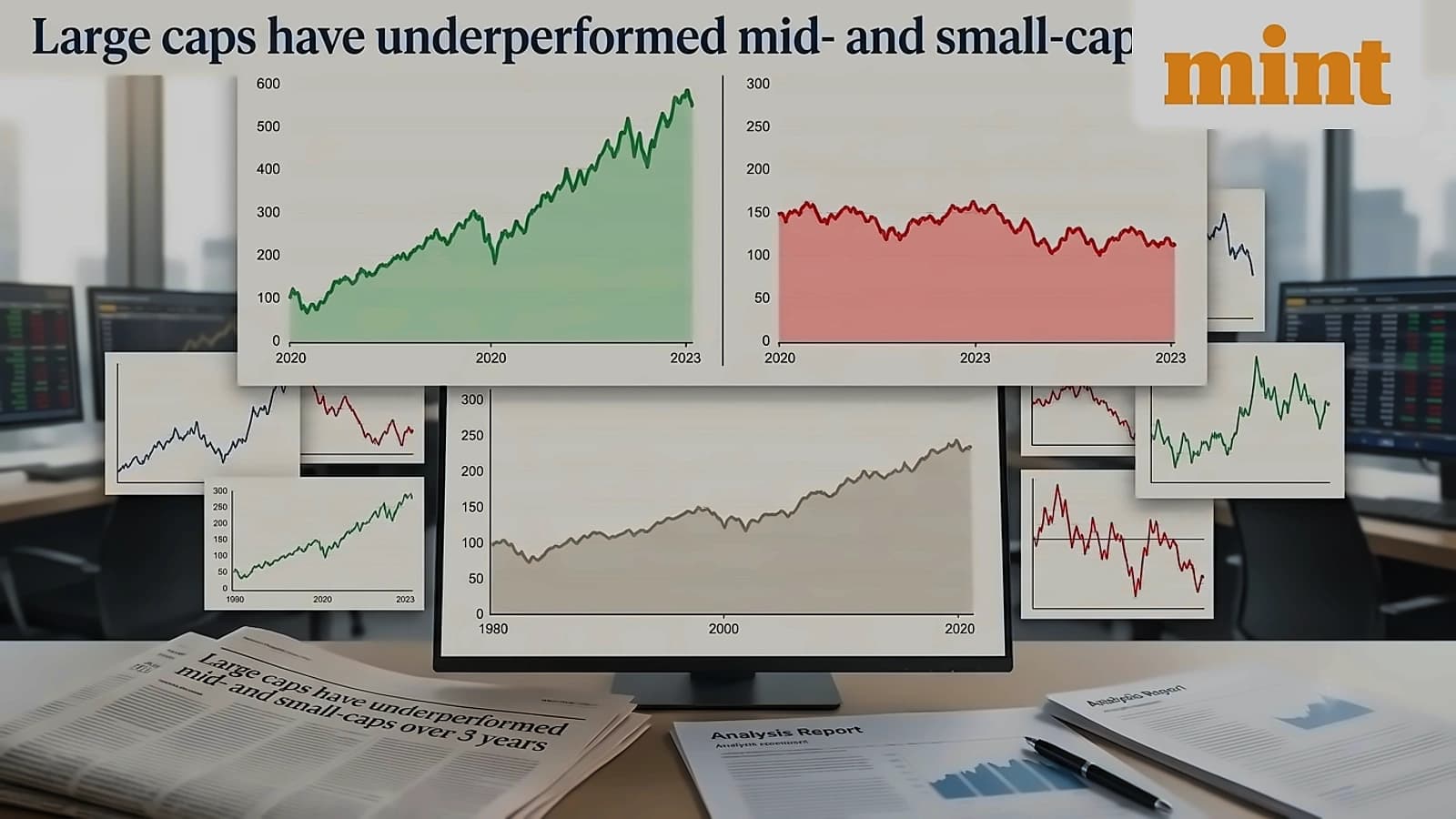
Thirteen stocks within the Nifty 50 index have significantly weighed on the benchmark's performance over the past five years, according to a study by 360 One Wealth. These stocks, which account for 33.7% of the index, delivered an annualised return of negative 0.8% between September 2021 and August 2026. The Nifty 50 itself returned 7.1% annually during this period, but excluding these 13 laggards, the index's return would have been 11%, as reported by 360 One Wealth executive director Varuk Sikka.
The drag from these heavyweight stocks has benefited actively managed funds, as many had lower exposure to these underperforming stocks. While Nifty 50 index funds returned 8.32% annually over the period, large-cap funds averaged 11.41%, flexi-cap funds 12.23%, and multi-cap funds 16.30%, according to 360 One Wealth. Typical active schemes had 15-22% of their portfolios invested in the 13 stocks compared with about 34% for the index, with this underweight alone accounting for roughly 1.5-2 percentage points of their outperformance, the study showed.

Market experts emphasize that missing just a few key trading sessions can significantly impact long-term wealth creation. As per FundsIndia Research, missing the 10 highest-return days over a 27-year period reduces a ₹10 lakh investment from ₹2.9 crores down to ₹1.3 lakhs. Similarly, Abakkus Mutual Fund analysis shows that missing the 10 best days over a 21-year period drops the Nifty 50 TRI CAGR from 13.55% down to 9.65%. The challenge lies in identifying when to enter or exit, but more importantly, remaining invested through periods of uncertainty and allowing time and compounding to work, as noted by Aikyam Capital Group fund manager Vishal Goraddia.
Market volatility creates psychological urges to take action, with selling providing temporary feelings of safety while waiting for clear indicators feels more comfortable. However, these behavioral mistakes frequently interrupt the power of long-term compounding. As per Equitrust Solutions founder Shiva Grover, missing the 20 best days can bring returns down closer to fixed-income levels, with investing ₹10 lakh and staying invested historically outperforming the same amount pulled out and re-entered around volatility by a factor of two or more. The key lesson is that the best days are extremely difficult to predict and often occur around periods of heightened volatility and market stress, when investor sentiment is at its weakest.