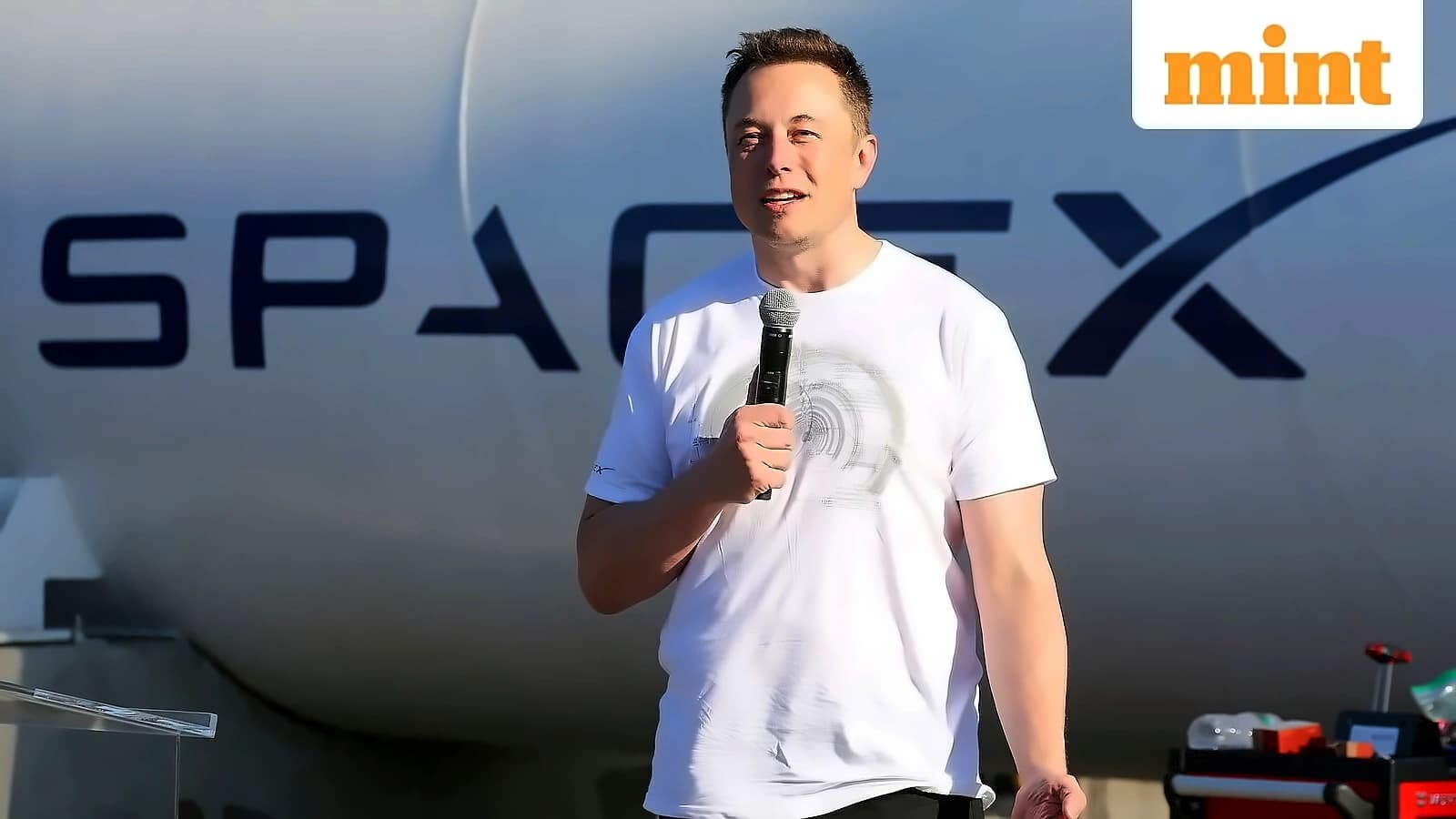
SpaceX shares fell below their $135 initial public offering price this week, marking the first time the stock has traded below its IPO floor since the company's public debut. According to The Times of India, the stock had peaked above $200 in the weeks following its record Nasdaq debut before the recent decline. The stock was priced at $135 a share in June, raising $75 billion in the largest IPO on record, but has now lost roughly a third of its value from that peak. The decline extends losses from the stock's record high of $225.64, which had briefly pushed the company's market valuation above $2 trillion. The fall signals fading investor enthusiasm after a strong debut that had made SpaceX one of Wall Street's biggest post-listing stories, with a company's shares falling below the IPO price within days or weeks of its first trading day puncturing the narrative that's been carefully choreographed by the company and its bankers to hype up expectations.
Elon Musk's net worth has fallen more than $500 billion from its June peak of $1.45 trillion as SpaceX stock slid nearly 40% from record highs. According to CNBC, the math behind Musk's loss is mechanical - he holds 4.8 billion shares, about 42% of SpaceX, according to the IPO filing. Each $1 move in SPCX therefore shifts his paper wealth by roughly $4.8 billion. The $84 slide from peak erased close to $400 billion from that stake alone. Forbes also cut $116 billion of restricted Tesla stock from its estimate, leaving his fortune near $879 billion, still the world's largest. The company has shed more than $1 trillion in market value in four weeks, with its capitalization now near $1.63 trillion, down from the $2.64 trillion peak it briefly reached. Despite the volatility, analysts view the drop as a valuation reset after post-IPO euphoria rather than a broken business, with recovery depending on execution.
Short sellers betting against SpaceX have dramatically increased their positions as the stock declined, with short interest reportedly reaching about 185 million shares, or 29% of the tradable float. According to The Times of India, this figure stood at roughly 40 million shares just three weeks earlier, representing close to $25 billion in bearish wagers. The rapid buildup followed SpaceX's historic IPO, which also sparked a rally in tokens tied to Musk, including Dogecoin. Short sellers already hold an estimated $8.7 billion in paper profits from their bearish bets against the stock. As reported by The Times of India, nearly 49% of SpaceX's free float, or almost half of the shares available for trading, is currently on loan, with Ortex co-founder Peter Hillerberg noting that "SpaceX has been a rollercoaster for the short sellers, and it has ended up firmly in their favor." The weakness in SpaceX shares has raised concerns about the broader momentum behind artificial intelligence-related IPOs, with AI forming a central part of the company's IPO narrative as it pursues plans to deploy data centres in space, targeting what it estimates to be a total addressable market worth $26.5 trillion.
SpaceX scrubbed a Starship test flight this week after automated safety systems halted the countdown at T-minus zero after several Raptor engines failed to ignite. According to Moneycontrol, at least two Raptor engines on the Super Heavy booster failed to ignite, preventing the rocket from proceeding with the planned test. CEO Elon Musk confirmed on X that SpaceX would replace the affected engines before making another launch attempt, with the updated timetable giving engineers several days to prepare. The aborted mission was intended to carry 20 functioning next-generation Starlink satellites into space, with the satellites expected to deploy, extend their solar arrays and attempt to connect with the broader Starlink constellation. SpaceX Communications Manager Dan Huot said the company would ''
The continued weakness in SpaceX stock comes despite its inclusion in the Nasdaq-100 Index last week, making it one of the fastest companies ever to be added to the benchmark. As reported by The Times of India, the stock was also added to the Russell 1000 Index in late June, just two weeks after its IPO. However, geopolitical risk added pressure after Iranian state media designated Musk's Middle East operations, including Starlink, as potential military targets, according to CNBC. Wall Street has come under pressure in recent weeks amid uncertainty over the US Federal Reserve's interest rate path and concerns that the rally driven by artificial intelligence-related stocks may be losing momentum, according to The Times of India. Dec Mullarkey, managing director at SLC Management, noted that "Investors are becoming more cognizant that much of SpaceX is about its xAI ambitions. As markets get more cautious on the cost and efficacy of the intensive buildout, SpaceX plans may sound too far removed from immediate cash flow." Brian Mulberry, chief market strategist at Zacks Investment Management, explained that "There's so much out there all at the same time, not just negative sentiment about what IBM said yesterday, but also negative sentiment about Elon as a personality and public figure, all of that kind of collides into this extra momentum to the downside in a moment in time where there's pressure and profitability is going to be a key metric."