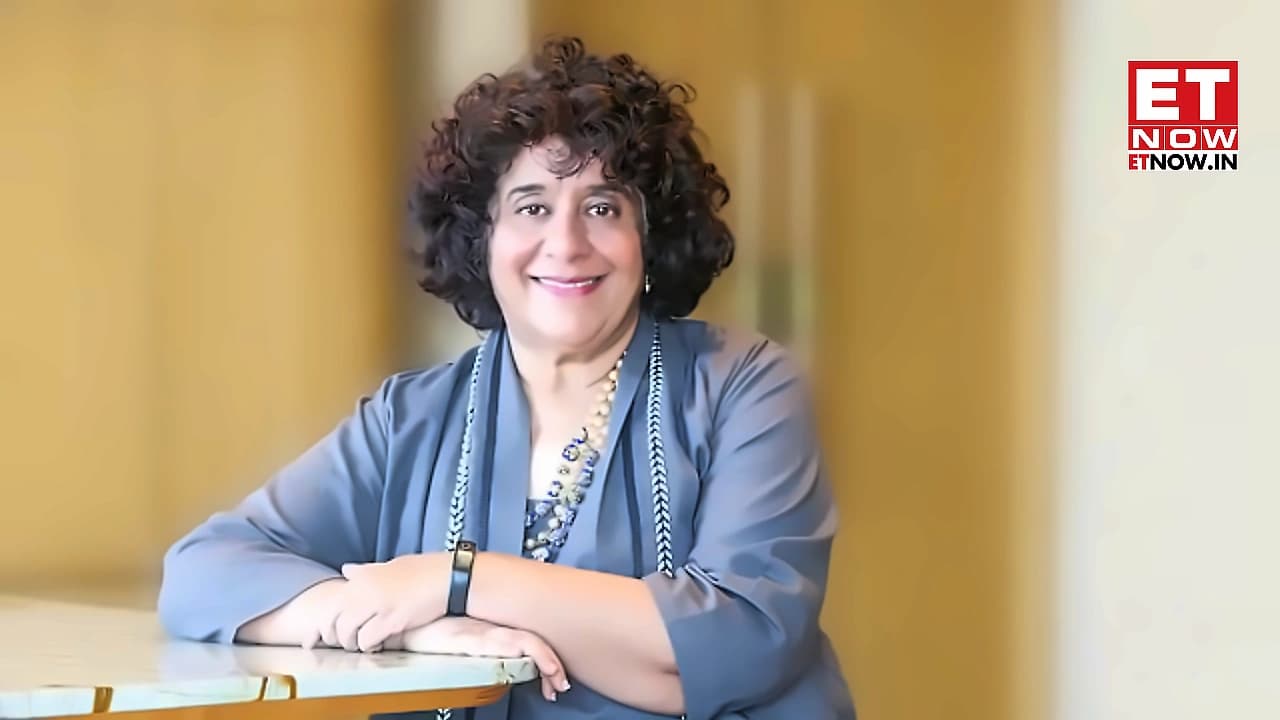
According to The Economic Times, Devina Mehra, Founder and CMD of First Global, maintains that Indian equity markets are in a bottoming zone and advises investors to stay invested rather than attempt aggressive timing. Speaking to ET Now, she emphasized that her view has remained consistent over the past several months, stating "We are around the bottom range" and recommending that investors maintain their current equity allocation. Mehra noted that while she does not make index forecasts, "probability suggests 2026 will be a better year than 2025" and advised against having 100% in equity at any time. As per ET Now, she reiterated that "my view has been consistent. So, last month on your channel or on your Hindi channel I had said that the market is somewhere around the bottom range" and emphasized that "whatever is your equity allocation, it was time to be invested then and it is time to be invested now as well."
As reported by The Economic Times, Mehra's investment approach is based on quarterly re-evaluation rather than multi-year forecasts, asking "if we had cash today, where would we be invested?" She highlighted past successful calls including capital goods identified in October 2021 and recent overweight positions in autos, auto components, and pharma. The portfolio maintains selective exposure to banking including PSU banks, while remaining diversified across FMCG and chemicals. She noted that "pharma and healthcare we have been consistently overweight" and while pharma saw consolidation in 2025, the overall stance remains constructive. According to ET Now, Mehra pointed to her investment process where "we look at everything from base zero every quarter" and emphasized that "the question we ask is: if we had cash today, where would we be invested?"
According to The Economic Times, one sector showing improving visibility is power generation and equipment, with Mehra attributing part of this improvement to data centre spending due to data centres being extremely power intensive. She stated that "one sector which has begun to look better is power including the power equipment and power utilities" and expects this trend to continue. As per ET Now, she suspects that "part of it is to do with data centre spending because data centres are extremely power intensive" and expects this trend to continue. This sector represents a key growth area for the portfolio's diversification strategy.
As reported by The Economic Times, Mehra acknowledged near-term earnings disruptions but remained broadly constructive, noting that "overall, I am not negative on the earning trajectory" despite expecting better acceleration. She cautioned against over-reliance on index-level PE multiples, stating that "looking at aggregate markets, it is usually not very meaningful if you talk about the Nifty PE" as sector composition changes make long-term comparisons misleading. She emphasized that "it is not as if that we are very-very stretched on the valuation side" and noted that commodity price shocks could create second-order effects across sectors. According to ET Now, she added that "probably I would have expected a better acceleration, but for this geopolitical conflict" and concluded that "it is not as if that we are very-very stretched on the valuation side."
According to The Economic Times, on the IT services sector, Mehra pushed back against extreme bearish narratives, stating that "the obituary of the IT services industry in India has been written many-many times" and highlighting AI-related risks but stressing execution uncertainty and continued need for human intermediation. She noted that "no CTO is going to hand over the keys of the kingdom to an AI product company" and emphasized that "the business itself will take time but I am saying that it will appear, it may not be exactly next month." On the macro level, she flagged "if the employment part slows down, that is more of a question mark for the economy as a whole" as a key concern. As per ET Now, she concluded that "the business itself will take time but I am saying that it will appear, it may not be exactly next month" and added that "when making money appears very-very easy... that is usually the worst time to get out of the market."