Technology stocks led Wall Street gains Wednesday as the artificial intelligence boom continued to drive market performance despite ongoing challenges to traditional bear market definitions. Nvidia rallied more than 3%, lifting the Dow Jones Industrial Average 0.6%, while the S&P 500 and Nasdaq composite both gained 0.5%. The rally came as investors navigated the complex relationship between AI-driven growth and conventional market volatility measures. As reported by Associated Press, the gains helped lift the market after a downbeat start to the week, with technology and communication services stocks accounting for some of the strongest gains.
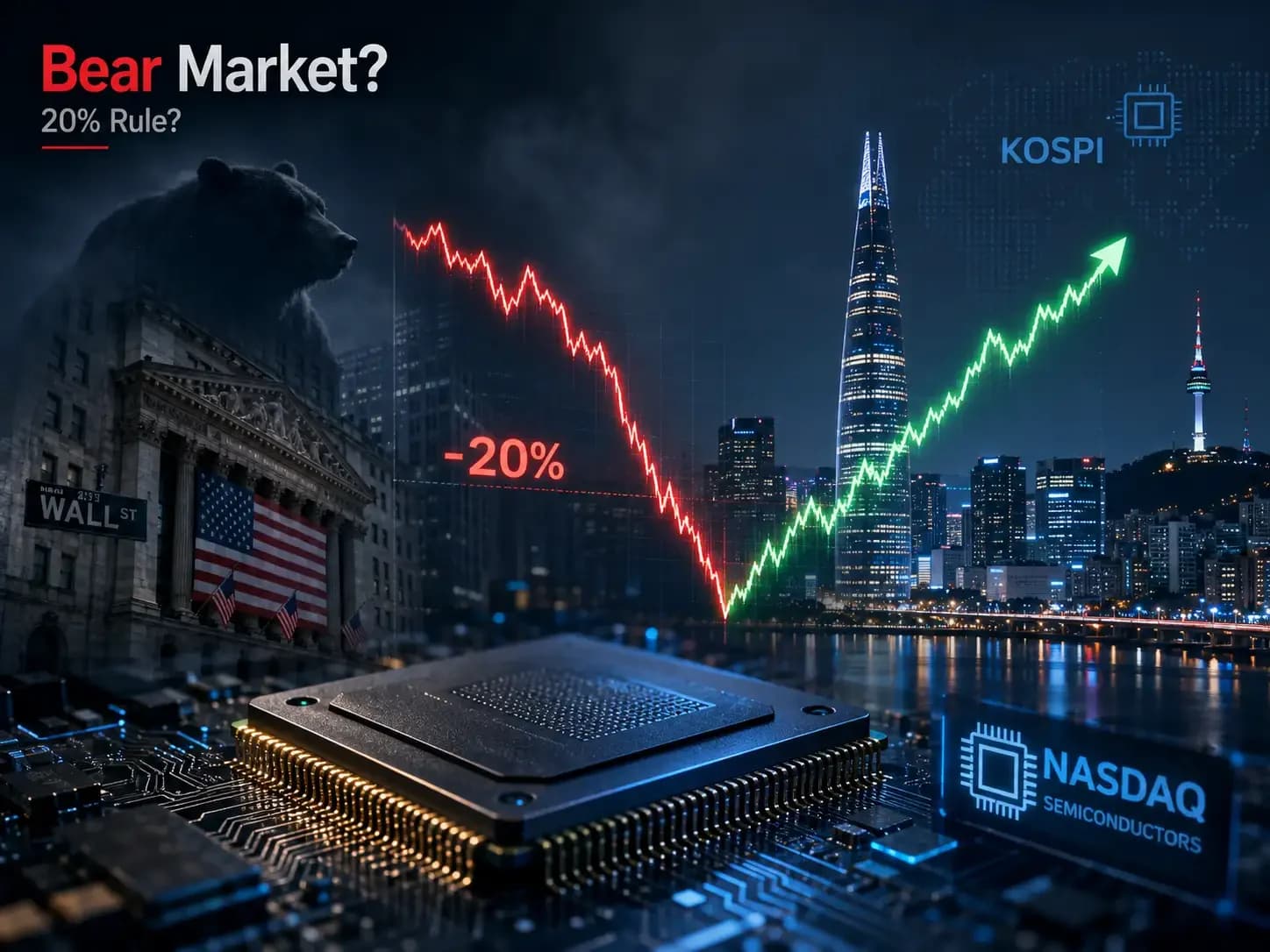
The traditional 20% decline threshold for defining a bear market is facing unprecedented challenges as the artificial intelligence boom drives extreme volatility across global technology indices. In July, the Philadelphia Semiconductor Index and South Korea's KOSPI both touched the conventional bear-market threshold, yet both still held substantial year-to-date gains of 46% and 25% respectively, largely because both had accumulated triple-digit percentage gains over the preceding year. According to reports from Reuters, the crux of the debate lies in the fact that the 20% decline standard was originally designed for broad-based indices, and applying it to highly volatile technology indices may produce misleading signals. Art Hogan, chief market strategist at B. Riley Wealth, put it bluntly: "Mechanically applying that label to a market this volatile is somewhat lazy." The debate matters because market terminology can influence investor perceptions of selloff severity, with bear markets historically representing more than temporary corrections that often signal prolonged deterioration in economic or corporate fundamentals.
Several market participants are suggesting alternative measures that incorporate duration, underlying volatility, economic conditions and broader market trends. Steve Sosnick, chief strategist at Interactive Brokers, proposed a more concrete alternative, arguing that a decline must at least exceed the index's one-year annualized historical volatility to be considered a true bear market. By this measure, the Philadelphia Semiconductor Index would need to fall more than 44% from its peak—not the traditional 20%—to qualify as a bear market. David Russell from TradeStation contends that a bear market requires confirmation over several weeks or even months, and must be driven by deeper structural negative factors, such as high interest rates or a peaking economic cycle. He emphasized: "A true bear market needs deeper structural negative factors behind it." Other investors suggested using technical indicators such as moving averages and Fibonacci retracement levels to assess whether a decline represents a deeper shift or simply a temporary correction. As reported by Reuters, Joe Saluzzi, co-head of equity trading at Themis Trading, noted that "for us guys that have been around a long time, it's more of a 'feel' type situation."
Despite the bear market designation challenges, corporate earnings expectations remain supportive for the technology sector. Data compiled by LSEG shows that the S&P 500 semiconductor and semiconductor equipment industry group is projected to see earnings growth of at least 114.7% this year, with AI demand continuing to provide strong profit momentum for related companies. This means that even when indices experience significant pullbacks, corporate fundamentals have not deteriorated in tandem, and the "long-term turning point" signal implied by a traditional bear market may not actually exist. The artificial-intelligence boom continues to support technology and semiconductor companies, with investors potentially missing gains if a traditional bear-market designation prompts them to sell during a temporary correction, highlighting the potential consequences of traditional bear market designations for highly volatile sectors.
The unusual performance has prompted investors and strategists to question whether the bear-market label is appropriate for indexes that have experienced extraordinary rallies and remain substantially higher on a year-to-date basis. As reported by Reuters, market strategists see the conventional 20% threshold as potentially misleading for highly volatile indexes such as the semiconductor index and KOSPI, where sharp corrections can occur even during powerful long-term uptrends. The debate over bear market definitions is hardly new, with Barry Ritholtz, co-founder and chief investment officer of Ritholtz Wealth Management, advising investors as far back as 2008 to ignore such "squishy terminology." However, what appears to be a semantic distinction can carry real investment consequences, as data from Hartford Funds shows that since 1928, S&P 500 bear markets have lasted an average of 289 days—approximately 9.6 months—far longer than short-term bouts of extreme volatility. The SOX and KOSPI have since rebounded from their bear market troughs, meaning investors who sold at the bottom would have missed out on recent gains.