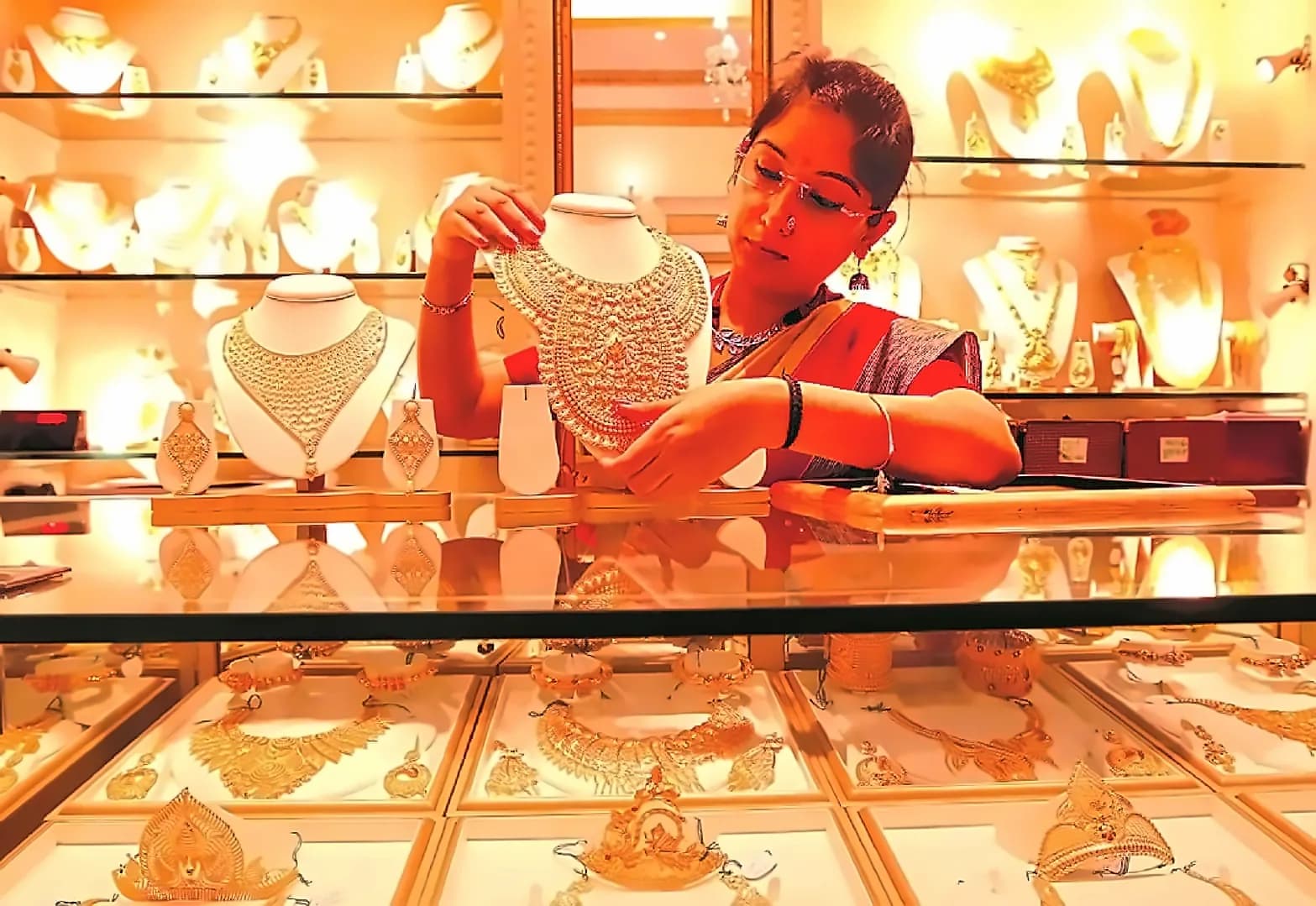
Gold stocks witnessed significant declines following Prime Minister Narendra Modi's latest appeal to Indians to refrain from buying gold unless absolutely necessary. In his latest Instagram post, PM Modi emphasized the importance of 'Swadeshi' and 'Vocal for Local' mantra, stating that citizens should avoid buying gold and instead focus on 'Weddings in India' and avoiding foreign travel for leisure or hosting weddings in foreign lands. The Prime Minister expressed confidence that by marking 100 years of independence, India will hand over a 'Viksit Bharat' to the youth, urging citizens to spare no effort in their endeavors with sound policies and pure intentions. PM Modi made the appeal in a post on Instagram, urging Indians to embrace the mantra of 'Swadeshi' and 'Vocal for Local', with the appeal coming as gold remains a key purchase for Indian households, particularly for jewellery and weddings. His comments came a day after India reported real GDP growth of 7.8% in the first quarter of fiscal 2026-27, with gross value added growing 8.2%, above the estimated 7.3% and broadly unchanged from 7.8% in the previous quarter.
Major jewellery stocks were trading lower on Tuesday morning following PM Modi's latest appeal to Indians to refrain from buying gold. Titan Company was trading at ₹5,050 on the NSE at 9:53 am, down ₹52.50, or 1.03%, from the previous close. Kalyan Jewellers India was trading at ₹587.45, down ₹13.55, or 2.25%, while Thangamayil Jewellery was trading at ₹5,333.50, down ₹78.50, or 1.45%. BlueStone Jewellery and Lifestyle was at ₹807.40, down ₹10, or 1.22%, and Senco Gold was the only major jewellery stock trading in the green, at ₹353.35, up ₹4.75, or 1.36%. According to Moneycontrol, Friday's decline came after recent strong gains in several jewellery stocks, with the moves appearing to be driven more by profit booking and investor positioning amid volatile gold prices.
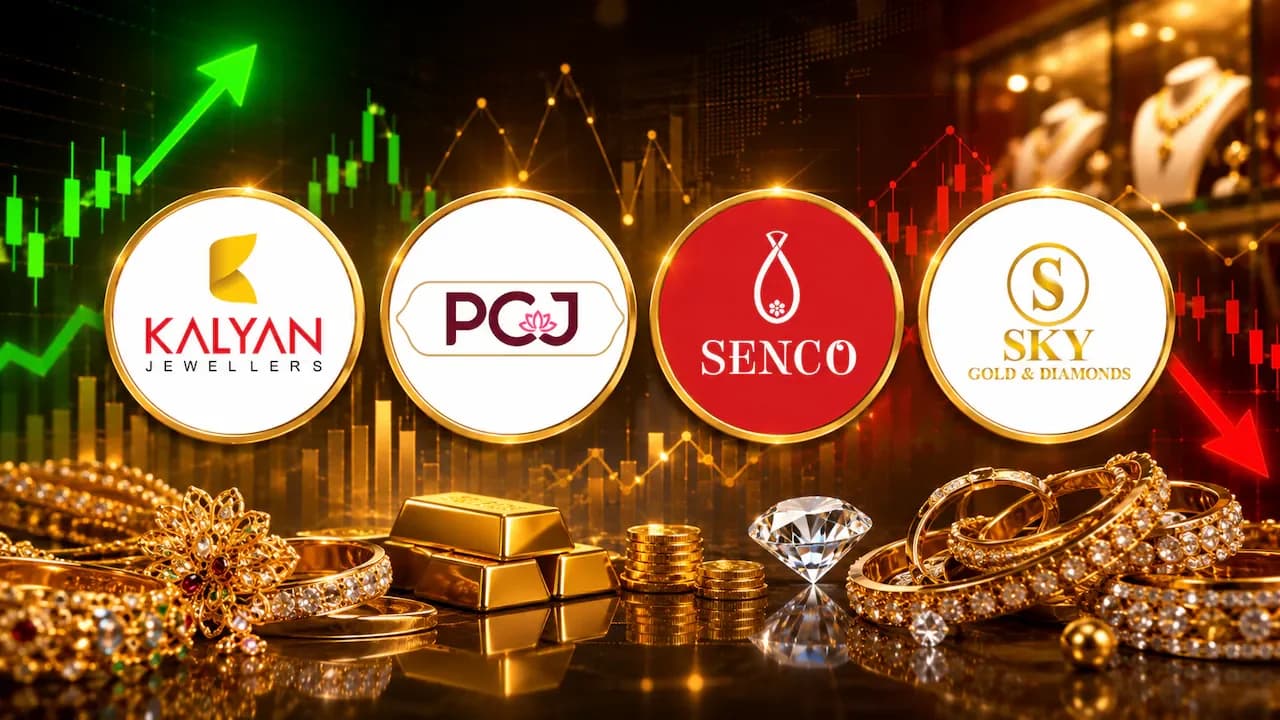
The movement in jewellery stocks comes amid a sharp rise in gold prices, with 24K gold prices in India up ₹600, or 0.38%, at ₹1,60,000 per 10 grams and 22K gold priced at ₹1,46,667 per 10 grams. As reported by Essential Business Intelligence, gold prices have posted strong gains with 24K gold prices in India rising 12.5% over the past month and 57.5% over the past year. Globally, spot gold was up 0.8% at $4,630.09 per ounce by 0232 GMT, while US gold futures gained 0.7% to $4,685.50. The precious metal's strength was supported by continued concerns around currency debasement and investor anticipation of remarks from US Federal Reserve Chair Kevin Warsh later this week. However, Friday's decline in gold prices came after a recent strong run that has supported jewellery sales in value terms but has also increased affordability pressures for consumers.
India's jewellery market is experiencing a significant shift as consumers buy fewer grams but maintain resilient spending patterns. According to the World Gold Council, India's jewellery demand fell 17.1% by volume in H1 2026, while demand value rose 40% to ₹2.13 lakh crore. In Q2 CY2026, India's jewellery demand fell 15.4% year-on-year to 75.1 tonnes, while jewellery demand value rose 34.4% to ₹1.13 lakh crore. As noted by CareEdge Ratings, "While the overall volume demand for jewellery could remain under pressure owing to the steep rise in gold prices and price-sensitive nature of purchases, the overall consumer spending on jewellery is expected to remain resilient." This paradox is driving organised jewellers to focus on selling more value per gram rather than volume, with the World Gold Council noting that jewellery demand has been strengthening, with retailers replenishing inventories ahead of the festive season.
Despite volume challenges, major jewellery companies are reporting robust financial performance. Titan's jewellery business grew 43% in Q1 FY27, with consolidated revenue rising 46% to ₹10,589 crore. The company's recycled gold accounted for more than 46% of revenue during the quarter, with its "Shine with India" gold recirculation campaign pushing recycled gold's share above 55% in June. Kalyan Jewellers reported 46% growth in consolidated revenue, while Senco Gold also entered FY27 with strong growth. The divergence between volume decline and value growth explains how jewellers can continue reporting revenue growth even when gold volumes weaken. JPMorgan remains constructive on the organised jewellery retail market, expecting jewellery demand to remain sustained through the second and third quarters, supported by an extended festive season, resilient wedding demand and retailer initiatives.
The jewellery sector is undergoing fundamental changes as consumers shift toward lighter, design-led pieces and experience-driven retail environments. According to CBRE's research, jewellery's share of organised retail leasing increased from 2% in 2019 to 8% in 2025, with showrooms larger than 8,000 sq ft accounting for 50% of jewellery retail leasing in 2025. Companies are expanding beyond traditional gold jewellery, with Senco Gold introducing a titanium jewellery range for men priced at ₹20,000-₹1 lakh and lab-grown diamond jewellery through its Sennes brand. The shift reflects consumers' demand for fashion jewellery as a high-frequency lifestyle accessory and accessible luxury options for younger consumers. JPMorgan expects margins to remain broadly range-bound, supported by premiumisation, operating leverage and efficiency measures, with the brokerage highlighting gold-exchange programmes, lightweight and lower-carat jewellery and affordable everyday-wear collections as key strategies helping organised jewellers maintain consumer participation despite elevated bullion prices.