The International Monetary Fund (IMF) has retained India as the fastest-growing major economy globally, projecting growth of 6.4% for FY26 and 6.7% for FY27, according to the latest July 2026 World Economic Outlook Update. On a calendar-year basis, India's growth is projected at 7.0% for 2026 and 6.4% for 2027. The forecast marks a marginal 10-basis-point downgrade for the current fiscal year compared with the Fund's April 2026 projections, but a 20-basis-point upgrade for FY27. India's projected FY26 growth of 6.4% is more than double China's 4.6%, with the IMF noting that China's growth would slow further to 4.1% in 2027 as higher global oil prices and structural headwinds weigh on activity. The United States is forecast to grow 2.3% in FY26, the euro area 0.9%, and Japan just 0.6%, with India's pace well ahead of the broader emerging market and developing economies cohort, projected at 3.8%. The IMF has now projected India to grow at 6.7% in fiscal year 2028, representing an increase of 20 basis points from the 6.5% growth projected in April, supported by strong momentum in private consumption and services activity. According to Deniz Igan, Division Chief (World Economic Studies), the forecast revisions are driven by better-than-expected recent data and high-frequency indicators showing considerable resilience in overall economic activity, though these positive effects are offset by higher energy prices in the baseline and greater pass-through of higher oil prices to fuel prices in India.
The IMF has projected energy prices to remain higher than they were before the war, with the average petroleum spot price index estimated at $89 per barrel, 9% higher than assumed under the reference forecast in the April 2026 WEO. Natural gas prices, based on Dutch Title Transfer Facility futures, are projected to be 15.5% higher than the April reference forecast, corresponding to an increase of 32% in crude oil prices and 22% in natural gas prices in 2026, relative to 2025. Fertiliser prices are projected to rise by 26%, while food prices are expected to increase by 8%, reflecting higher energy and fertiliser costs and more expensive transport. However, India, as a major energy importer with limited direct exposure to Iran-US hostilities relative to some regional peers, has so far avoided the sharper growth downgrades seen in energy-importing economies without a strong technology export base. The IMF expects growth to recover to 6.7% in the next financial year, with the multilateral lender noting that the economy could regain some momentum once the external shock from higher energy prices begins to ease. As per the IMF, moving into 2027, the Fund expects a strengthening of the economy as the energy shock dissipates, with medium-term growth estimated at around 6.5% and the output gap closing, leading to some pickup in activity.

The IMF's report, titled Global Economy in Crosscurrents of War and Technology, noted that the war in the Middle East has created a negative supply shock through elevated energy prices, while the artificial intelligence-driven technology cycle has provided an offsetting boost to countries plugged into that value chain. India's resilience is attributed to strong momentum in private consumption and services activity, even as the global economy navigates what the Fund called 'crosscurrents of war and technology'. Global growth overall is projected to slow to 3.0% in 2026, down from an average of 3.5% recorded in 2024-25, though this represents a modest slowdown that is broadly unchanged on a cumulative basis compared with the April forecasts. The IMF expects global headline inflation to rise to 4.7% in 2026 before easing to 3.9% in 2027, a trend that domestic consumption strength in India has helped counterbalance. The Fund flagged that elevated energy prices, which squeeze real incomes, were a key factor in their revised forecast, but India's diversified economy has shielded it from the sharper growth downgrades seen in other energy-dependent economies. The modest slowdown reflects the effects of the war in the Middle East, partly offset by accelerated demand-driven momentum in the global technology cycle, supported by advances in artificial intelligence (AI) and its adoption, with the impact varying significantly across countries depending on their exposure to the conflict and their position in the technology value chain.
The first quarter of FY 2026-27 has closed on a positive note, with several high frequency indicators showing strong momentum. As reported by The Times of India, GST collections rose 13.9% to ₹1.95 lakh crore, almost touching ₹2 lakh crore, with total collections for the April-June quarter reaching ₹6.32 lakh crore, a rise of 8.4%. Retail sales of vehicles went up 22% year-on-year to 2.56 million units, the highest ever figure for June, driven by sustained demand for passenger vehicles, two-and-three wheelers, and commercial vehicles. Passenger vehicle dispatches jumped by 24% in June, while UPI transaction volumes rose 23% and electricity consumption increased 11.6% to 166.5 billion units. However, some indicators show signs of moderation, with manufacturing and services PMIs dropping in June - while manufacturing is at a 3-month low, services has hit a 17-month low, though PMI readings remain in expansionary terrain. India's economic indicators back in green - almost, with results from the RBI Pulse survey showing close to half of firms surveyed witnessing an increase in selling prices, while consumption of petroleum products declined and industrial fuels moderated in May.
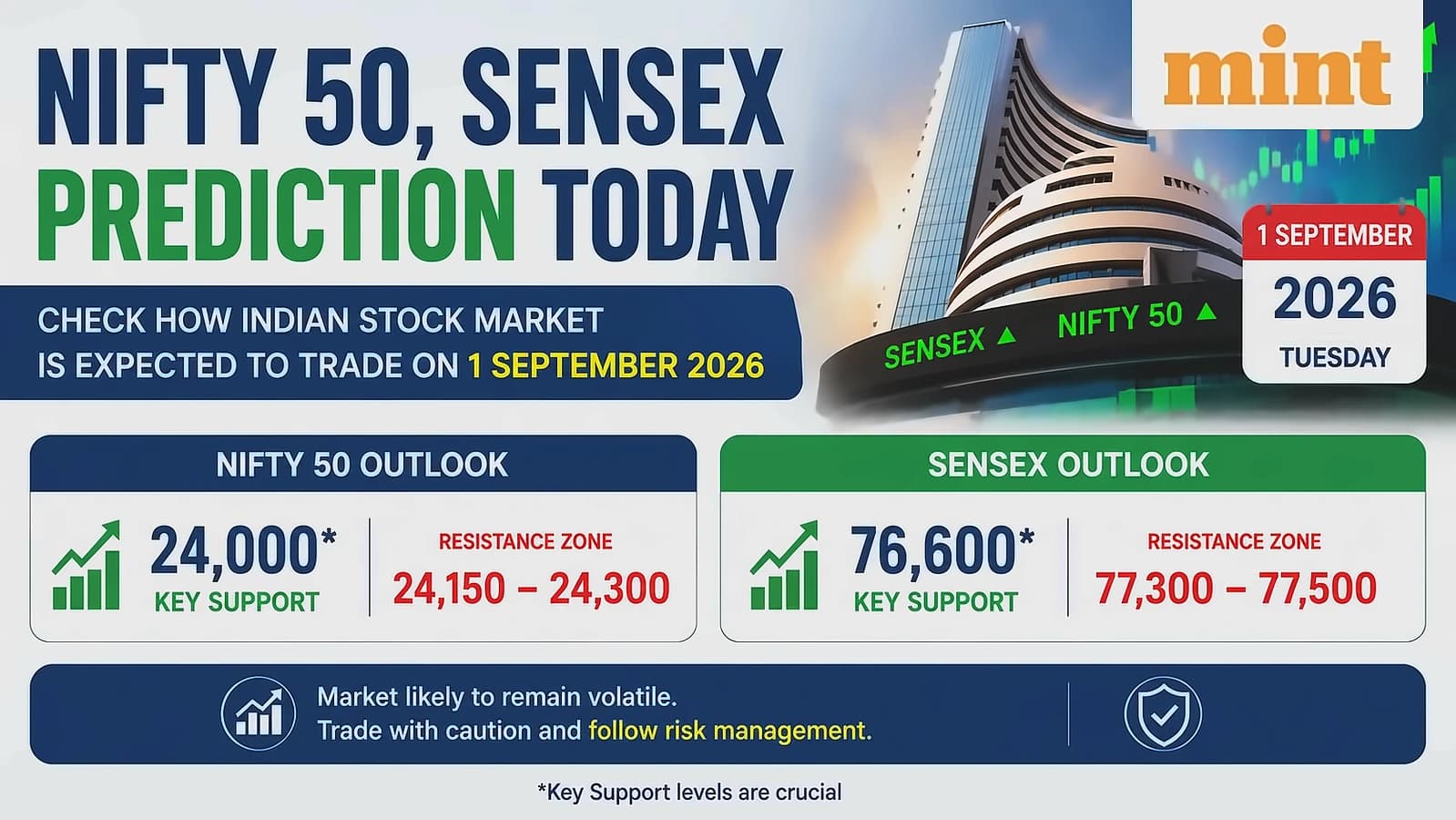
The NSE Nifty 50 Index is emerging as a safe haven for global investors amid the ongoing artificial intelligence market frenzy. According to reports from The Economic Times, the index has demonstrated remarkable stability compared to other major benchmarks, moving 1% or more on just about one-third of the days in the first half of the year. This performance places it between the MSCI Emerging Markets Index and the S&P 500 Index, with the benchmark index logging 38 sessions with moves of 1% or more in the first six months of 2026, compared with 59 for MSCI's emerging-market and Asian gauges and 32 for the S&P 500. South Korea's Kospi index was particularly volatile with 79 days of fluctuations of at least 1% - two-thirds of the days in 2026. The India NSE Volatility Index dropped for a third straight month in June, falling below its one-year average and reaching its lowest level since February, marking a significant improvement from April when the gauge was at a one-year high.