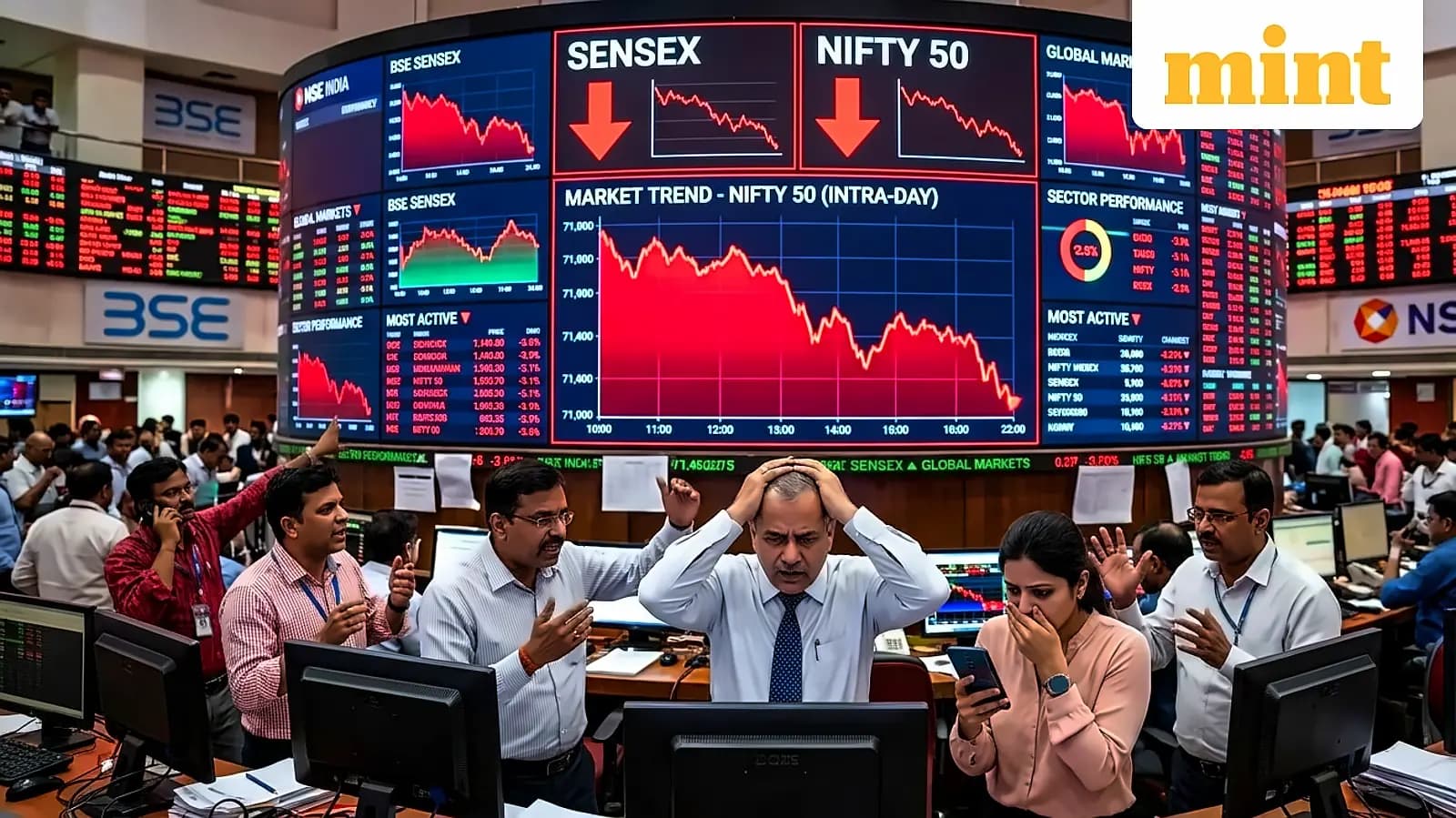
The Indian stock market has experienced significant challenges in the first five months of 2026, with the Sensex declining 10.83% and Nifty 50 falling 8.54% on a year-to-date basis. According to reports from Mint, the market is witnessing intense, choppy trading in May, with the Nifty 50 consolidating in a tight but volatile range while attempting to hold the 24,000 psychological support level. On Wednesday, benchmark indices turned negative after opening higher, with the Sensex trading 77.80 points lower at 75,935.11 and Nifty declining 29.15 points to 23,897.80 despite initial gains of 127.83 points and 36.45 points respectively.
Market experts indicate that hopes of a resolution to the US-Iran conflict are improving investor confidence, with recent comments from the US administration strengthening belief in potential negotiations. However, tensions have escalated significantly with US military strikes in southern Iran on Tuesday, targeting vessels allegedly attempting to deploy mines along with missile launch sites. According to The Economic Times, Iran's Islamic Revolutionary Guard Corps said it would respond to violations of the ceasefire after identifying and engaging US drones and an F-35 fighter jet that had entered Iranian airspace. The geopolitical tensions have created significant market pressure, with India remaining heavily dependent on West Asia for crude oil, LNG and trade routes.
Brent crude prices have surged beyond $126 per barrel, marking a dramatic increase from the previous levels of $90-100 range as the Middle East conflict enters its third month. As reported by The Times of India, disruptions through the Strait of Hormuz are increasing pressure on the global oil market, with inventories declining and potential production losses mounting. Swiss multinational investment bank UBS said on Friday that observed global oil inventories fell by a combined 246 million barrels in March and April, while cumulative production losses could cross 1 billion barrels by the end of May. Saudi Aramco CEO Amin Nasser warned that disruptions in Hormuz could delay stability in global oil markets until 2027, with close to 100 million barrels of oil supply per week potentially affected.
The Middle East conflict is creating significant inflationary pressures across domestic markets, with home-cooked thali costs rising 2% year-on-year in April 2026, according to Crisil Intelligence's Roti Rice Rate report. Tomatoes emerged as the biggest culprit, with prices jumping 38% to ₹29 per kg from ₹21 per kg, while vegetable oil and LPG prices also rose 7% each. However, some relief comes from onions becoming 16% cheaper and potatoes falling 14%, helping to offset some cost increases. The rupee's depreciation against the dollar is acting as an additional cost pressure, with petrol and diesel prices already jumping by ₹7.5 per litre, pushing up transport and logistics costs across all sectors.
Devarsh Vakil, Head of Prime Research at HDFC Securities, told Mint that near-term direction will depend on how geopolitical tensions evolve, crude oil stays contained, and whether foreign fund flows remain stable. According to the report, Vakil noted that while markets may remain volatile in the near term, the worst part of the correction appears to be behind us for now. He emphasized that the earnings season has been broadly better than feared, with companies delivering largely in line or modestly better-than-expected results. Nikhil Gangil, CIO at Instrinsic Value, believes the market has formed a 'long-term bottom after nearly 18-20 months of correction' and doesn't see a strong reason for another major correction.