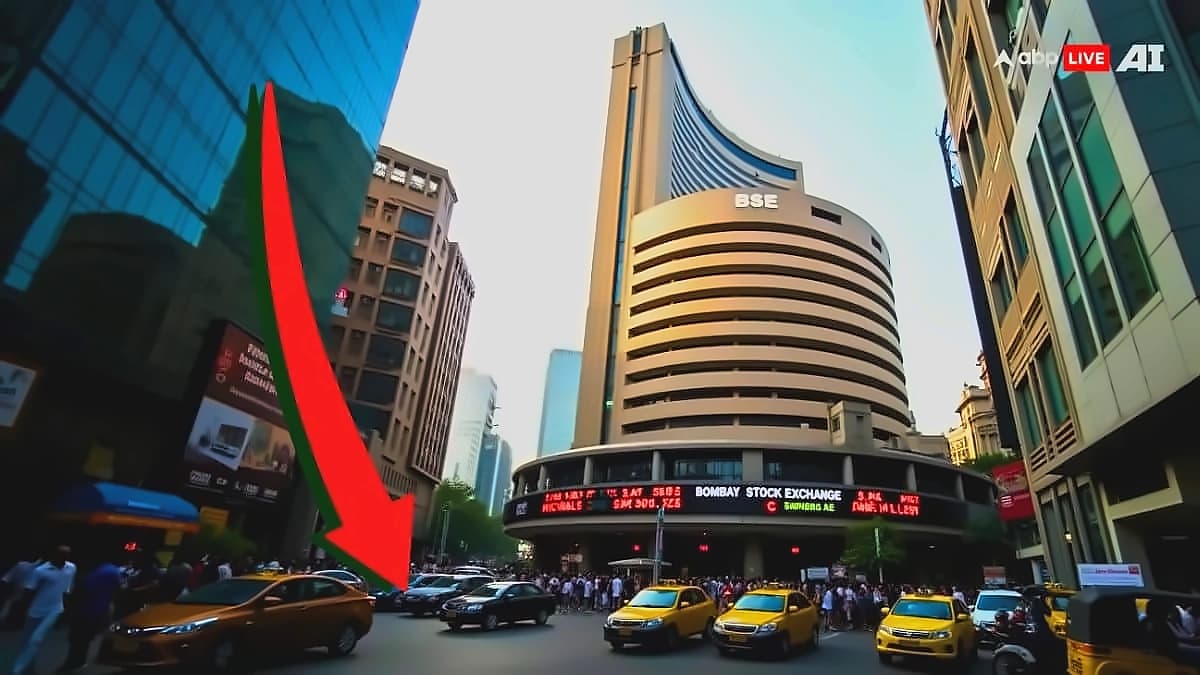
Indian markets ended the week lower, with the NIFTY50 falling 2.2% to close at 23,643 and the SENSEX dropping 2.7% to 75,237. According to market reports, this marked the end of two consecutive weeks of gains, with selling pressure broad-based across all major sectors. The Small-cap 250 and Mid-cap 150 indices fell 4.1% and 2.2% respectively, indicating that the selling pressure extended beyond headline indices to the broader market. Recent market movements showed sharp volatility with several stocks delivering strong gains while others faced heavy selling pressure, as reported by market analysts.
The Indian rupee closed near 95.90 against the US dollar, its weakest level in 12 months, adding to market pressure. As reported by market analysts, the sharp decline was attributed to elevated crude oil prices, a stronger dollar, and persistent FII outflows. Sectorally, IT stocks were the biggest drag, with the NIFTY IT index falling 5.7% for the week, while Real-Estate (-8.1%), PSU Banks (-4.1%), and Automobiles (-4.3%) witnessed significant cuts. However, defensive sectors like Pharma (+2.1%) and Metals (+1.9%) witnessed buying interest. Recent stock-specific movements included Biocon, Saregama, Oil India, and MCX emerging among the top gainers, while Nava, Clean Science, HUDCO, and HAL saw notable declines.

Market breadth deteriorated significantly, with the percentage of NIFTY50 stocks trading above their 50-day moving average dropping from around 74% to nearly 40%. According to market reports, this represents a concerning shift as breadth had improved strongly from March lows, moving from deeply oversold levels near 5-10% to above 70% by late April. Foreign investors remained net sellers, selling shares worth ₹13,583 crore, while domestic investors supported the markets by buying shares worth ₹18,524 crore. The government's decision to raise petrol and diesel prices by ₹3 per litre for the first time in four years further stoked inflation concerns.
The NIFTY50 index remains in a choppy setup after the sharp weekly fall, with 23,800–24,000 acting as the immediate resistance zone where the index needs to reclaim strength. As reported by market analysts, 23,550 remains the first important support level, and a decisive close below this level can weaken the structure further and bring 23,300–23,250 back into focus. The recent low near 23,262 will also remain an important level for traders to monitor in the upcoming sessions. Investors continue to track earnings, global cues, and sectoral momentum closely as markets navigate the current volatility.