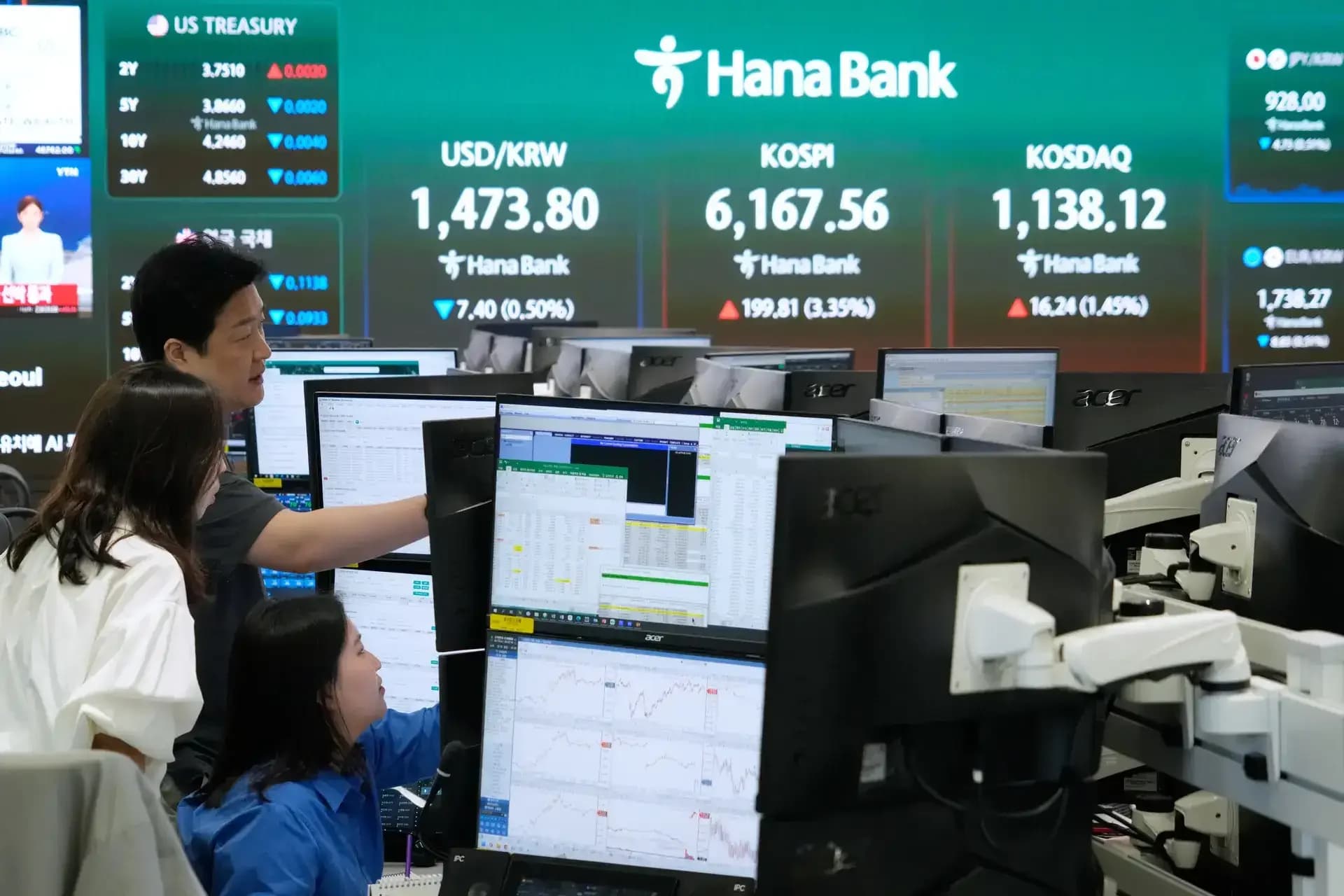
Global stock markets are staging a defiant rally nearly two months into the Iran conflict, with investors piling back into artificial intelligence trades and emerging-market stocks. According to reports from Bloomberg, markets have largely looked past the geopolitical tensions to focus on corporate fundamentals, even as oil prices remain elevated. The US dollar has mostly given back its gains from the conflict start, while equities are charging back toward all-time highs across major markets including the US, Taiwan, and South Korea. As PGIM Fixed Income analyst Magdalena Polan notes, markets may be applying the 'transitory' principle to a situation that will continue to work its way through the system over a prolonged period of time, with investors continuing to focus on global liquidity and adopting a glass half full read of fundamentals.
The war's energy supply shock has pushed oil and gasoline prices higher, but oil markets are showing signs of stabilization. According to Associated Press, Brent crude oil prices have pulled back from their peak of $119 when war worries reached their height to around $100 on Wednesday. The price for a barrel of Brent crude oil, the international standard, went from roughly $70 before the war to $119 when worries reached their peaks. Much of the focus has been on the Strait of Hormuz, which oil tankers use to exit the Persian Gulf. If Iran keeps the strait closed, and if the U.S. Navy continues to blockade Iranian ships, everyone will get hurt, as customers worldwide will not get oil, and Iran will not get revenue from selling its own crude. As Macquarie Group strategist Thierry Wizman notes, traders may be thinking that the economic war may be more effective in getting concessions from Iran's regime than was the kinetic war only, and that this will end the war sooner, rather than later.

Company earnings have provided markets with much-needed support, with nearly 80% of S&P 500 companies reporting first-quarter results beating analyst estimates according to Bloomberg data. A number of brokers have already revised up earnings growth for the year, leading analysts to turn more upbeat on fundamentals. Technology shares have been the major driving force behind the stock rally, with solid artificial-intelligence demand showing resilience amid the war. On Wednesday, GE Vernova reported a 13.7% surge after the company, whose products help generate about a quarter of the world's electricity, reported profit for the first three months of the year that blew past analysts' expectations. The company's electrification business booked $2.4 billion in equipment orders for data centres during the quarter, more than it did during all of last year. This follows Taiwan Semiconductor Manufacturing Co.'s raised 2026 revenue outlook and Samsung Electronics Co.'s eight-fold jump in quarterly profit. GE Vernova also raised its revenue forecast for the year, benefiting from the rise of artificial-intelligence technology and increased demand for power from AI data centres. On Thursday, SK Hynix Inc. reported a five-fold jump in quarterly profit as the South Korean memory chipmaker reiterated plans to ratchet up its spending, following similar strong results from other semiconductor companies.
The S&P 500 closed at a record 7,137.90 on Wednesday, rewarding investors who remained patient after the index fell nearly 10% below its prior record during the early days of the war. According to Associated Press, about 15% of S&P 500 companies have already reported first-quarter results, with the vast majority topping analyst expectations. If the rest of the companies in the index just match analysts' estimates, earnings for S&P 500 companies will end up being roughly 14% higher than a year earlier according to FactSet. Bank of America's CEO Brian Moynihan said last week that "we saw healthy client activity, including solid consumer spending and stable asset quality, indicating a resilient American economy." PepsiCo last week stuck by its forecast for profit over 2026, with CEO Ramon Laguarta encouraged by how resilient its international business has been. Analysts have actually raised their expectations for upcoming profits for S&P 500 companies since the war began, forecasting 20% growth in the second quarter. The Dow Jones Industrial Average added 340.65 points to 49,490.03, while the Nasdaq composite climbed 397.60 to 24,657.57.