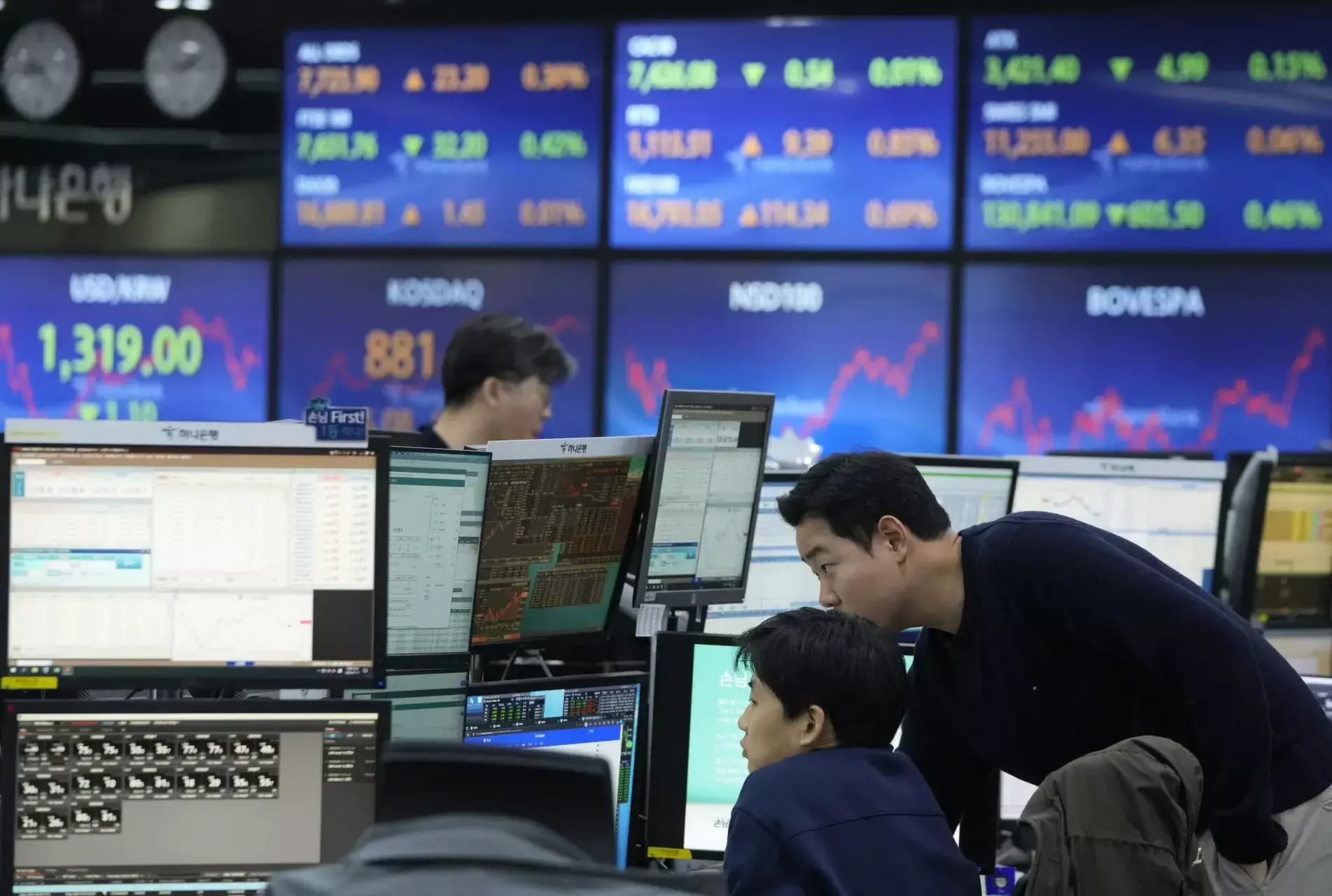
Asian share markets have demonstrated exceptional performance, with Japan's Nikkei 225 rising 0.5% to a further record high after gaining almost 5% last week to all-time highs. According to Business Standard, South Korea rose 1.3% after surging 8% last week, while Taiwan climbed almost 6% last week. The rally continues to be driven by strong gains in semiconductors and AI-related technology, with MSCI's broadest index of Asia-Pacific shares outside Japan adding 0.2%. However, Brent crude rose 1.9% to $92.89 a barrel and U.S. crude added 2.4% to $89.46 as geopolitical tensions in the Gulf region offset some market gains. While negotiators from Washington and Tehran are working on a deal, President Trump has remained notably silent on their progress, with Defense Secretary Pete Hegseth indicating the U.S. is ready to restart attacks on Iran if no agreement is reached. The tensions were further complicated by an Israeli push further into Lebanon in the battle against the Iranian-backed Hezbollah militant group.
Global equity markets have achieved unprecedented heights driven by renewed enthusiasm for artificial intelligence investments and resilient corporate earnings. According to reports from LiveMint, the S&P 500, Nasdaq, and Nikkei have all scaled new record highs, while markets such as KOSPI and Taiex are witnessing buying on declines. The rebound in AI trade has fueled a rally in technology stocks globally, with better-than-expected first-quarter earnings brightening investor confidence that massive AI spending is yielding results. Stocks across the AI ecosystem have emerged as hot picks, with growing interest from overseas investors in the sector. Latest data shows US consumer confidence fell to 93.1 in May from an upwardly revised 93.8 in April, as higher prices linked to Middle East conflict weighed on sentiment, though the Expectations Index rose to 74.4 from 73.4. Stock futures were generally higher this morning with the tech sector leading the way again, suggesting another record high for the Nasdaq today, as reported by StoneX Group Inc., with the tech sector continuing to outperform other market segments.
US stocks ended mixed as the Dow Jones Industrial Average rose 189.08 points (0.37%) to a record closing high of 50,650.76, driven by healthcare and consumer gains, while the S&P 500 gained 1.81 points (0.02%) to 7,520.93 and the Nasdaq Composite rose 18.55 points (0.08%) to 26,676.60. According to ETMarkets.com, rising healthcare and consumer stocks boosted the Dow, with consumer discretionary leading sub-index gains. However, tech and chip stocks lagged as investors took a pause from the AI-led market rally while cautiously watching Middle East peace talks. JPMorgan Chase shares fell after CEO Jamie Dimon warned that expenses this year could be $1 billion higher than estimated, while Zscaler tumbled after projecting fourth-quarter revenue below expectations. The gains have been narrowly based with the AI-linked big 10 companies making up 40% of the S&P 500 and only 21 stocks of the 500 making record highs, while tech stocks climbed almost 16% in May, consumer discretionary and healthcare managed little more than 2%, and consumer staples lost more than 3%.

The Federal Reserve's policy stance remains a key focus for markets, with U.S. 10-year yields rising 3 basis points to 4.470% as the inflationary pulse from oil continues to hamper bond markets. According to Moneycontrol, markets are implying a 50-50 chance the Federal Reserve will have to hike rates by year-end to prevent rising prices from getting baked into inflationary expectations. A host of Fed members are set to speak this week, while major data include the ISM survey of manufacturing and the May payrolls report on Friday, with market forecasts for a solid rise of 85,000 in employment to keep the jobless rate steady at 4.3%. Anything stronger would likely see the odds of a hike narrow further, while the market's hawkish outlook has kept the dollar broadly steady with the Japanese yen and euro hampered by energy import reliance. The euro stood at $1.1645, having spent the past week hemmed in between $1.1585 and $1.1661, while gold was little changed at $4,535 an ounce having found little support as a safe haven. As per JPMorgan's Michael Feroli, "While uncertainties remain, the acute risk phase for the global economy should be over if tankers can begin moving again, though oil prices are likely to remain elevated for some time as inventories get rebuilt and the supply infrastructure in the Middle East is repaired."