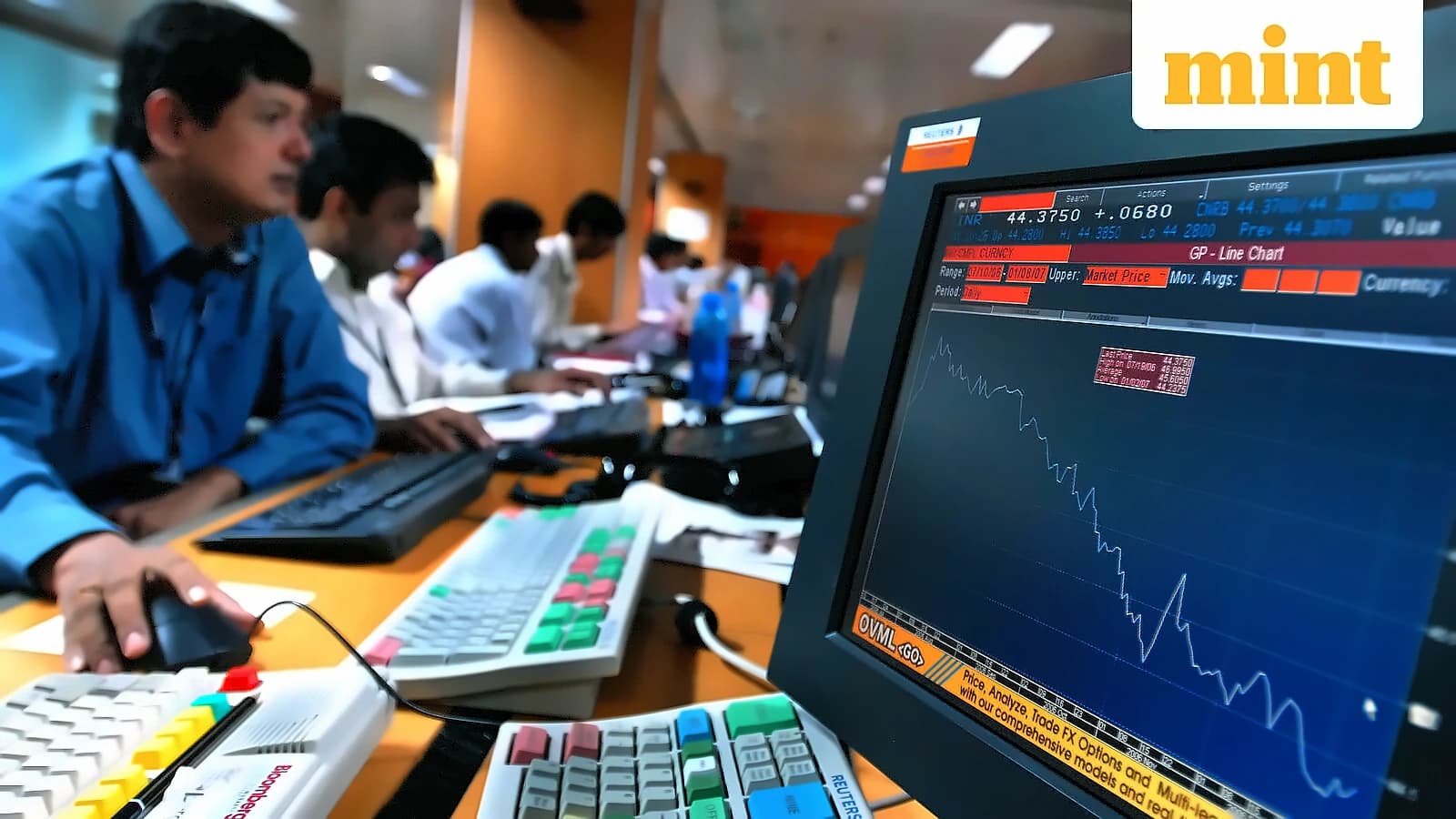
Both NIFTY50 and BSE SENSEX opened sharply lower on Wednesday, May 20, with the NIFTY50 falling 163 points to 23,455 from its previous close of 23,618, while the SENSEX dropped 495 points to trade at 74,705 against its previous close of 75,200. According to The Hindu BusinessLine, the selloff came on the back of rising US Treasury yields, elevated crude oil prices, and a rupee touching fresh record lows. Only three stocks gained on the Nifty 50 in early trade - Hindalco led gainers, rising 1.26% to ₹1,061.50, TCS added 0.50% to ₹2,338.70, while Infosys edged up 0.02% to ₹1,197.10. On the losing side, Tata Steel fell the most, declining 2.26% to ₹204.56, Eicher Motors dropped 1.82% to ₹6,757.50, Eternal slipped 1.72% to ₹242.97, Nestle India fell 1.50% to ₹1,409.90, and M&M declined 1.46% to ₹3,047.

The Indian rupee weakened to a fresh record low of 96.61 before recovering slightly to 96.54, adding to market pressures. As reported by The Hindu BusinessLine, Ponmudi R of Enrich Money flagged the currency as a serious concern, warning of "mounting pressure on inflation, import costs and broader economic stability" from crude prices holding above $100 per barrel. Brent crude held above $110 a barrel, with July futures at $110.76, even as US President Donald Trump signalled the Iran war could end soon. WTI crude traded at $103.82, while on the domestic Multi Commodity Exchange, June crude futures rose 0.63% to ₹10,090. Foreign investors sold ₹2,457.49 crore worth of assets in a single day on Tuesday's market session over fears of a falling rupee and elevated oil rates, as per The Economic Times.
The session reflected continued caution in the market, with technical indicators showing weak momentum and resistance at higher levels. As reported by NDTV Profit, the Nifty traded in a 195-point band during the session, marking its narrowest daily range in seven trading sessions and forming an NR7 candle pattern. The candle formed with a small body and a long upper shadow, indicating selling pressure at higher levels. The index also closed near the day's low, suggesting sellers retained control through the session. On the hourly chart, the Nifty continues to trade below the moving average ribbon, while the MACD remains below the zero line, indicating weak short-term momentum. For the last four trading sessions, the 8-day exponential moving average and the 50-day moving average have acted as resistance levels, with the index remaining about 0.5% below the 50-day moving average. The 14-period daily RSI remained below the 50 mark, while the 50-day and 200-day moving averages continued to trend lower.
In banking, the sector remained under pressure with Bank Nifty's RSI "slipping to the 40 mark with a bearish crossover, while the MACD continued to remain below both the signal and zero lines," as noted by Aakash Shah of Choice Equity Broking. Immediate support for Bank Nifty was placed at 52,800–52,200, with resistance near 54,600–55,000. Hariprasad K of Livelong Wealth highlighted divergence within financials, with private banks like Kotak Mahindra Bank and ICICI Bank showing "relatively stronger resilience due to healthier balance sheets," while PSU banks remained under pressure from elevated bond yields. India VIX declined 4.87% to 18.67 but remained elevated, with the Nifty Put-Call Ratio at 1.10, down from 1.24 in the previous session.
Gaurav Udani of ThinCredBlu Securities advised traders to "avoid aggressive longs at the open, and stay focused on disciplined, level-based execution," with 23,400 as the immediate level to watch. A break below that level could push the index toward 23,100, while on the upside, 23,800 remains the key resistance. Shrikant Chouhan of Kotak Securities added that "short-term market texture is non-directional, and range-bound activity is likely to continue in the near future." A decisive close above the 23,758-23,860 zone would be required for bulls to regain control of the trend, with immediate support placed near 23,550. The last six sessions of sideways movement have not produced a fresh directional signal, with broader indicators continuing to signal caution.