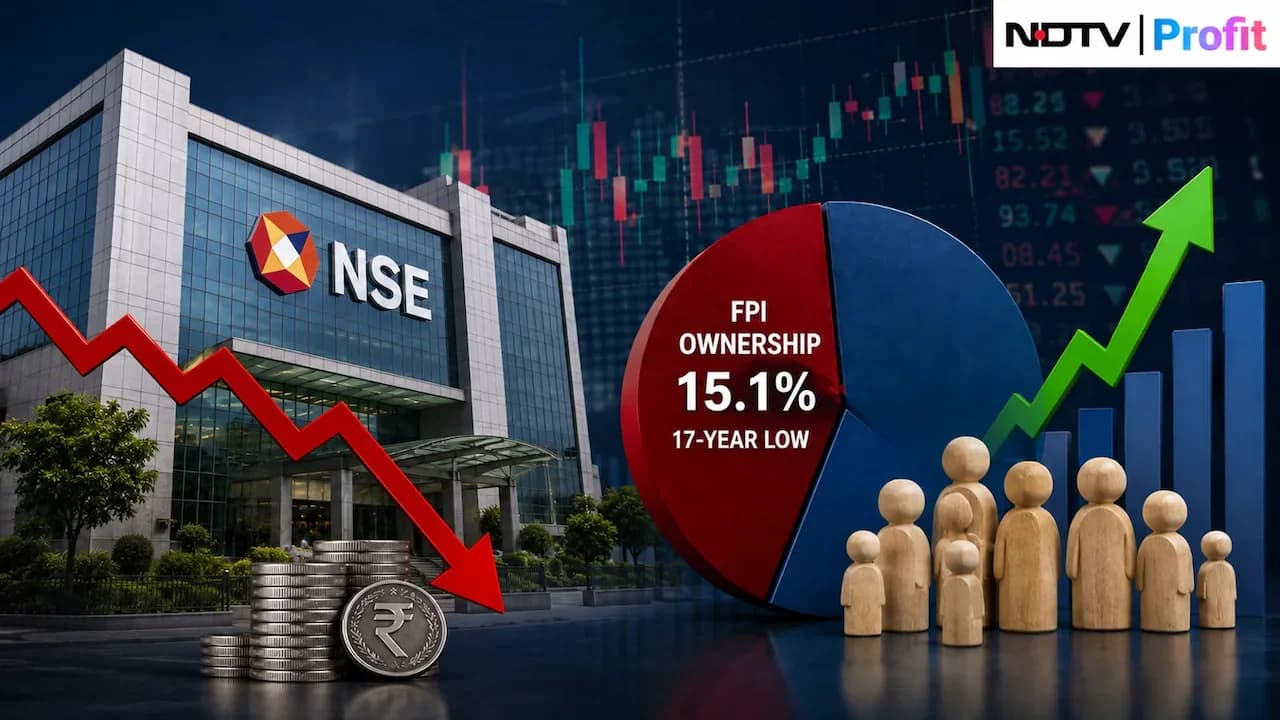
Foreign portfolio investors (FPIs) have reached a 15-year low of 15.8% market share in Indian equities by March 2026, while domestic institutional investors (DIIs) achieved a record 17% share, according to SEBI's Annual Report 2025-26. This dramatic shift represents the most significant change in ownership structure since 2007, with FPIs maintaining their buying momentum in August 2026 with ₹12,921 crore investments despite the overall decline. The previous month saw ₹20,200 crore in FPI inflows, marking a sharp turnaround after four consecutive months of heavy selling that included massive outflows of ₹1.17 lakh crore in March and ₹60,847 crore in April. As per SEBI, domestic institutional investors recorded a cumulative net investment of ₹8.5 lakh crore during 2025-26, acting as a critical countervailing force that absorbed foreign divestments.
Mutual fund systematic investment plans (SIPs) emerged as the primary driver of domestic market participation, with SIP accounts increasing 3.9% to 10.45 crore in 2025-26 from 10.05 crore in the previous financial year. Most significantly, average net monthly SIP investments surged 25.8% to ₹16,413 crore from ₹13,052 crore, demonstrating the growing role of domestic savings in India's capital markets. This sustained SIP growth provided crucial support during volatile market conditions, with SEBI noting that consistent mutual fund SIPs heavily supported the record domestic institutional investor inflows. The shift reflects the maturing of India's retail investment ecosystem and the increasing confidence of domestic investors in Indian equities.
Despite the ownership shift, Indian markets faced significant volatility during 2025-26, with the Nifty 50 touching a record high of 26,328.6 in early January before correcting due to geopolitical tensions in the Middle East. The index ended the financial year with a decline of 5.1%, reflecting the impact of global factors including geopolitical tensions in West Asia, elevated crude oil prices, and rising US bond yields that led investors to move money across global markets. However, India maintained its position as the world's fifth-largest stock market with total market capitalisation at ₹411.6 lakh crore at the end of 2025-26. The domestic buying helped cushion markets during this volatile period, with FPIs showing sector preferences for automobiles, consumer durables, and healthcare sectors. Recent market activity shows BSE Sensex advancing 404.53 points (0.51%) and NSE Nifty gaining 187.05 points (0.76%) in the first week of August, demonstrating continued resilience despite ongoing geopolitical uncertainties.

Despite the recent buying spree, foreign investors have remained net sellers in Indian equities in 2026, withdrawing ₹2.41 lakh crore so far, already exceeding the ₹1.66 lakh crore outflow recorded during the entire 2025. As per market experts, the sustained buying by both FIIs and DIIs was largely driven by the de-escalation of geopolitical tensions, which helped strengthen investor confidence and supported positive market sentiment. The RBI's improved growth and inflation outlook has further strengthened confidence, while relatively low foreign ownership of Indian equities leaves room for fresh allocations. The current ownership structure reflects this dynamic, with domestic institutions now holding a record 17% share while foreign investors maintain a 15.8% stake - the lowest level in 15 years.