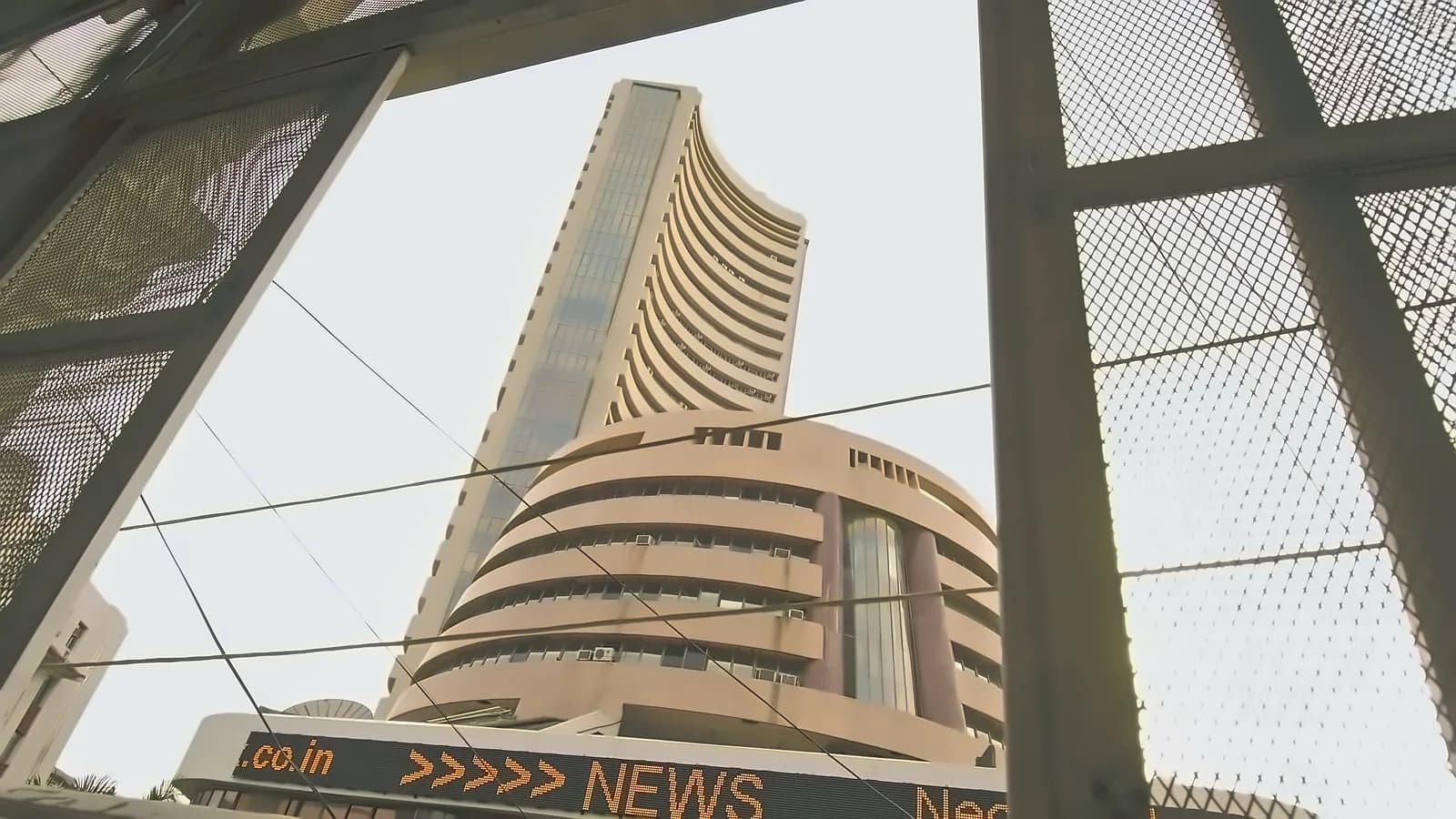
On May 15, foreign institutional investors (FIIs) net bought shares worth ₹1,329 crore while domestic institutional investors (DIIs) net sold shares worth ₹1,958 crore, according to market data. During the trading session, DIIs purchased shares worth ₹14,962 crore and sold shares worth ₹16,920 crore, while FIIs bought shares worth ₹16,300 crore but sold shares totalling ₹14,970 crore. For the year so far, FIIs have been net sellers of shares worth ₹2.64 lakh crore and DIIs have net bought shares worth ₹3.72 lakh crore. The latest FII buying comes despite being net sellers for the year, suggesting foreign investors may be targeting specific undervalued areas while local institutions reduced their exposure amid challenging market conditions.

As per a note by Bajaj Broking, benchmark indices ended on a negative note on May 15 amid heightened volatility. The Sensex declined by 160.73 points or 0.21% to settle at 75,237.99, while the Nifty fell by 46.10 points or 0.19% to close at 23,643.50. After touching an intraday high of 23,839.30, the market witnessed profit booking in the latter half of the session and slipped into negative territory amid a rise in crude oil prices and continued weakness in the Indian Rupee, which hit a new all-time low below 96 against the US dollar. The rupee weakness was linked to rising crude oil prices amid geopolitical tensions in the Middle East and global inflation worries, with Brent crude futures nearing $108.8 per barrel and WTI crude around $105 per barrel.
On the sectoral front, major weakness was witnessed in Nifty Realty, PSU Bank, Oil & Gas, and Metal indices, with these sectors falling about 1.7% to 2% during the session. However, selective buying interest was seen in Nifty Media, IT, and FMCG stocks, with the IT sector notably showing strength supported by global demand. The Nifty Midcap 100 declined by 0.45% and the Nifty Small Cap 100 fell by 0.61%, indicating broad-based selling pressure across the broader indices. This sectoral divergence reflects a cautious undertone across the market, with investors particularly sensitive to economic shifts and rising costs in sectors like PSU Banks and Realty.
India's decision to sharply raise import duty on gold from 6% to 15% comes at a time when record prices, rupee weakness and geopolitical tensions are reshaping the country's gold consumption patterns. Gold imports rose 24% year-on-year to around $72 billion in FY26, making it India's second-largest import item after crude oil. The duty hike has already pushed domestic gold prices higher by nearly ₹9,000, making fresh purchases more expensive. While physical gold demand may slow in the near term, investment demand is steadily shifting towards gold ETFs, gold mutual funds and sovereign gold bonds. Gold ETF inflows rose 34% month-on-month to ₹3,040 crore in April from ₹2,265 crore in March, with younger investors preferring products that offer liquidity, transparency and lower ticket-size investments through SIPs. Investment demand for gold in India rose 170% in the first quarter of 2025 even as jewellery demand weakened sharply, suggesting investors increasingly view gold as a mainstream financial asset rather than purely a consumption-driven product.
The Reserve Bank of India has announced the premature redemption price for Sovereign Gold Bond (SGB) 2020-21 Series-VIII, setting the price at ₹16,012 per unit based on the simple average of closing gold prices from May 13-15, 2026. The SGB 2020-21 Series-VIII was issued at ₹5,127 per gram for online buyers and ₹5,177 per gram for offline subscribers. Based on the premature redemption price, the bond will deliver an absolute return of 212.3% for online investors, meaning a ₹1 lakh investment would now be worth approximately ₹3.12 lakh. However, tax rules have been revised from April 1, restricting tax benefits and making capital gains tax applicable even for primary issue subscribers on premature redemption. The capital gains tax exemption at maturity is now restricted to original subscribers who hold their bonds for the full eight-year tenure.