The Indian stock market witnessed a sharp intraday reversal on Monday, October 12, as heavy selling in frontline stocks wiped out the gains recorded at the opening bell. According to CNBC TV18, the BSE Sensex fell 548 points to close at 71,925, while the NSE Nifty50 declined 157 points to settle at 22,363. Both indices closed near the day's lows, with the Sensex opening at 72,771.32 and touching an intraday high of 72,884.25 before falling to a low of 71,898.17. The Nifty 50 was trading at 22,378.60 around 11:40 am, declining 141.85 points or approximately 0.63% from its previous close of 22,520.45. The sell-off came after both benchmark indices began the session on a positive note, but buying momentum failed to sustain with selling pressure returning across heavyweight stocks.
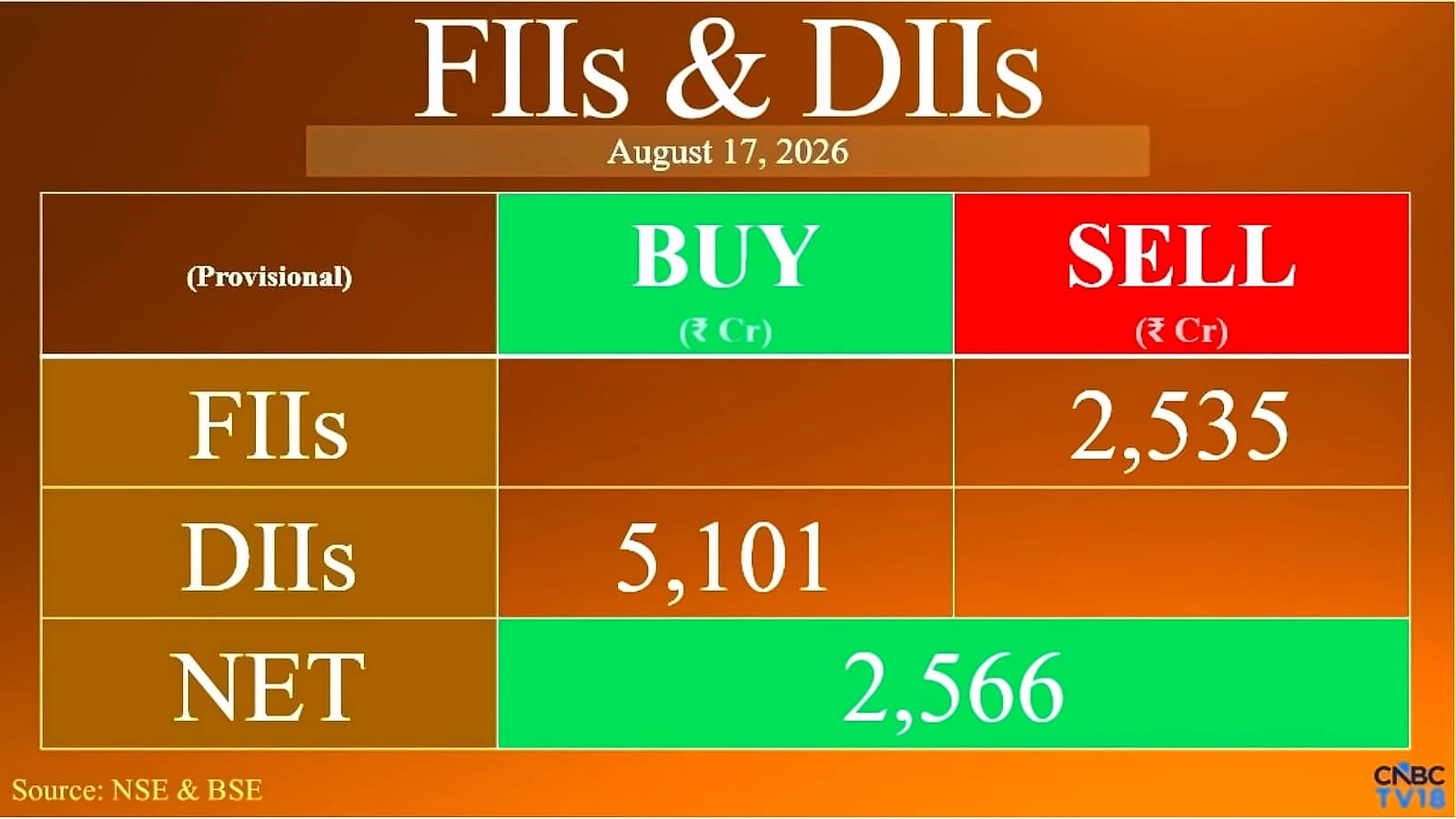
Foreign institutional investors were net sellers of equities worth ₹1,708.48 crore on October 12, while domestic institutional investors acted as net buyers, purchasing ₹3,045.02 crore worth of equities during the trading session, according to provisional exchange data. As reported by CNBC TV18, FIIs bought shares worth ₹12,583.21 crore and sold ₹14,291.69 crore during the session, while DIIs purchased equities worth ₹15,506.73 crore and sold ₹12,461.71 crore. This marked a significant shift from Friday's session when FIIs had sold shares worth ₹3,568.90 crore on a net basis while DIIs bought ₹4,743.26 crore, resulting in net institutional buying of ₹1,174.36 crore. The latest data shows FIIs sold Indian equities worth ₹30,294 crore on a net basis during the week ended October 9, while DIIs bought shares worth ₹30,313 crore, with FIIs recording their largest daily net outflow of ₹12,943.58 crore on October 8.

Banking stocks remained under pressure following the Reserve Bank of India's (RBI) measures on Cash Reserve Ratio (CRR) requirements, with the Nifty Bank ending 339 points lower at 54,918. As reported by CNBC TV18, the decline was driven by banking sector concerns over the RBI's latest monetary policy measures. The banking sector's weakness was a key factor in the broader market decline, with ICICI Bank, Larsen & Toubro (L&T) and Reliance Industries being the top contributors to the Nifty's losses. According to PL Capital, PSU banks, IT, FMCG and private banks remained under pressure, while media, auto, realty and metal stocks showed relative resilience. Among the Nifty constituents, Apollo Hospitals Enterprise, ITC and Tech Mahindra emerged as the top laggards, contributing significantly to the benchmark's decline. The PSU banks sector fell 1.31%, while IT declined 1.14%.
Hospital stocks fell sharply in the final hour of trading as investors tracked a Supreme Court hearing on drug pricing, with Avenue Supermarts, which operates DMart, declining more than 4% after its second-quarter results highlighted margin pressure. As reported by CNBC TV18, Lenskart also fell over 4% amid a large trade, with Alpha Wave likely to have been the seller. In the commodity market, Brent crude rose 1.15% to $106 per barrel, with IndiGo and Asian Paints falling nearly 1% each due to rising oil prices. However, Goodluck India jumped more than 14% following its proposed restructuring announcement. The midcap index rose 47 points to 58,835, outperforming benchmark indices, while market breadth was weak with declining stocks outnumbering advancing stocks by roughly one to one.
Despite the benchmark indices' decline, the broader markets ended in positive territory, with the Nifty Midcap 100 index rising 47 points to 58,835 and Nifty Smallcap 100 outperforming with a gain of 1.42%. According to PL Capital's Vikram Kasat, large-cap stocks remained under pressure from foreign fund selling, while mid- and small-caps outperformed on expectations of a stronger Q2FY27 earnings season. He advised focusing on fundamentally strong businesses and staggering investments until earnings visibility and market participation improve. The India VIX climbed more than 7% and moved above the 15 level, signalling growing volatility concerns among market participants. Dr. V K Vijayakumar from Geojit Investments Limited noted that the market is going through a stage wherein external headwinds are dominating the domestic tailwinds, with elevated crude prices and high US bond yields continuing to impact the market.