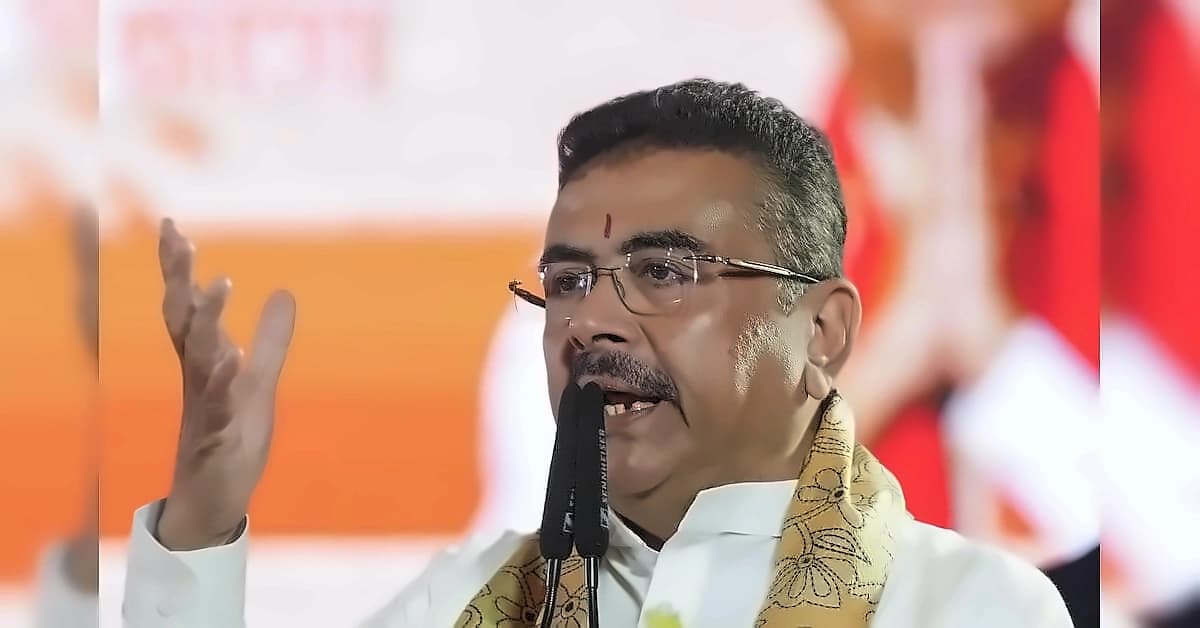
West Bengal Finance Minister Swapan Dasgupta announced on Wednesday that the BJP government would pursue a pro-business policy framework to foster an enabling environment for industrial growth while integrating the state's economy more closely with the national economy. Speaking at the inaugural edition of the Growth Driven Family Business Conclave organised by Assocham, Dasgupta emphasized that "We are unequivocally, emphatically pro-business" and noted that "from a position of being contrarian we are now part of the mainstream." The minister highlighted that "One of the most important contributions which we can make in the coming days is to assure everyone that there is a certain tectonic shift in the public culture of West Bengal." He acknowledged that conflicts between the Centre and the state do happen occasionally, but in West Bengal, the prolonged conflict sometimes was completely needless.
The Calcutta Stock Exchange board meeting is scheduled for this month to discuss the revival proposal after the West Bengal government announced its support for the 118-year-old institution. According to The Hindu BusinessLine, Deepankar Bose, public interest director of CSE, confirmed that the board will meet this month to discuss the government's decision and will provide appropriate advice to SEBI. "It is a very welcoming decision taken by the West Bengal government. We all want to see that the CSE restarts its operation. We will be holding a board meet this month to discuss the decision of the government. Following this, appropriate advice will be sent to SEBI," Bose stated. However, he emphasized that "The Calcutta Stock Exchange can resume its operation only after its regulator, SEBI, conveys its approval."
The budget proposes a comprehensive investment promotion framework with a proposed allocation of ₹5,000 crore this financial year for new incentive policies. According to Business Standard, the BJP government plans to introduce a West Bengal Investment Promotion Framework with a thrust on industrial development through a cluster approach along industrial corridors. This framework is designed to encourage investments in both MSMEs and major industrial projects, give priority to investments in North Bengal and Paschimanchal, encourage the use of green energy, and incentivise investments in emerging technologies such as electric vehicles, semiconductor devices and designs, green hydrogen and defence manufacturing. Dasgupta noted that "We must make the structure, the government incentives etc on par with the rest of the neighbouring states — so that Assam doesn't have a disproportionate advantage or Odisha doesn't benefit too much." He added that "It's really about creating an enabling environment, that's what everybody needs."
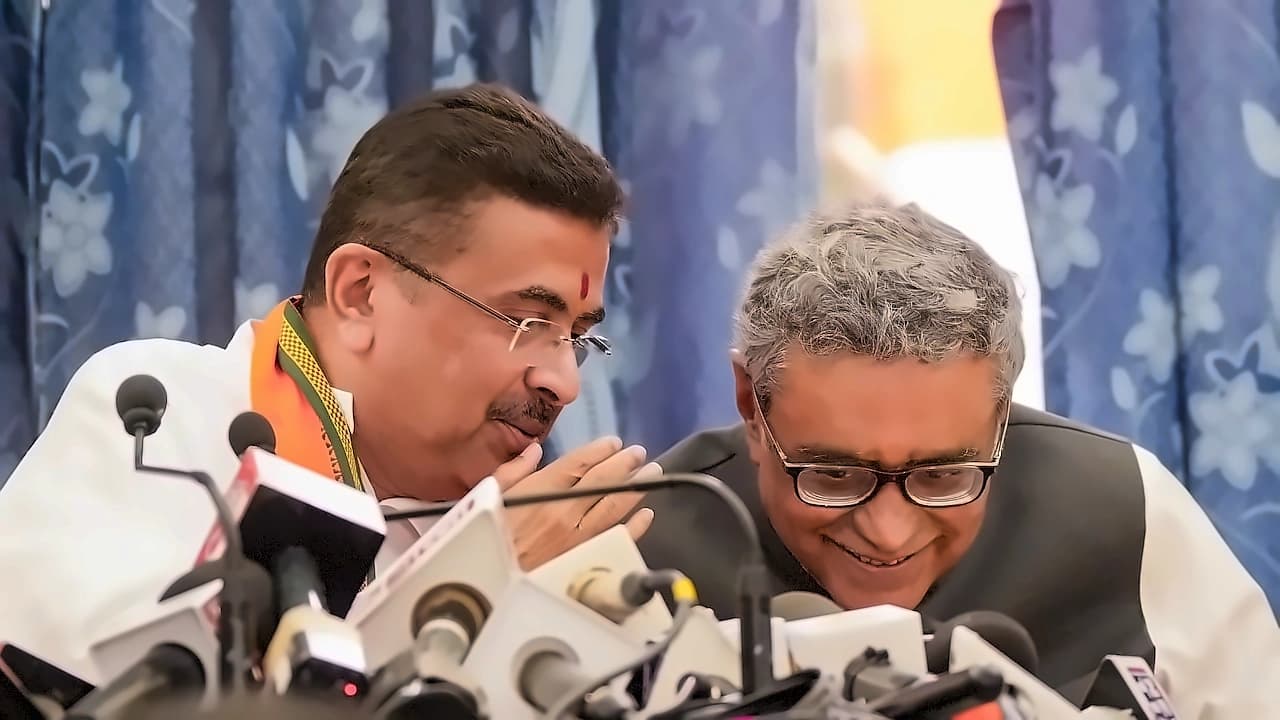
West Bengal's first full budget by the BJP government has received widespread industry praise for its comprehensive reforms across multiple sectors. According to Rediff Moneynews, Merchants' Chamber of Commerce and Industry (MCCI) president Priti A Sureka described the budget as a prescription for all-around development and said it sought to transform West Bengal into a business and investment-friendly state. Calcutta Chamber of Commerce president Anant Saharia noted that the budget addressed several long-standing concerns of investors, with the proposed ₹5,000 crore industrial incentive package directly addressing key investor concerns. The budget marks a decisive shift from incremental progress to structured industrial revival that can restore investor confidence and accelerate manufacturing growth.
Finance Minister Dasgupta emphasized that West Bengal was too Kolkata-focused and called for the growth of other urban centres. According to Business Standard, he stated that "We need either Asansol or Durgapur to get back its old importance; we need Siliguri to actually rival and challenge Kolkata in various ways." The budget proposes techno-economic feasibility studies for metro links between Durgapur-Asansol and Siliguri-Jalpaiguri, which Dasgupta said would spur the growth of these centres. "The point is, we've got to think big," he added. The minister also highlighted that the perception that West Bengal is a difficult place to do business is one that needs to be tackled, citing the Eastern Dedicated Freight Corridor linking Ludhiana to Dankuni as an example of a scheme that was stopped at the Bihar border because West Bengal was being difficult.
Finance Minister Swapan Dasgupta announced during his 2026-27 budget speech that the BJP-led West Bengal government is exploring plans to restore the Calcutta Stock Exchange (CSE) after more than a decade of inactivity. According to The Hindu BusinessLine, Dasgupta stated in the West Bengal Assembly on Monday that "The Calcutta Stock Exchange, an 118-year old institution is on the verge of closure due to several legal hurdles. My government proposes to support the revival of the Calcutta Stock Exchange so as to reclaim Kolkata's place as a financial capital." The minister emphasized that the government aims to revive the 118-year-old institution as part of its broader vision for a 'Viksit Bharat' and 'Viksit Bengal'. The revival would have multifarious advantages, including easier access to capital for Eastern India, lower costs of listing and trading, and the creation of new jobs. As reported by The Economic Times, the exchange, which has not conducted trading for more than a decade and officially surrendered its platform last year, was on the verge of closure due to several legal hurdles.