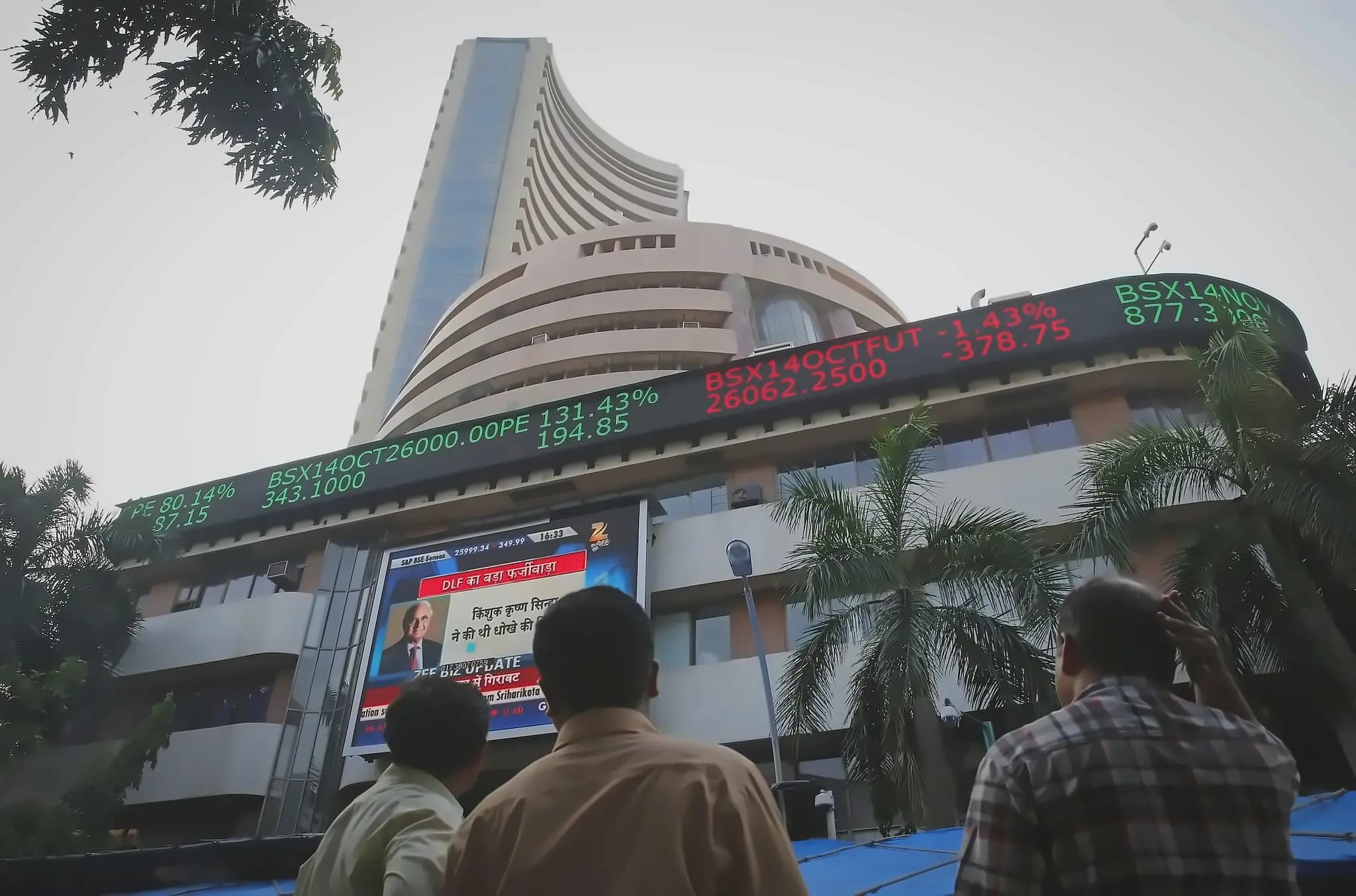
Shares of BSE Ltd. achieved a fresh record high on Tuesday, May 19, gaining as much as 4% to test the ₹4,300 mark intraday. According to reports from CNBC TV18, the stock has demonstrated remarkable momentum with gains in four out of the last five trading sessions. The stock is currently trading 3.6% higher at ₹4,268, extending its remarkable advance for 2026 to 63% so far. On May 19, BSE was the second biggest gainer on Nifty Capital Markets index, which was trading 1.8% higher with Angel One leading the gains by climbing 5.5%. With Tuesday's gains, BSE has advanced about 8% over the last two sessions amid expectations of strong passive inflows.
The stock exchange is set to join the benchmark Nifty 50 index in the September 2026 rebalancing, potentially displacing IT giant Wipro Ltd. For an index change to be triggered, there must be at least one eligible stock whose Average Float Market Cap (AFMC) is greater than 1.5 times the AFMC of the smallest index member. Analyst Janaghan Jeyakumar of Quiddity Advisors noted that BSE currently clears this bar, with its AFMC exceeding 1.5 times that of Wipro — making Wipro the most vulnerable name in the index. Assuming a single change, one-way flow for the Nifty 50 is estimated at $639 million. The broader Nifty 100 is set for more sweeping changes, with reports indicating that BSE, Hitachi Energy India, Polycab India, Vodafone Idea and Bharat Heavy Electricals could be added to the index, while likely exclusions include Macrotech Developers, Shree Cement, Indian Hotels, REC, and Zydus Lifesciences.
BSE reported exceptional financial results for Q3 FY26, with consolidated net profit jumping 61% to ₹795.47 crore compared to ₹493.67 crore in the corresponding quarter of the previous financial year. Total revenue during the January-March period rose to ₹1,630 crore from ₹926.38 crore in the year-ago period. For the entire 2025-26, the bourse's net profit jumped 88% to ₹2,487 crore as against ₹1,322 crore in FY25. The company recorded its highest-ever performance in its 150-year history in FY26, with revenue rising 59% year-on-year to ₹5,148 crore from ₹3,236 crore in the preceding fiscal year. The strong earnings were supported by higher trading activity and growth in derivatives turnover, with weekly Sensex options contracts seeing higher participation along with stronger earnings in FY26.
The BSE equity derivatives segment posted strong growth in FY26, with revenue more than doubling to ₹3,134 crore, aided by a rise in average daily premium turnover to ₹19,522 crore from ₹8,977 crore in the previous financial year. This growth was driven by a sharp jump in trading volumes, rising retail participation, and a resurgence in its derivatives business — particularly weekly Sensex options. The company's diversified revenue streams have contributed to its record earnings and sustained rally momentum throughout 2026, with increased retail activity in the equity and derivatives segments also supporting revenue growth.
While BSE has surged over 63% in the past year, Wipro has shed over 25% in the same period, weighed down by broad weakness in the technology sector and growing concerns over artificial intelligence disruption. A disappointing fourth quarter, revenue that missed estimates, and a cautious guidance of -2% to 0% growth for the next quarter have added to the pressure. Should Wipro be removed from the index, passive outflows are estimated at $206 million. The contrasting performance highlights the different trajectories of traditional financial services versus technology stocks in the current market environment, with BSE emerging as one of the stronger-performing financial sector stocks supported by higher trading activity and growth in derivatives turnover.