The benchmark indices extended losses and hit fresh intraday lows in afternoon trade as a stronger-than-expected US jobs report heightened concerns over a potential Federal Reserve rate hike. At 12:29 IST, the S&P BSE Sensex declined 481.73 points or 0.63% to 76,033.70, while the Nifty 50 index fell 140.55 points or 0.59% to 23,757.15. In the broader market, the BSE 150 MidCap Index fell 0.69% and the BSE 250 SmallCap Index shed 0.13%. The market breadth remained negative with 1,923 shares rising and 2,425 shares falling on the BSE, while 286 shares remained unchanged. Top gainers included Apollo Hospitals (up 1.26%), Eicher Motors (up 0.96%), Maruti Suzuki (up 0.84%), Coal India (up 0.77%) and Max Health (up 0.69%). Top losers were Infosys (down 3.67%), Tech Mahindra (down 3.06%), SBI Life (down 2.46%), Trent (down 2.34%) and HCL Tech (down 2.23%).
For the week, the Nifty 50 slipped around 1.15% to end at 23,897.70, while the Sensex declined nearly 1% to close at 76,515.43. As reported by Business Standard, the key equity benchmarks ended with modest gains on Friday, snapping a four-session losing streak. The Sensex gained 362.57 points, or 0.48%, to settle at 76,515.43, while the Nifty edged up 24.25 points, or 0.10%, to 23,897.70. Both benchmark indices registered their fourth straight weekly fall, underscoring persistent weakness in the market despite selective buying in individual stocks. On Friday, the Sensex rose 362.57 points, or 0.48%, to settle at 76,515.43, with 20 of its 30 constituents closing higher.
Markets are now pricing in a 58 percent probability of a Federal Reserve rate hike at its September 15-16 meeting, while the probability of a move by October stands at 70 percent, according to Reuters. The robust labour-market reading presents investors with a mixed signal: resilience in the US economy supports the global growth outlook, but it also gives the Fed greater room to maintain a restrictive monetary stance as it seeks to control inflation. The US Labor Department reported that nonfarm payrolls increased by 162,000 in August, well above economists' expectations for a 56,000 rise, with the unemployment rate remaining at 4.1% and the labour-force participation rate edging up to 61.6%. Friday's payroll report was the first wake-up call, strong enough to drag a September Fed hike back toward coin-toss territory, but not strong enough to settle the debate. The jobs data simply passed the decision to inflation, making this week's CPI report the hinge that will determine the Fed's next move. A soft print keeps the story manageable, while a hotter print lands very differently as oil prices near triple digits.
Asian markets demonstrated strong performance on Wednesday, with most Asian stocks advancing after a stronger-than-expected US jobs report boosted optimism over global growth. According to Investing.com, Asian markets look set to open with a slight defensive lean Tuesday, with Japan, Australia and Hong Kong pointing lower while South Korea holds firmer alongside Nasdaq futures. Japan's Nikkei rebounded 2 percent, recovering after a similar decline last week, while South Korea's Kospi surged 3 percent. Asian equities rose sharply following strong US jobs data, but the same report has strengthened expectations of another US Fed rate hike. MSCI's broadest index of Asia-Pacific shares outside Japan gained 0.9 percent as investors viewed the robust US employment report as a positive signal for global economic growth. However, South Korean shares declined more than 1% on Thursday as growing tensions in the Middle East weakened investor risk appetite, with the benchmark KOSPI falling 96.61 points, or 1.37%, to 6,955.03. Taiwan's stock market opened 52.4 points lower on Thursday, with selling pressure intensifying and dragging the index down as much as 378 points to 46,805.36, below the key 47,000-point mark. Japan's Nikkei 225 declined 1.07% and the Topix also slipped 0.53%, while the MSCI Asia Pacific Index fell 0.3% in early trading.
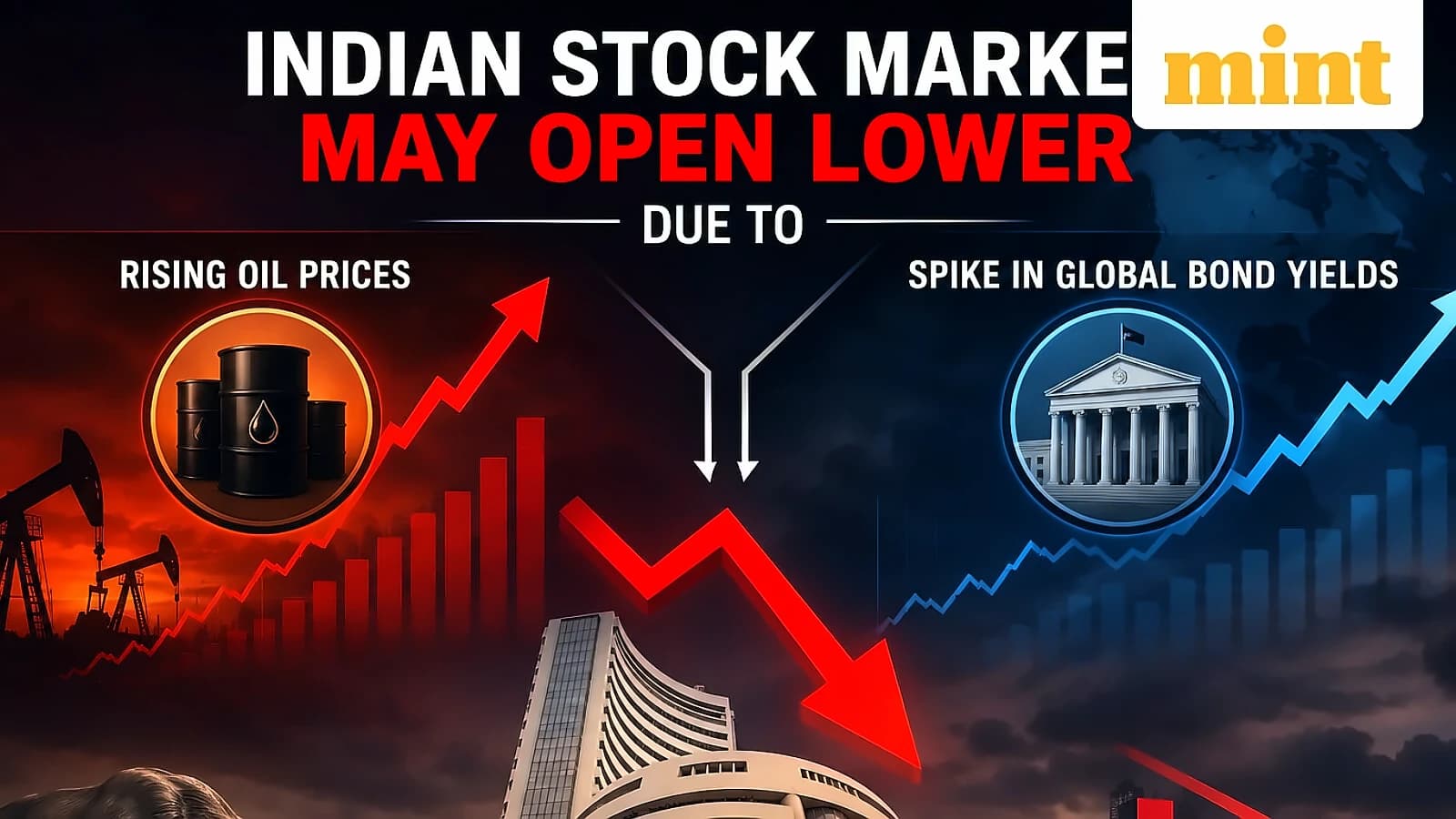
Brent crude rose to around $101.34 a barrel, gaining 0.1% on Thursday after crossing the $100-a-barrel mark, as traders anticipated further supply disruptions following the largest attacks on shipping by Iran and the United States since their six-month-long conflict began. US West Texas Intermediate (WTI) crude rose 0.5% to $96.55 a barrel. Brent crude futures have surged around 25% since early August, as hopes of a lasting resolution to the six-month-long conflict weakened and renewed fighting intensified. Brent crude futures gained 0.1% to $101.34 a barrel, while US West Texas Intermediate (WTI) crude rose 0.5% to $96.55 a barrel on Thursday. Brent crude futures have surged around 25% since early August, as hopes of a lasting resolution to the six-month-long conflict weakened and renewed fighting intensified. Brent prices have climbed more than $1 in early trading after Iran launched fresh attacks on US military assets in the Gulf, as the ongoing conflict between Washington and Tehran continued to spread across the region. The developments have raised concerns over possible disruptions to oil shipments through the Strait of Hormuz, a critical route for global energy supplies. At $70/bbl, oil is mostly a commodity story. Near $100/bbl, it starts leaning across the table at the Fed. The rise in crude prices is also adding to inflation concerns at a time when major central banks are reassessing their interest-rate paths.
Gift Nifty was trading around the 23,461.50 level, down nearly 90.70 points from the Nifty futures' previous close, indicating a negative start for the Indian stock market indices. According to Mint, Indian equities are likely to open flat to mildly negative, with GIFT Nifty indicating a cautious start. Global sentiment remains weak as elevated crude oil prices and rising bond yields revive concerns over inflation and the outlook for interest rates. On the Sensex outlook, Sachin Gupta from Choice Equity Broking said the index has slipped below the 75,000 mark and closed near the lower end of the day's range, indicating weakness in the short-term structure. The immediate support is placed at 74,500–74,600, while 75,000–75,200 remains the key resistance zone. The broader trading range is likely to remain between 74,500 and 75,200, with the index maintaining a sideways-to-bearish bias unless it manages to reclaim the resistance zone convincingly. For the Nifty 50, Rupak De from LKP Securities said the index has slipped further, with no respite seen in the market. The RSI has also slipped into the oversold zone, though the trend remains weak. If the Nifty manages to hold above 23,500 on Thursday, a meaningful recovery could be seen, but a fall below 23,400 might trigger further correction in the index.