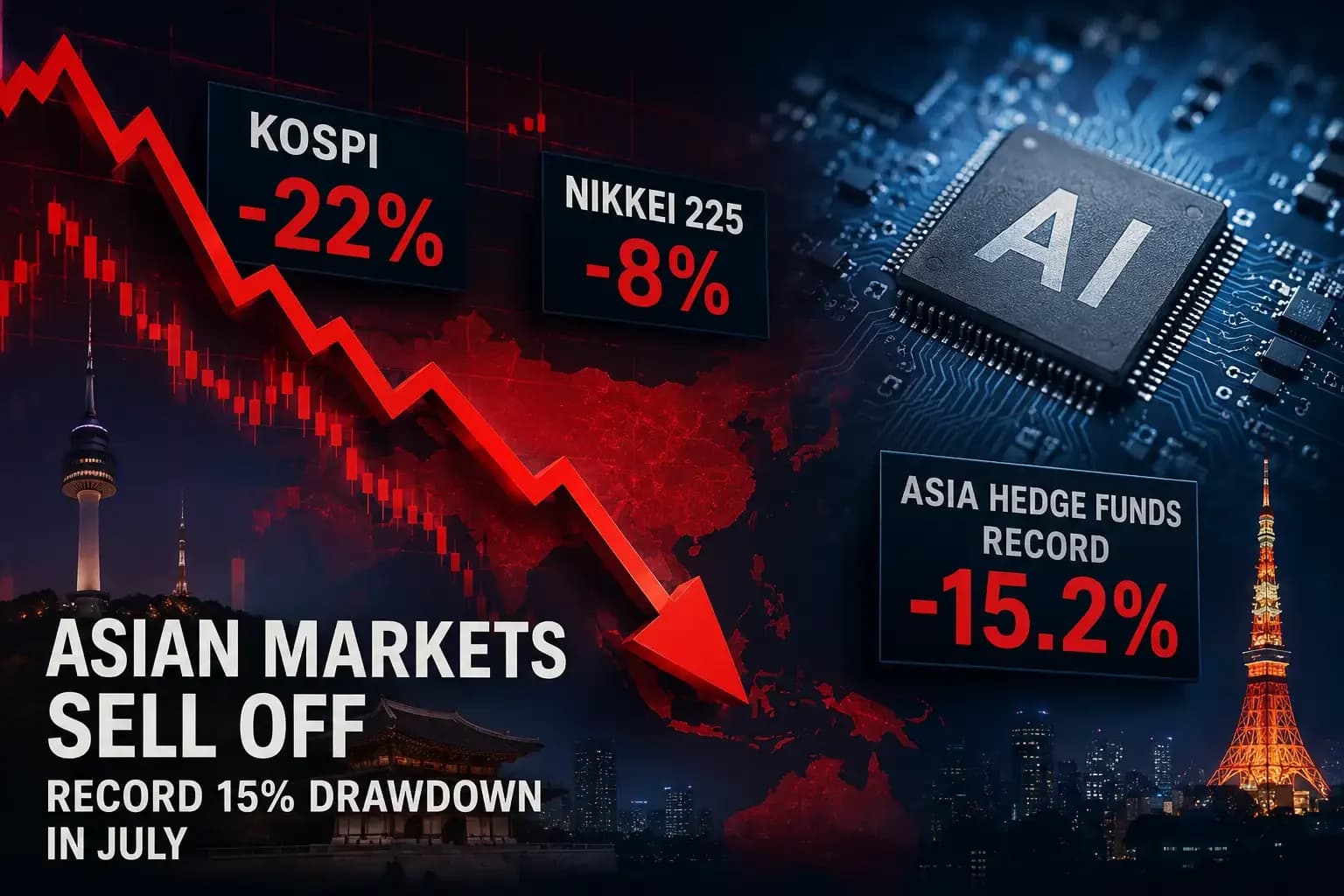
Asia-based hedge funds have experienced significant declines in July following their exceptional performance in the first half of the year. According to Bloomberg reports, WT China Fund, led by Wang Tongshu, lost 17% this month before fees through July 17, having soared 120% in the first six months. Keystone Investors Pte's hedge fund retreated 12% through the same day, after surging 63% in the previous six months. Other notable declines include funds from CloudAlpha Capital Management, Indus Capital Partners, and FengHe Asia, all known for their stock-picking expertise.
The selloff has been particularly severe in AI supply chain stocks, with memory chip giant SK Hynix Inc.'s South Korea-listed shares losing about 28% of their value this month. Japanese peer Kioxia Holdings Corp. has tumbled 28% and is now trading about 40% off its peak. As reported by Bloomberg, hedge funds had piled into such bets in anticipation that AI's advancement from training to actual applications would spur higher demand for chips, energy storage, cooling solutions and server components. The plethora of stocks in the AI supply chain was the key driver behind the outperformance of Asia-based hedge funds in the first half.
The correction has been amplified by hedge funds unwinding momentum trades concentrated in the biggest AI-linked companies that had propelled semiconductor stocks to record highs. The Philadelphia Semiconductor Index (SOX) entered technical bear market territory on July 17 after falling more than 20% from its record high in late June. Despite the recent volatility, the SOX remains up 63% year-to-date and more than 100% over the past 12 months, showing just how strong the rally was before this correction. According to Madhur Kakkar, chief executive of investment advisory firm Elevate Financial Services, this represents a sharp technical correction layered on top of a more sober fundamental re-rating, rather than the end of the AI semiconductor cycle.
The Gulf region continues to be an increasingly important contributor to AI infrastructure investment despite recent volatility. Humain, owned by Saudi Arabia's Public Investment Fund, has signed about $23 billion of agreements with Nvidia, AMD, Amazon and Qualcomm, while Abu Dhabi's G42 has been cleared to import up to 35,000 of Nvidia's latest AI chips. The first phase of the Stargate UAE campus is also due to be completed this quarter. Vijay Valecha, chief investment officer at Dubai-based Century Financial, noted that the world's five largest hyperscalers are expected to invest about $600 billion in infrastructure this year, up 36% year-on-year, with about 75% directed towards AI. Global data-centre capital expenditure is projected to reach $3.3 trillion up to 2029, while the data-centre server market is forecast to grow from just over $200 billion in 2024 to almost $1 trillion by 2030.