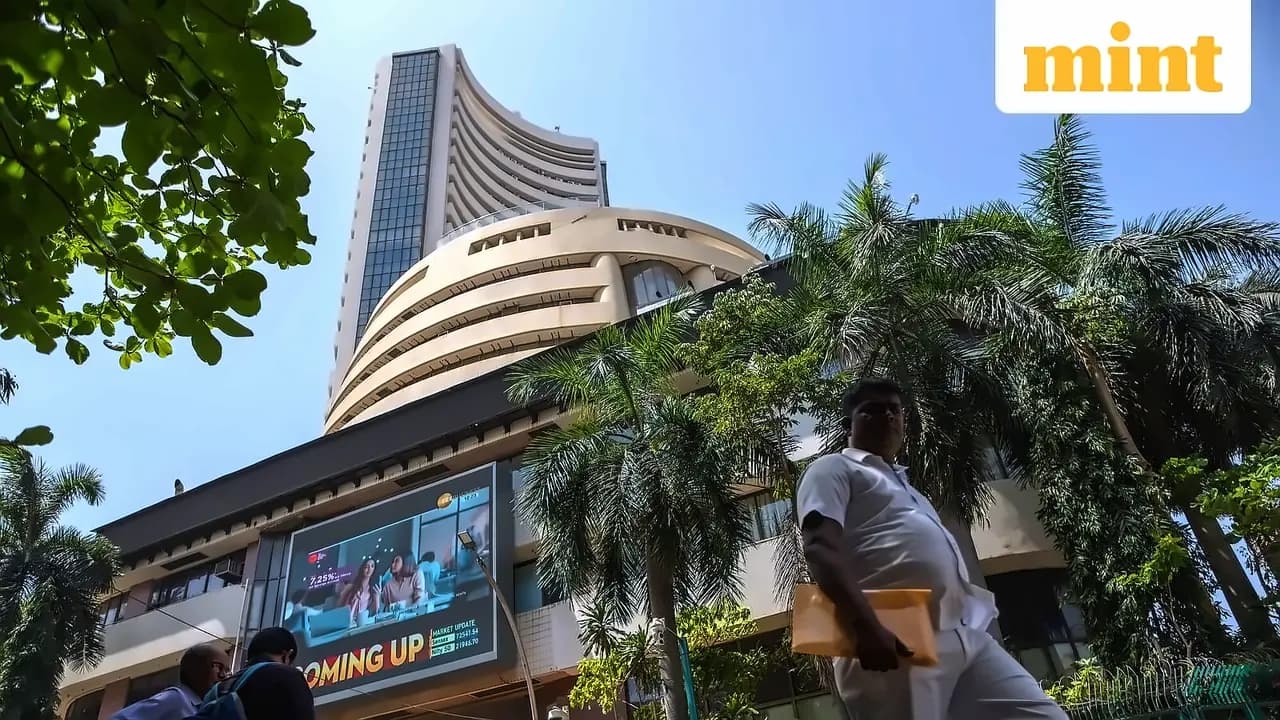
Indian stock markets achieved their third consecutive weekly gain, with the Nifty 50 rising 0.1% to 24,056 and BSE Sensex adding 0.1% to 77,101 on Thursday. According to The Economic Times, both indices were up about 0.4% for the week, marking the third straight weekly gain driven by falling crude oil prices and measures to boost the rupee and attract foreign investment. The rally was supported by RBI Governor Sanjay Malhotra's comments ruling out a near-term rate hike, which helped sentiment as lower borrowing costs have the potential to support earnings, consumption and valuations. Markets had gained as much as 1% intraday before paring advances ahead of the prolonged weekend, with financial markets shut on Friday for Muharram. Foreign portfolio investors bought shares worth a net ₹383.8 crore on Thursday, providing additional support to the market rally.
Brent crude extended its decline for a fourth straight session, slipping to as low as $72.4 per barrel, as reported by The Economic Times. The Street was anticipating that the reopening of the Strait of Hormuz by June, and now that it has played out, oil prices have settled favourably for India, lending some investor confidence, said Dharmesh Kant, head of research at Cholamandalam Securities. This crude oil drop to pre-war levels significantly boosted market sentiment, with investors trimming positions in late trades ahead of the Friday market closure. The pharma sector gained 2.1% this week after reports that the U.S. FDA reached out to Indian drugmakers for a critical cancer drug, with investor preference for sectors less exposed to crude oil and El Nino risks aiding pharma and healthcare stocks.
HSBC's flash India Composite Purchasing Managers' Index (PMI) fell to 57.4 in June from 59.3 in May, reflecting a slowdown in economic activity that prompted investors to take money off the table and cap gains. According to The Economic Times, the services PMI fell to a 17-month low of 57.3 from 59.8, while the manufacturing PMI slipped to 54.5 in June from 55 in the previous month. Market breadth was weak with 2,627 stocks declining and 1,602 advancing, while IndiGo gained 4.73% and Mahindra & Mahindra rose 3.82% in the Sensex pack. Gold rose 0.4% to $4,015 per ounce after declining for two sessions, with the total market capitalisation of BSE-listed firms standing at ₹475 trillion, down ₹1.3 trillion.
Heavyweight financials, banks and private lenders rose 1.3%, 0.9% and 1.5% respectively in the week after the RBI allowed loans against foreign-currency deposits. According to The Economic Times, the Nifty Auto index gained 2.3% on softer crude prices, while the Nifty Metal index fell 1.4% and the Nifty IT index declined 0.9%. The Nifty Midcap 150 and Nifty Smallcap 250 indices fell 0.5% each, with out of 4,406 shares traded on the BSE, 1,602 advanced, and 2,627 declined. Foreign Institutional Investor (FII) flows continue to be a significant factor influencing market sentiment, with the direction and magnitude of these flows closely watched by market participants as they assess broader investment trends.
India VIX fell 2.5% to 13.1, indicating reduced market uncertainty and improved investor confidence, as reported by The Economic Times. The India VIX dropped over 4% to 13.34 in the previous session, indicating reduced market volatility expectations. The Nifty remained range-bound, taking support around its 20-day moving average of 23,800, said Ruchit Jain, head of technical research at Motilal Oswal Financial Services. He expects the index to test the 24,200-24,250 zone in the near term, though a breakout above this level is needed for a sustained upmove. Bond yields also sharply declined, supported by fresh capital inflows following the recent debt market policy reforms, providing additional support to the market rally.