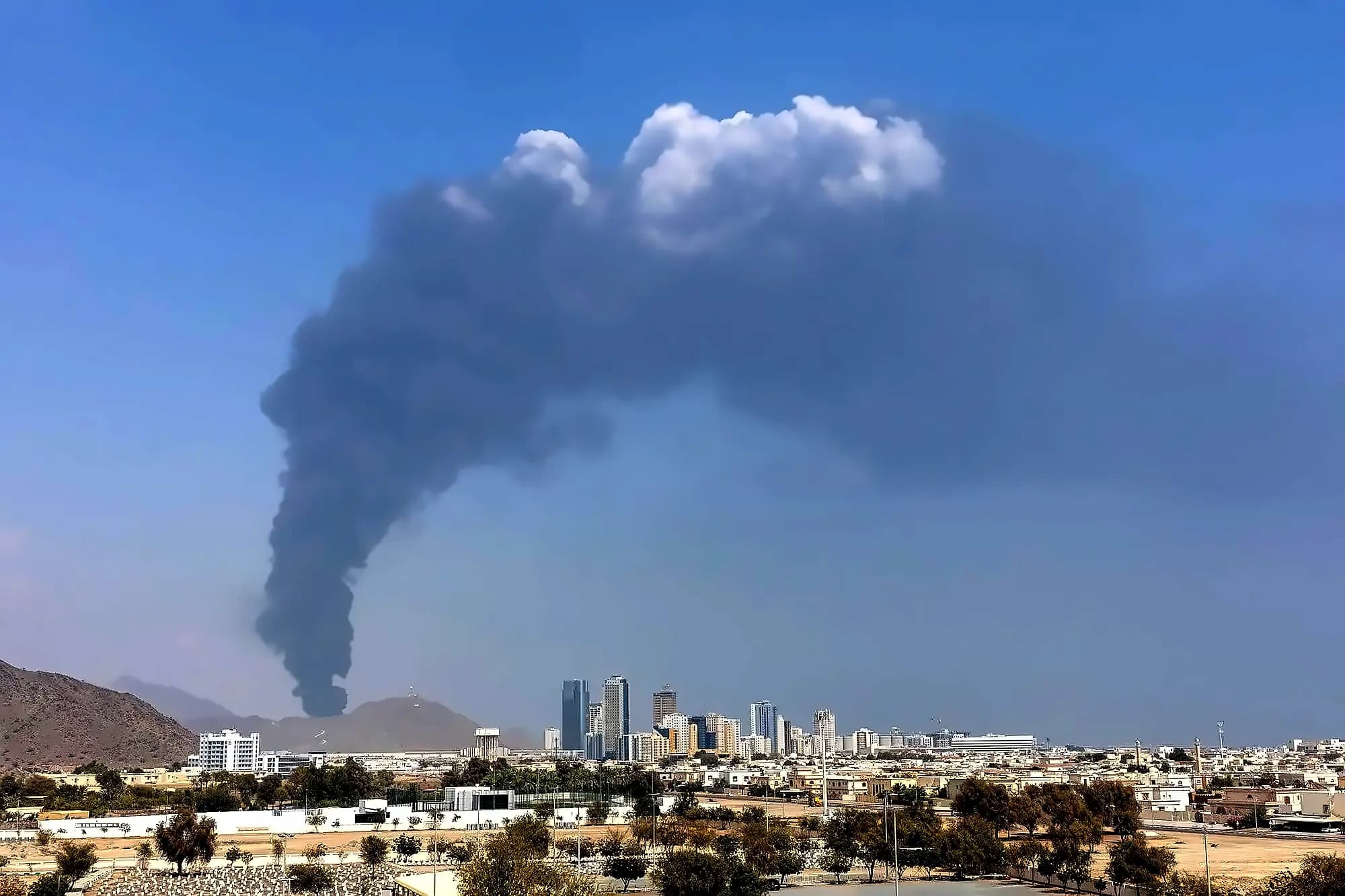
The Iran war has cost Americans $37.6 billion in additional fuel expenses since the conflict began on February 28, according to a live tracker from Brown University's Watson School of International and Public Affairs. The data shows every American household has paid an additional $287 for fuel costs, with national gas prices now averaging $4.52 per gallon. This represents a dramatic 51.6% jump from the pre-war level of $2.98 over just 72 days. The tracker, led by Jeff Colgan, director of the Climate Solutions Lab, compares fuel data from the American Automobile Association with estimated levels had the conflict not occurred, with the gap between actual and counterfactual prices forming the cost calculation. The impact extends beyond households, as BeInCrypto previously reported that US airlines spent $5.06 billion on jet fuel in March, representing a 56% jump from February as the conflict disrupted global supply.
The Asian Development Bank's Chief Economist Albert Park has warned that prolonged Middle East tensions will keep crude oil prices elevated well into the coming years. According to The Times of India, Park projects average oil prices at $96 per barrel for 2026 and expects them to remain at $80 per barrel in 2027. "With a higher oil price expectation, we actually have it as USD 96 per barrel as average for 2026 as per the new reference scenario. It should stay elevated at USD 80 per barrel in 2027. So, our idea is that the oil prices are likely to stay higher for longer," Park said. The economist noted that "there is such a shortage currently" in the market, creating a premium between spot prices and nearby futures. Future prices are showing higher prices farther out into next year than they did before, indicating sustained market pressure.
Global equities pulled back on Friday as escalating Middle East tensions revived concerns over energy supplies, testing the durability of a rally that had lifted equities to record levels. The MSCI All Country World Index slipped 0.3% as clashes between the US and Iran heightened tensions, with Asian shares falling 1.1% after Wall Street benchmarks retreated from their peaks. Despite the pullback, Asian equities were set for a fifth week of gains, the longest winning streak since January, with the Kospi remaining the world's best-performing gauge in 2026. According to Bloomberg, investors are now assuming some resolution in the next month or so regarding the Iran war or Strait of Hormuz closure, with near-term volatility expected but market willingness to buy dips unless new flare-ups become severe.
Crude oil prices have surged beyond the $100 per barrel mark due to the ongoing Strait of Hormuz crisis, with Brent crude climbing 1% to around $101 per barrel on Friday. The world's busiest oil supply passage has been in a chokehold since February 28, when US and Israel launched joint attacks on Iran, after which Tehran tightened its control over the crucial waterway. Oil prices have continued to swing, even touching the $126 per barrel mark, with the conflict showing no signs of immediate resolution. However, despite the recent gains, oil has fallen more than 6% this week, reflecting market uncertainty about the duration of the supply disruption. The closure of the Strait of Hormuz, which handles nearly 20% of global energy shipments, has created broader economic disruption beyond fuel costs. Inflation among US food and beverage companies rose 7.9% year-over-year in March, marking the sharpest increase in at least a year, while a Generation Lab survey found 77% of Americans believe the strikes against Iran were the wrong call.
The ongoing West Asia crisis is expected to significantly impact India's economic growth trajectory, according to the Asian Development Bank's revised projections. As reported by The Times of India, Park warned that the crisis could reduce India's GDP growth by 0.6% in FY27, bringing it down to 6.3% from the earlier projection of 6.9%. The economist explained that "growth would be lower by 0.6 per cent (FY27)" due to higher oil price expectations. Additionally, the crisis is expected to sharply increase inflationary pressures, with the ADB's earlier inflation estimate of 4.5% likely to rise. This represents a significant downward revision from the bank's April projections that supported strong domestic demand growth. The Asian Development Bank (ADB) in April projected India's GDP growth to remain robust at 6.9% in the current fiscal, and rise to 7.3% in the next fiscal, driven by strong domestic demand.
The Middle East crisis continues to show signs of potential resolution, though tensions remain high in both the Persian Gulf and Lebanon. Washington is waiting on Tehran to respond to its proposal to reopen the strait, with tensions still elevated in the region. An Iranian official said the nation wouldn't allow a reopening with "an unrealistic plan," according to the Wall Street Journal, citing Press TV. The US president had announced "Project Freedom," an initiative to help ships transit the strait, before abruptly suspending it. However, Saudi Arabia and Kuwait have lifted restrictions on the US military's ability to use regional bases, the Wall Street Journal reported Thursday, indicating that could allow the Trump administration to restart the effort to ease traffic through the strait. President Donald Trump threatened to hit Iran "more violently" in the future if the Islamic Republic didn't sign a deal fast, describing the action as a "love tap" in a telephone interview with ABC News, and saying that the ceasefire with Iran was still "in effect." The latest standoff came on Thursday when US President Donald Trump claimed that three American naval destroyers were fired upon while passing through the Strait of Hormuz, though none of the vessels sustained damage.