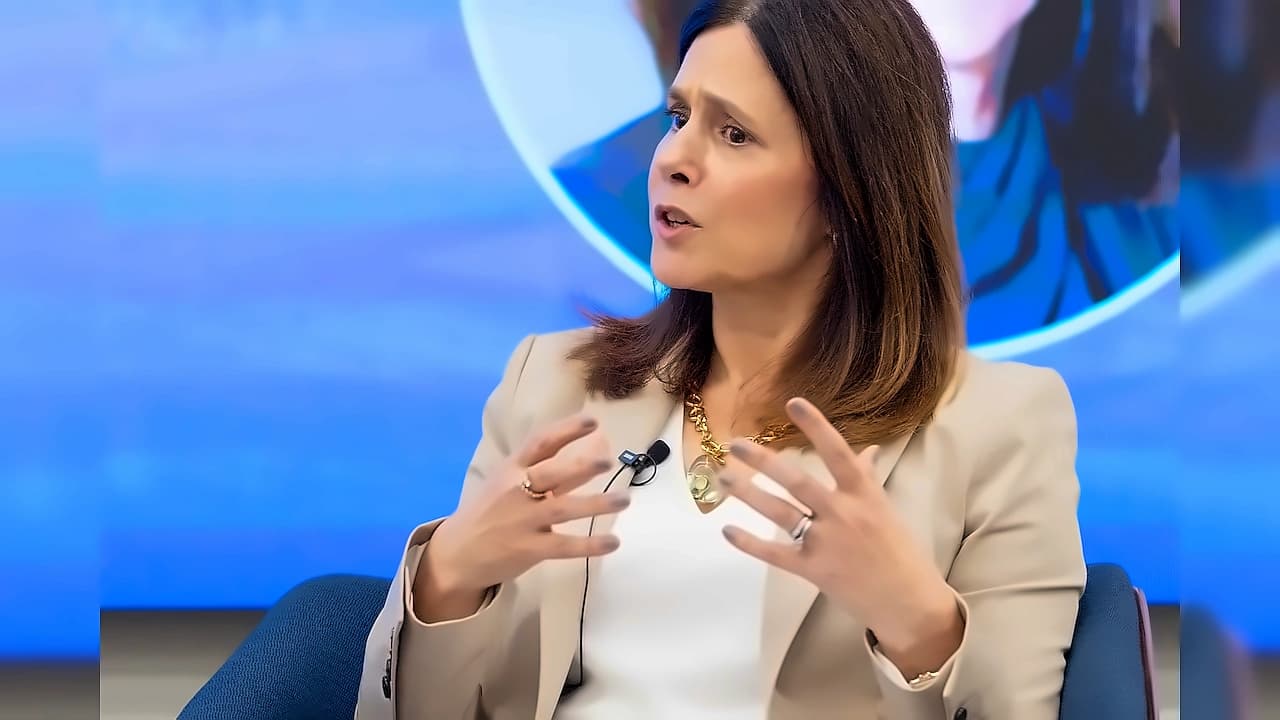
Federal Reserve officials are signaling an accelerated monetary policy response as inflation pressures persist beyond expectations. Federal Reserve Governor Michelle Bowman warned of significant market risks, stating she 'sees a number of risks to economic activity from financial markets, including a sharp downturn in stock prices if returns on investments in artificial intelligence fall short of expectations.' Speaking in Washington on Tuesday, Bowman flagged the risk of 'a large correction in equity valuations' stemming from AI returns, along with 'a sharp increase in private longer-term rates.' She noted that 'lower equity prices could undermine the resilience in consumer spending' and that 'higher interest rates could further strain interest-rate-sensitive sectors of the economy, like housing and small business investment.' Bowman also signaled she could support an interest-rate hike at the central bank's final meeting of the year next month, amid persistently elevated inflation. Federal Reserve Bank of Dallas President Lorie Logan has reinforced the need for aggressive monetary policy action, stating she 'still sees the need for at least two quarter-point rate increases' but warning the pace may need to accelerate. According to Bloomberg, Logan did not commit to a jumbo-sized hike, emphasizing that 'it remains clear to me, given the current outlook, that the FOMC needs to implement at least two more 25-basis-point rate increases' to combat excess inflation.
US consumer prices surged to 0.4% month-over-month in October, significantly exceeding the consensus expectation of 0.3%. According to reports from Investing.com India, the core CPI also increased to 0.3% for a third consecutive month, with core goods rising 0.97% year-over-year and core services climbing 3.4%. This unexpected inflation data has intensified calls for Federal Reserve rate hikes, particularly as the Fed meets in December amid ongoing political uncertainty. Fed Governor Christopher Waller earlier Tuesday suggested the Fed should consider a larger, half percentage point hike at the December meeting, with his remarks coming just before the Labor Department reported that consumer prices rose by more than expected. As reported by Bloomberg, Bowman noted that 'while I continue to expect that several of the factors currently boosting inflation will abate next year, currently inflation has proven to be more persistent than I had anticipated.' She emphasized that 'today I am seeing signs that inflation pressures are persisting, while labor market conditions appear to be firming' and that 'this indicates that there is still work to do to bring inflation closer to 2%.'
The inflation surge extends beyond traditional housing costs, with multiple categories showing concerning trends. As reported by Investing.com India, primary rents increased 0.2% month-over-month while Owners' Equivalent Rent rose 0.32%. Medical care components also contributed significantly, with Medicinal drugs up 0.42%, Medical equipment and supplies rising 1.45%, and Hospital and related services increasing 0.70%. The Food category showed broad-based strength with Food at home up 0.44% and Food away from home rising 0.52% year-over-year. This broad-based nature of inflation across multiple sectors reinforces the Fed's concerns about persistent price pressures. According to The Economic Times, Logan noted that inflation is rising not just because of wartime energy disruptions or tariffs, but also because of broader trends that could persist even after recent shocks dissipate.
Deutsche Bank has now forecast three consecutive quarter-point Fed rate hikes through March 2027, taking rates to 4.50%-4.75% following October's hotter-than-expected inflation report. As reported by Reuters, the bank added a January interest rate hike to its forecast after October's inflation data, putting three consecutive quarter-point moves on its expected path. The bank expects each of the next three meetings to produce a 25-basis-point hike, with the projected destination being a federal funds target range of 4.50%-4.75%. Starting from the current 3.75%-4.00% range, three quarter-point moves would add 75 basis points. The implied ranges would be 4.00%-4.25% after December, 4.25%-4.50% after January, and 4.50%-4.75% after March. A larger December move remains outside the bank's central forecast, though Deutsche Bank did not rule out a half-point hike after comments from Fed Governor Christopher Waller, who had raised the possibility of a 50-basis-point move if inflation remained strong.
Beyond inflation concerns, Fed Governor Michelle Bowman flagged significant risks from the rapid build-out of artificial intelligence infrastructure. According to Bloomberg, Bowman warned of 'rapidly rising AI-related debt, with notable gains in corporate bonds, private credit and project finance, on track to exceed $800 billion this year.' She noted that 'given their strong credit ratings, hyperscalers and large tech firms have assumed off-balance-sheet liabilities to allow smaller and riskier companies to use them as collateral in asset-based financing for data center construction and the purchase of accelerated computing equipment.' These connections among AI firms have created 'circular financing' patterns, with hyperscalers and chip designers making equity investments in smaller companies that purchase their products. Bowman's comments highlight the dual challenge facing the Fed: managing inflation pressures while monitoring potential financial market corrections from AI investment risks.