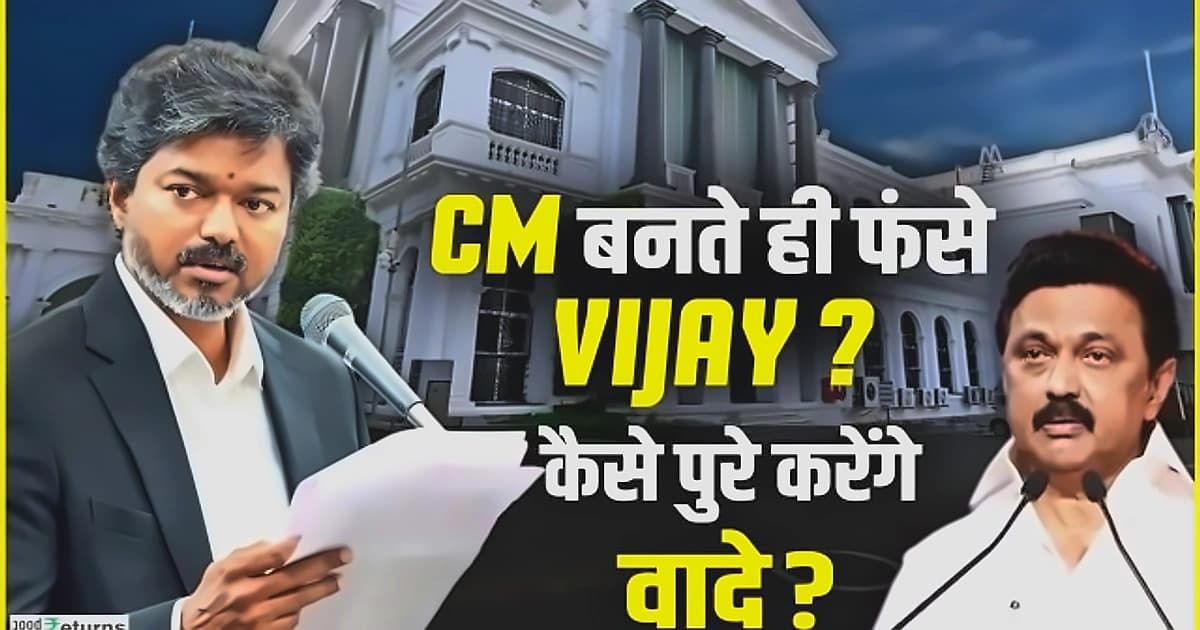
Tamil Nadu Chief Minister Thalapathy Vijay has implemented a significant Dearness Allowance hike from 58% to 60% for government employees, teachers, and pensioners, benefiting 16 lakh people across the state. However, this policy change will increase annual spending by ₹1,230 crore, adding to the state's existing debt burden of approximately ₹10 lakh crore. The DA hike announcement comes as Vijay continues to defend his government's debt disclosure, stating that the state inherited massive debt from the previous administration and announced plans for a detailed white paper on Tamil Nadu's financial condition. The policy decision has sparked debate about whether the additional spending burden represents a support measure or an unsustainable financial burden for the state.
The political confrontation over Tamil Nadu's debt burden has intensified significantly, with CM Vijay's recent claims about inheriting massive debt from the previous administration sparking sharp responses from former Chief Minister MK Stalin. As reported by The Indian Now, Vijay announced that his government inherited a massive debt of nearly ₹10 lakh crore from the previous administration and announced that a detailed white paper on Tamil Nadu's financial condition will soon be released. Stalin responded sharply, stating that Tamil Nadu's debt is still within permissible limits and accused Vijay of creating a misleading narrative around the state's finances. The political clash has now triggered huge debate across social media, with many calling it the beginning of a completely new political chapter in Tamil Nadu politics. Recent developments show Tamil Nadu Minister Arunraj defending Vijay's debt disclosure, stating that the government first needs a clear understanding of the state's 'real fiscal situation' before implementing key poll promises, including the proposed ₹2,500 monthly assistance scheme.
The administration is implementing tactical pivots toward austerity measures as it faces the challenge of balancing expansive campaign pledges with fiscal reality in 2026. A notable development is the restructuring of the Magalir Urimai Thogai program for a viability audit, which critics view as a delay but the government maintains is essential for managing the state's debt-heavy treasury amidst high inflation. This restructuring represents a strategic shift toward fiscal responsibility while maintaining the government's commitment to social welfare programs. The decision reflects the administration's recognition that managing the state's substantial debt burden requires careful evaluation of all expenditure commitments, particularly given the ₹1,230 crore annual DA hike cost and the ₹48,000 crore liquor revenue loss from the closure of 717 state-run TASMAC liquor shops.
Recent RBI data reveals that Tamil Nadu's outstanding liabilities are roughly ₹9.56 lakh crore, making it the highest among Indian states. Despite this substantial debt burden, the state's debt-to-GSDP ratio remains around 26-27 per cent, which is still within manageable levels for a large industrial state. Most importantly, Tamil Nadu's economy has grown faster than the interest burden on its debt, recording real economic growth above 10 per cent in the last two financial years. This growth rate implies that the economy has been expanding faster than the debt itself, suggesting the state's fiscal position may be more manageable than initially perceived. The state's GSDP is ₹36 lakh crore, doubled in the last 5 years when EPS left with ₹19 lakh crore, making it the fastest growing state in India recording double digit growth for 2 consecutive years.
While current debt sustainability appears manageable, future spending pressures remain a concern with the additional burden from the DA hike and the liquor shop closures. The analysis points to TVK's ambitious welfare promises that could sharply increase annual expenditure as a potential risk factor, with the ₹1,230 crore annual DA hike cost and the ₹48,000 crore liquor revenue loss adding to existing fiscal pressures. If borrowing continues mainly to fund subsidies and revenue spending rather than productive investment, debt could eventually become unsustainable. This is why Vijay's proposed white paper matters, as it will need to explain the composition of borrowing and what fiscal room exists for the new government's campaign commitments, including the DA hike, liquor shop closures, and other welfare programs. Many political observers believe this could mark the start of a completely new political chapter in Tamil Nadu, potentially reshaping alliances, governance priorities, and voter sentiment in the years to come.