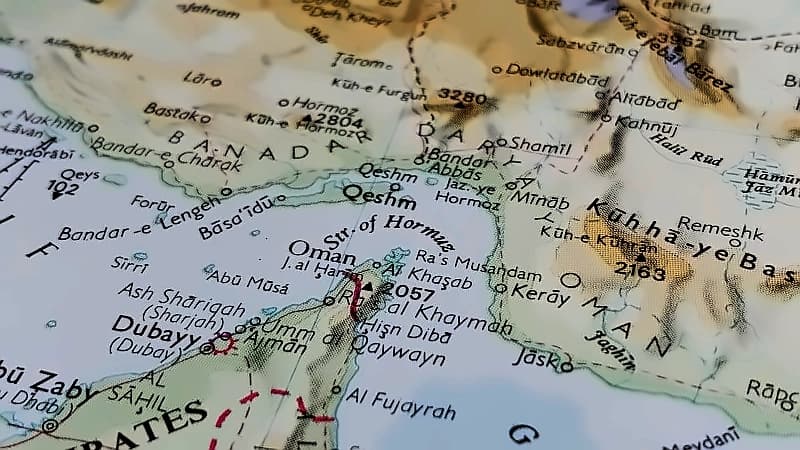
Iran is reviewing participation in peace talks with the United States in Pakistan, according to a senior Iranian official speaking to Reuters. The official confirmed that Tehran is positively reviewing its participation but no final decision has been made. This represents a significant shift from earlier statements ruling out attendance and pledging retaliation for U.S. aggression. Pakistan is mediating efforts to end a U.S. blockade of Iranian ports, which has been a major hurdle for Iran to rejoin peace efforts. The two-week ceasefire is set to expire soon, adding urgency to diplomatic efforts. Iranian Foreign Ministry spokesman Esmaeil Baghaei said on Monday that Washington had shown it was "not serious" about pursuing the diplomatic process, and that Tehran would not change its demands.
The Iran-Israel conflict has created a significant energy crisis with oil prices surging to over $100 per barrel, as reported by The Economic Times. India's oil imports from Iran have been disrupted due to the ongoing military tensions, creating immediate supply chain challenges. The Hormuz Strait, a critical chokepoint for global oil trade, remains under threat of blockade, with Iranian naval forces reportedly shooting down US military aircraft and deploying air defense systems. This disruption to India's oil supply chain is expected to push up fuel prices significantly, with petrol and diesel prices already showing upward pressure due to the global energy market volatility. The crisis is particularly concerning for India's energy-intensive sectors and transportation industries, which rely heavily on imported crude oil for their operations. As per The Economic Times, the current disruption does not simply expose vulnerability but reveals the cost of treating energy security as an incremental reform agenda rather than a structural imperative.
As reported by The Times of India, instability in the Middle East is slowing down talks on the India–Gulf Cooperation Council (GCC) Free Trade Agreement (FTA). This development is affecting efforts to widen India's trade base and improve access to new markets. According to NITI Aayog Vice Chairman Suman Bery, trade deals work both ways, noting that FTAs are not a one-way street for market access. Bery highlighted that merchandise trade has remained steady despite global uncertainty, while services trade has shown strong performance during the challenging year of 2025. The current Middle East crisis is further complicating these negotiations as regional tensions escalate, potentially delaying the finalization of these important trade agreements. As per The Economic Times, India's dependence on a narrow set of maritime routes has long been recognised, yet insufficiently mitigated, with port modernisation and logistics reforms improving efficiency but not fundamentally altering exposure to chokepoint risks.
According to The Economic Times, hindsight offers both clarity and caution regarding India's vulnerabilities in energy, trade and finance. The analysis emphasizes that the present disruption, however acute, is unlikely to be the last, requiring a shift from reactive agility to structured anticipation. The report recommends institutionalising scenario planning across sectors, conducting regular stress tests of critical systems, and integrating risk assessment into decision-making processes. For energy security, a more anticipatory strategy would have entailed substantially larger strategic petroleum reserves, calibrated not merely for short-term disruptions but for prolonged geopolitical shocks. The authors from CUTS International note that India's unique geopolitical positioning offers a distinct advantage in leveraging engagement across competing blocs, provided it is done with strategic coherence. The deeper lesson is that anticipation was not institutionalised, making the failure to prepare less a matter of uncertainty and more a matter of prioritisation in an era where disruptions are increasingly signalled before they unfold.
According to the report from The Times of India, NITI Aayog has called for a shift towards higher-value exports in India's gems and jewellery sector. The report recommends design-led manufacturing, cluster-based research and development, and promotion of GI-branded products, especially in lightweight, fashion and men's jewellery. It also suggested that India's gems and jewellery sector should strengthen trade facilitation and raw material access by aligning FTAs, streamlining duty drawback/refunds, expanding IIBX access, and improving raw material supply to cut input costs and boost MSME margins. The report emphasized easier access to finance for MSMEs through collateral-free loans, credit guarantees, interest subvention, export factoring and supply chain finance.
As reported by The Economic Times, the digital economy introduces a layer of vulnerability that has yet to be fully internalised within policy frameworks. As India's economic activity becomes increasingly dependent on undersea cables, cloud infrastructure, and cross-border data flows, the risks associated with these systems acquire a strategic dimension. A more anticipatory approach would have embedded digital resilience into national planning, through redundancy in critical infrastructure, enhanced security protocols, and coordinated international frameworks for safeguarding connectivity. The analysis notes that India's commitment to maintaining openness within the global financial system is both prudent and necessary, but openness without optionality can impose constraints in moments of volatility. Greater emphasis could have been placed on developing parallel buffers, expanding bilateral currency arrangements, deepening domestic capital markets, and strengthening institutional mechanisms to manage external shocks.