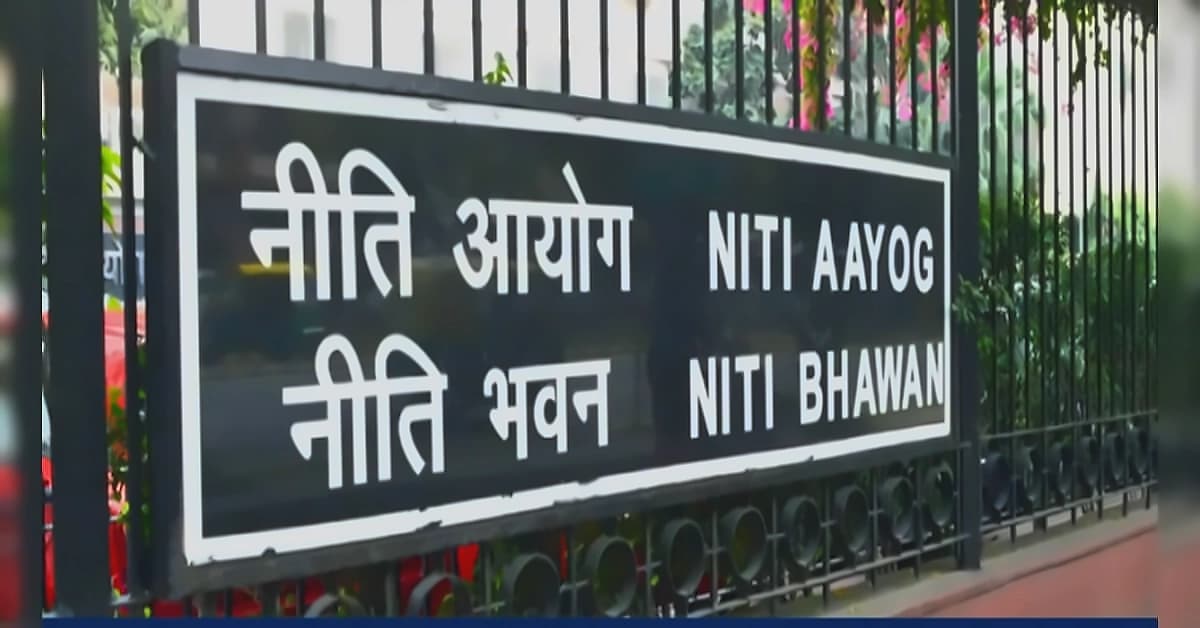
NITI Aayog has completed its comprehensive framework for critical minerals recovery and is now preparing for policy implementation. Anupam Lahiri, Principal Director (Minerals) and Additional Director General at NITI Aayog, announced during the 15th India Minerals and Metals Forum that the think tank is working on policy prescriptions including royalty and incentive mechanisms to encourage critical mineral extraction. As reported by Business Standard, the committee has mapped the entire value chain from collection and transportation to processing, recovery costs and revenue streams to identify where policy support or incentives may be required, with the committee expected to come out with a plan of action for implementation by the Ministry of Mines.
According to Business Standard, Nitin Gupta, co-founder and CEO of Attero, estimates that urban mining has the potential to meet 20-75% of India's critical mineral demand over the next 10-15 years, with the highest potential for rare earth elements such as neodymium, praseodymium and dysprosium where recovery from secondary sources could eventually meet as much as 75% of domestic demand. The economics of recycling show promise, with NITI Aayog's analysis of a 10,000 tonne lithium-ion battery recycling plant estimating total recycling costs at ₹294-350 per kg of battery feedstock, compared to India's 2024-25 lithium imports worth ₹300.5 crore at an average landed value of ₹1,002 per kg. However, current recovery systems capture only 18% of India's ₹51,000 crore e-waste stream, with the remaining 42% lost due to poor processing and informal-sector inefficiencies.
The government's recycling initiatives are showing strong progress under the ₹1,500-crore National Critical Mineral Mission, with commitments reaching 850,000 tonnes, well above the target of 270,000 tonnes. As reported by Business Standard, another scheme to develop a domestic battery-mineral processing value chain is nearing finalisation, which could create an annual capacity to recycle 300,000 tonnes of e-waste by 2030. 58 recyclers have been approved under this initiative, with experts expecting India to emerge as a major global hub for critical-mineral recycling by 2030. The committee is examining the entire value chain for recovery of critical minerals from battery waste, e-waste and mining waste, and is working on identifying costs and revenue streams across the chain to design suitable incentives.
According to the latest data from the Ministry of Mines, India imported about 12.47 million tonnes of critical minerals in 2024-25, with the import bill led by platinum group elements, phosphorous, nickel, molybdenum and tin. As reported by Business Standard, India remains fully import-dependent for lithium, cobalt and nickel, with Finland supplying 59.77% of cobalt oxide imports, Tanzania 50.34% of copper ore concentrates, China 91.26% of synthetic graphite, and Ireland 39.73% of lithium carbonate imports. The technical committee is particularly focused on addressing royalty structures for recovered critical minerals, especially in cases where royalty has already been paid on coal, while examining commercial viability and incentives needed to make the extraction process economically attractive for mining companies.
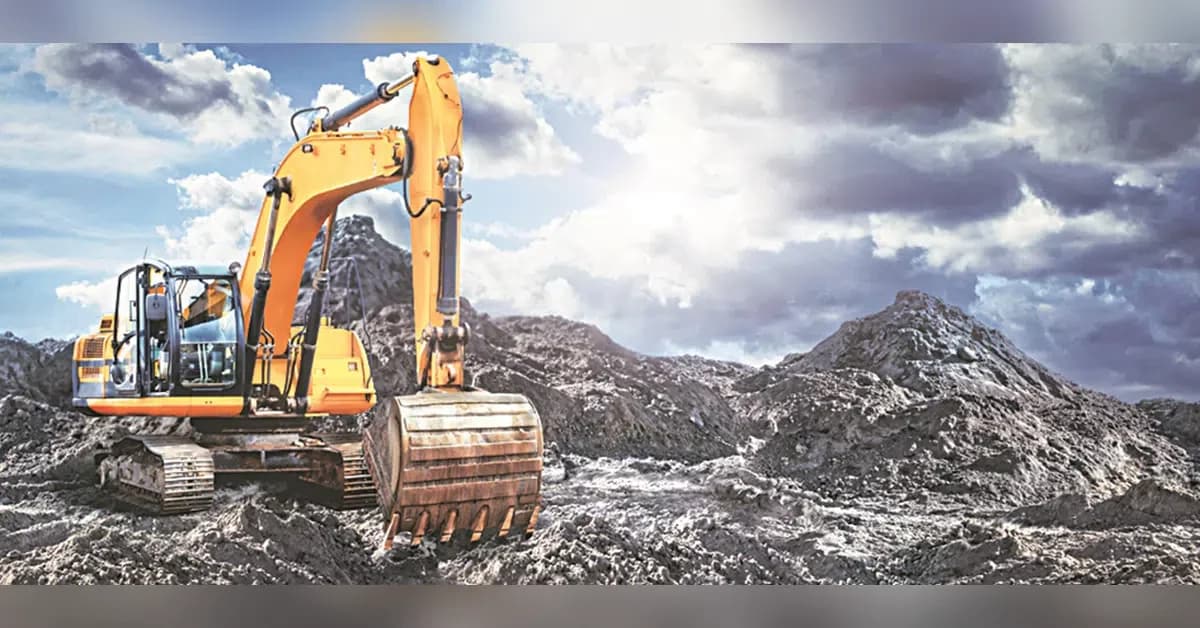
On overseas mineral assets, Lahiri acknowledged that India is pursuing opportunities in countries such as Australia, Argentina and the United States, but noted that many resource-rich nations permit mining while restricting exports of raw ore, requiring value addition within their jurisdictions before exports to India. The growing importance of new technologies is driving a shift in industrial demand from conventional raw materials towards critical minerals, with experts emphasizing that recycling should complement, not replace, mining because it strengthens resource security, reduces import dependence and keeps more value addition within India. Sanjay Mehta from MRAI highlighted that solar panels, lithium-ion batteries and consumer electronics will soon become valuable sources of critical minerals, with the journey from exploration to final production in mines taking upwards of 5-10 years, making recycling a faster and more resource-efficient alternative for meeting immediate demand.