Karnataka has demonstrated remarkable economic transformation over the past three decades, transitioning from a state with below-average per capita income to ranking fourth in per capita gross state domestic product (GSDP) by 2023-24. According to reports from Business Standard, the state's per capita net state domestic product stands at ₹3,39,813, which is 1.8 times the average per capita net national income. The state recorded the highest annual growth in GSDP at constant prices among all states over the last three decades at 6.4 per cent, driven primarily by its modern services sector which accounts for 65 per cent of total GSDP in 2023-24. Karnataka has established itself as India's technology and innovation hub, hosting over 875 global capability centres (GCCs) and being the country's largest destination for foreign investment. In 2023, Karnataka's 45 unicorns accounted for 44.6 per cent of their combined valuation, with its capital Bengaluru widely known as India's Silicon Valley.
Despite its economic achievements, Karnataka faces significant regional disparities that undermine its growth sustainability. As reported by Business Standard, over 54 per cent of the state's income is generated in just seven districts - Bengaluru Urban and Rural, Dakshina Kannada, Udupi, Chikkamagaluru, and Shivamogga. The remaining 46 per cent is spread across the other 26 districts, creating a stark regional divide. The agricultural sector, which supports 46 per cent of the state's population, contributes only 8.7 per cent of GSDP, while manufacturing accounts for just 20 per cent. This concentration of income generation in modern services has resulted in skewed income distribution across the state. Apart from Bengaluru Urban and Bengaluru Rural, per capita income is higher than the state's average only in the two coastal districts of Dakshina Kannada and Udupi, the plantation district of Chikkamagaluru, and Shivamogga. Even the districts in the Bengaluru-Mysuru belt, with large investments in agriculture and irrigation, generate incomes well below the state average. The source of imbalance partly lies in the pattern of growth itself, with the spectacular growth driven predominantly by the services sector at 65 per cent share in 2023-24, contrasting sharply with the primary sector's 11.7 per cent and agriculture's 8.7 per cent share.
Karnataka's healthcare spending reveals significant regional and per-capita disparities that highlight the challenges of translating budgetary allocations into outcomes. According to recent budget data analysis, Karnataka allocates 4.6 per cent of its expenditure to health and family welfare in FY26, positioning it among the lower-spending states despite being among India's more prosperous economies. When measured on a per-capita basis, Karnataka spends approximately ₹3,188 per person on health, ranking it among the lower-spending states in this category. This spending pattern contrasts sharply with states like Goa, which emerges as the country's highest health spender at ₹20,300 per person, followed by Odisha at ₹7,241 per person. The healthcare infrastructure faces significant challenges, with specialist doctor shortages at 80 per cent vacancy rate in community health centres across the state. Despite being among the top five states in health spending, Odisha, Rajasthan, and Chhattisgarh continue to face severe specialist doctor shortages at 81 per cent, 88 per cent, and 80 per cent vacancy rates respectively. These disparities demonstrate that increased budgetary allocations alone are insufficient to address healthcare infrastructure gaps and service delivery challenges.
Karnataka's education spending reflects the broader pattern of regional disparities across Indian states. According to the latest budget data, Karnataka allocates 10 per cent of its total expenditure to education in FY26, ranking it among the lower-spending states despite being among India's more prosperous economies. This allocation places it below states like Bihar at 20 per cent, Delhi at 19 per cent, and Himachal Pradesh at 17.5 per cent. When measured on a per-capita basis, Karnataka spends approximately ₹1,828 per person on education, which remains among the lower figures nationally. The state's position at the top of education spending comes with a significant caveat - its population of over 130 million means those resources are spread thinly, resulting in lower per-capita spending despite higher absolute allocations. This pattern mirrors the healthcare spending disparities, where Bihar leads in budgetary commitment but remains among the lowest spenders on a per-capita basis due to its large population size.
The current imbalances stem from Karnataka's reconstitution in 1956, which brought together diverse regions with varying development levels. As reported by Business Standard, the state comprises regions with different infrastructure levels, institutional frameworks, and governance structures. The regions under Mysore royalty had established infrastructure and educational institutions, while the erstwhile Hyderabad-Karnataka and Bombay-Karnataka regions faced significant infrastructure and governance deficits. The feudal Jagirdari system in these regions, combined with neglect of education and healthcare systems by successive governments, has created lasting institutional challenges that continue to impact development outcomes. The regions under Mysore royalty had good infrastructure, irrigation, and educational institutions, while the erstwhile Hyderabad-Karnataka and Bombay-Karnataka regions had huge infrastructure, knowledge, and governance deficits. Added to these challenges was the neglect of education and health care systems by successive governments, with the more influential sections exiting public education in favour of private schooling and health care, leaving these sectors to suffer gross neglect. The seeds of imbalance were sown when the state was reconstituted in 1956, joining the Kannada speaking parts of the erstwhile Bombay-Karnataka and Hyderabad-Karnataka regions, the district of South Kanara on the West Coast, the mineral-rich district of Bellary ceded from the Madras Presidency, the directly governed British province of Coorg, and the region under Mysore royalty.
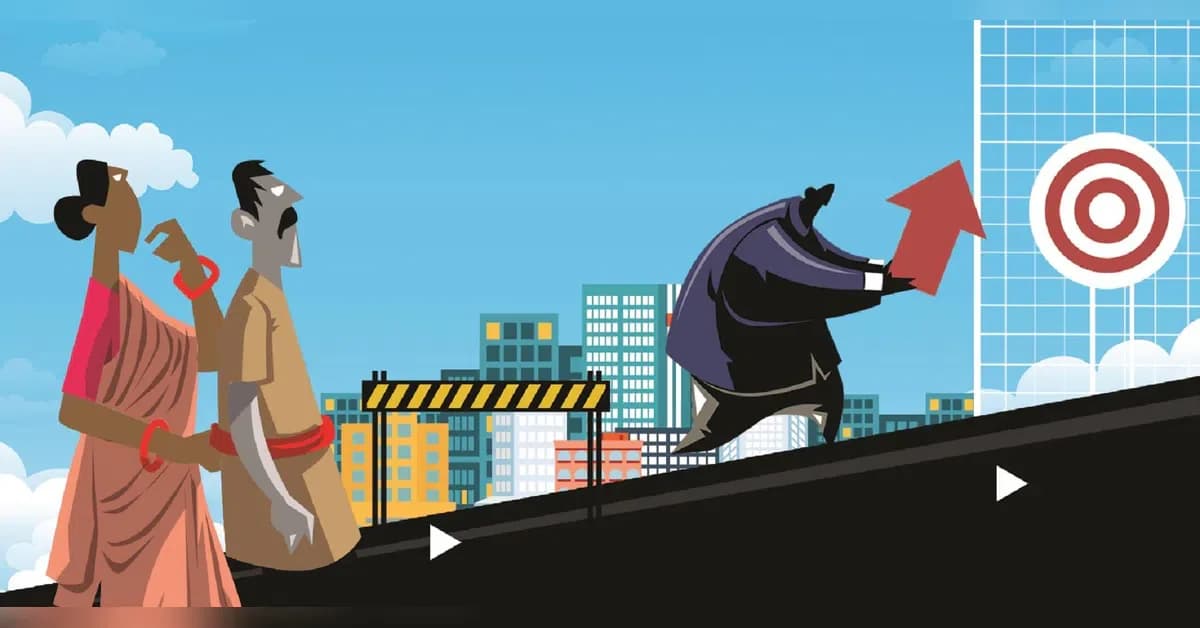
According to the analysis from Business Standard, Karnataka requires comprehensive policy interventions to address its development imbalances. The report emphasizes the need for strengthening social sector interventions in education, skill development, and healthcare to break institutional constraints. Focus on quality tourism development in low-income northern regions could generate greater dividends, while improving infrastructure and connectivity across the state would support broader economic inclusion. The state's rich heritage and history in these regions present opportunities for sustainable development through targeted tourism and infrastructure investments. Most of the low-income regions in the northern part of the state have a rich history and heritage, and a focus on quality tourism can bring greater dividends to these areas. The only way to break the shackles of these institutional problems is to strengthen social sector interventions, as the more influential and well-to-do sections have exited public education in favour of private schooling and health care, leaving these sectors to suffer gross neglect. Recent budget data analysis suggests that per-capita deficits and infrastructure gaps mean increased budgetary allocations are failing to deliver development targets, highlighting the critical need for more targeted and effective policy implementation across all sectors.